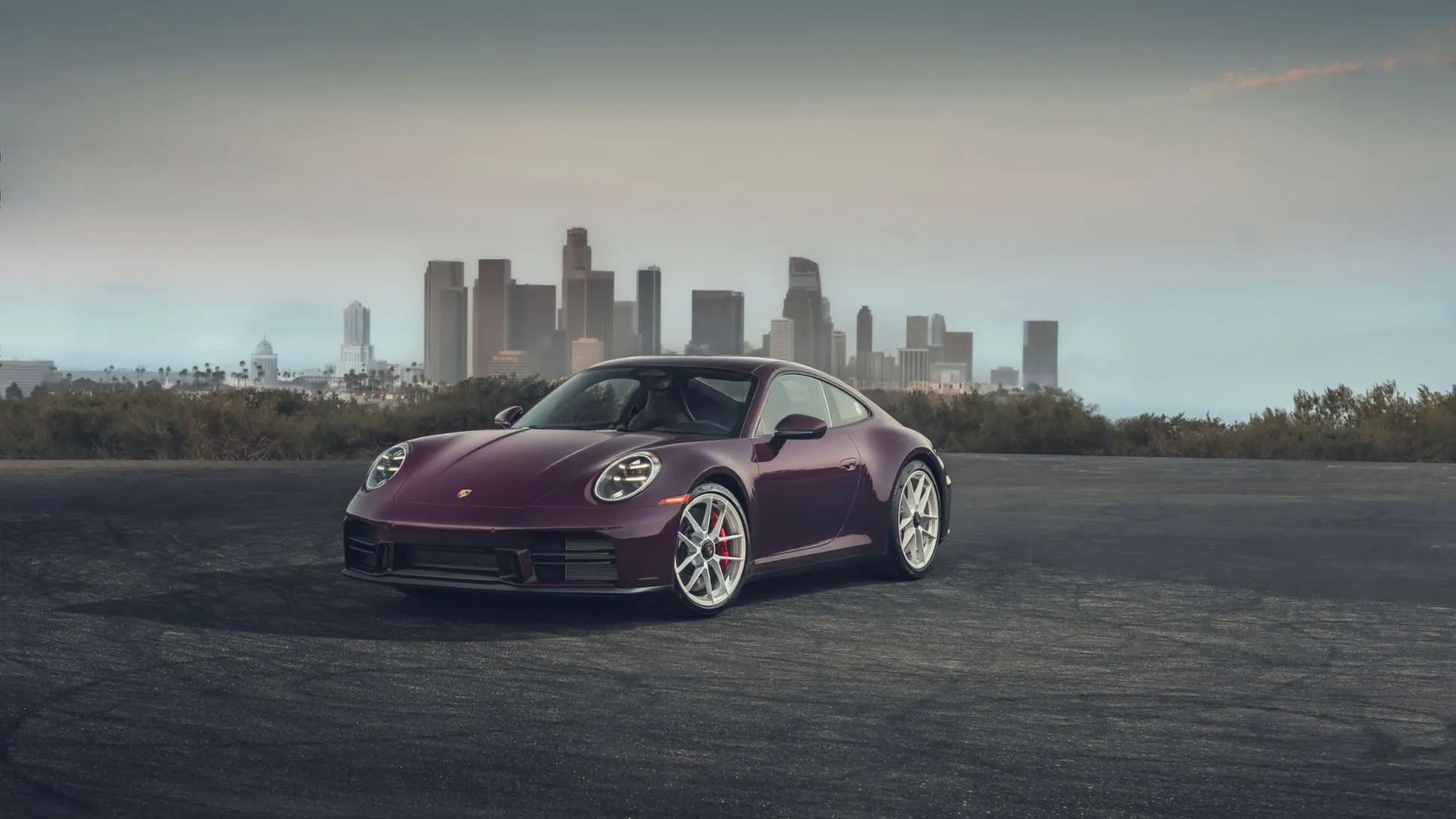
Photo: Andrew Akabane / Unsplash. A Porsche 911 Turbo S (992).
The production 911 Turbo was unveiled at the Paris Motor Show on 3 October 1974, and it did not look like the other 911s. Porsche says the new car was set apart by bodywork 12 centimeters wider and a broad rear wing. Half a century later, Porsche still calls the big rear arches a well-known distinguishing feature of its Turbo models, and the look has spread to GT cars, special editions and an entire aftermarket. Here is how the factory did it, and why the 911 kept getting wider.
Width started with tires
The 911 was already growing for rubber before the Turbo arrived. Porsche says the G-series Carrera, like its predecessor, was widened by 42 mm across the rear fenders to make room for larger tires.
The Turbo went much further. The car Porsche calls Turbo No. 1, built for Louise Piëch in 1974, still lacked what the company calls "the mighty fender extensions", and that narrow-body 2.7-liter coupe stayed a one-off. The production car gained 16-inch wheels for the 1977 model year, and evo notes it was one of the first cars offered with Pirelli's first low-profile tire, the Cinturato P7.
The Turbo look goes on the order form
The look soon outran the engine. The Turbo-look Carrera arrived in the autumn of 1983, and a Carrera 3.2 buyer could order the naturally aspirated car in the wider Turbo body as option M491, with the Turbo's rear spoiler on request. Porsche offered it as a Coupe, Targa, Cabriolet and Speedster through 1989.
It was more than a body kit. Porsche says the car came with the Turbo's brakes and firmer suspension. The pre-production Turbo-look Cabriolet built for chief executive Peter W. Schutz also had its shell reinforced to suit.
Porsche built Turbo-look versions of the G-series and 964 between 1983 and 1993, ending with the 964 Carrera 2 Cabriolet and Speedster and the Carrera 4 "30 years of the 911" coupe. That anniversary car paired wide front and rear fenders with the Turbo's 17-inch wheels.
Customers liked the look. Porsche says 2,103 G-series Speedsters were built with the Turbo-width body, against 171 narrow-body export cars.
964 and 993: the Turbo body becomes a platform
The 964 Turbo returned in 1990 with a 3.3-liter engine and 320 PS, then moved to a 3.6-liter unit with 360 PS at the start of 1993.
The 993 Turbo's body was 60 mm wider, with bigger fenders and a new rear spoiler, and Porsche put that wide body on the naturally aspirated Carrera 4S and Carrera S.
Then came the GT2. Developed from 1994 as a car for recreational motorsport, it wore bolted-on plastic wheel arch extensions as standard, so a damaged arch could be swapped after contact on track. Porsche lists it at 1,855 mm wide, on 9J x 18 front wheels with 235/40 tires and 11J x 18 rears with 285/35s. Its rear wing made downforce, steered air to the charge-air coolers and fed intake air through openings in its sides. Porsche built 172 in the first series.
Cooling and aero join the brief
By the 996, the wide body was doing more than covering tires. The 996 Turbo had the wide fenders and big spoiler, but Porsche also gave it 50 percent more radiator area than the naturally aspirated 911, fed through three large intakes in the front bumper.
The GT cars borrowed the body for their own reasons. For the 2015 GT3 RS, Porsche said the body came from the 911 Turbo, with front-arch vents that add downforce at the front axle. The 991.2 GT2 RS used carbon front fenders and rear-arch intakes that cool its intercoolers, on 265/35 ZR20 front and 325/30 ZR21 rear tires, evo reports.
The 992 GT3 RS treats the arches as aero devices. Porsche vents the front arches through louvered openings in the front fenders, adds GT1-style inlets behind the front wheels to cut pressure in the arches, and gives each rear arch an intake and a sideblade. Its track is 29 mm wider than the GT3's, so the front wishbones are longer, and it runs 275/35 R20 front and 335/30 R21 rear tires. Our GT3 versus GT3 RS explainer covers what else the RS changes.
The 992 Turbo S, by the numbers
When the 992 Turbo S arrived in March 2020, Porsche said its body was 45 mm wider over the front axle, at 1,840 mm, and 1,900 mm over the rear axle, 20 mm more than before. The track grew 42 mm at the front and 10 mm at the rear, with 255/35 tires on 20-inch front wheels and 315/30s on 21-inch rears.
The T-Hybrid Turbo S presented in Munich in September 2025 keeps a body and track wider than the Carrera's. Its rear tires grow to 325/30 ZR 21, 10 mm wider than before, and active cooling-air flaps and an active front diffuser manage the air. It makes 701 hp and lists at $270,300 in the U.S.
Where the aftermarket picked it up
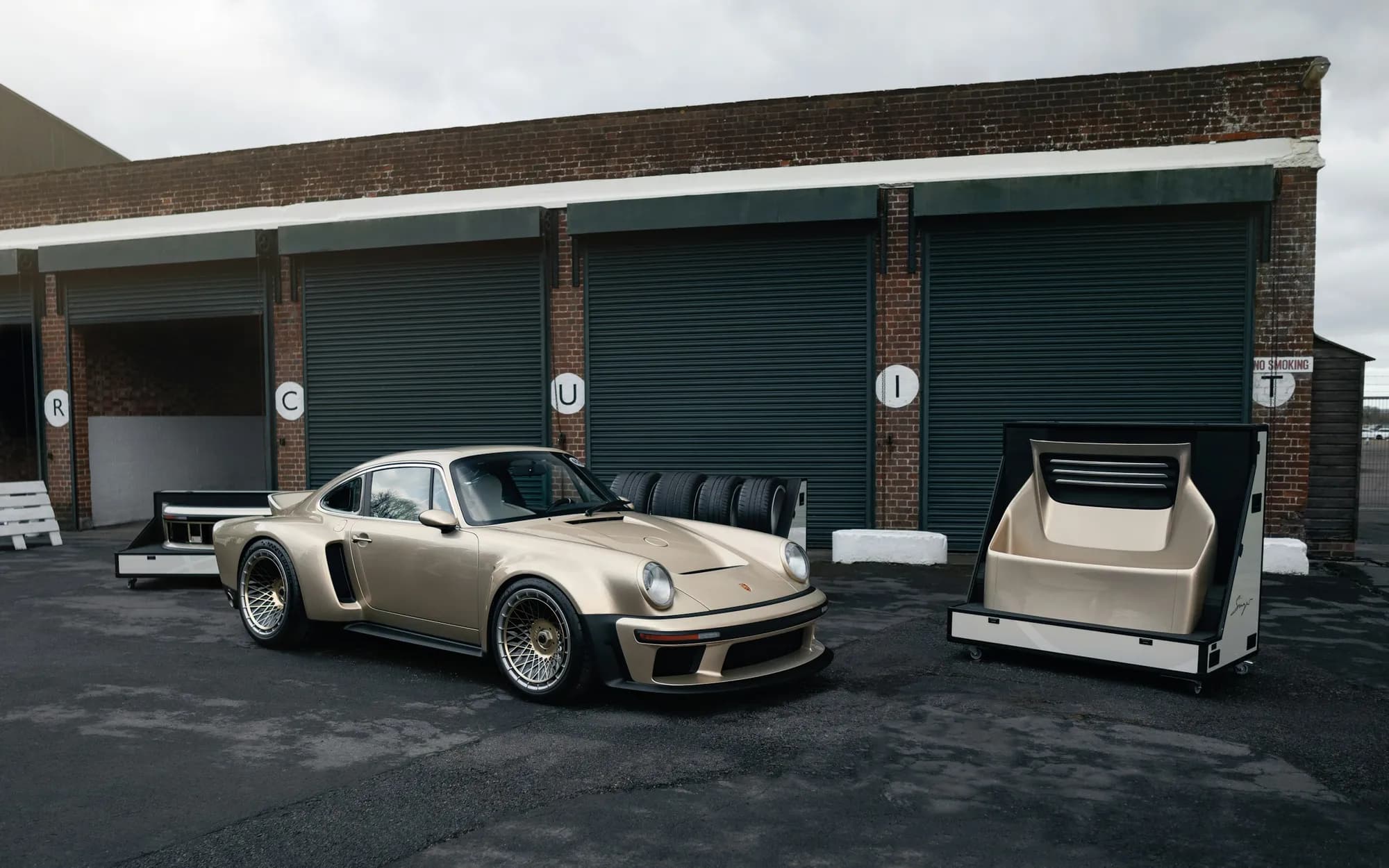
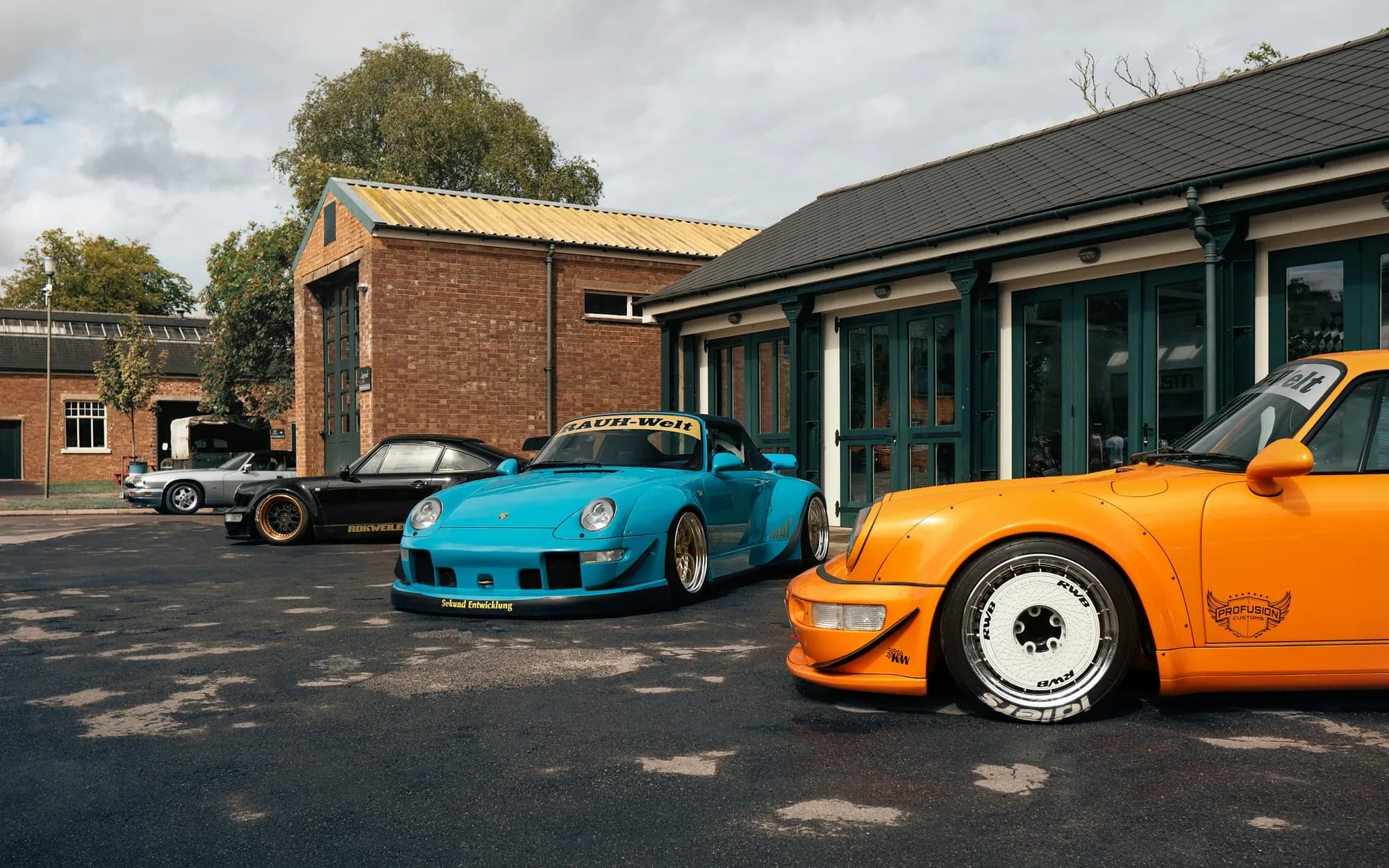
The factory look became a template. Yokogao Magazine says the wide fenders on an early RWB 930 built by Akira Nakai were a nod to the 993 GT2 race cars of the 1990s; our RWB story covers how he builds them. Singer's 2026 Cabriolet uses wide carbon bodywork that the company says was inspired by the Turbo-look cars of the 1980s. We cover that end of the market in Singer and Gunther Werks.
Porsche has gone back to its own playbook, too. In August 2026 it showed a one-off Flachbau RS, built through its Sonderwunsch program on a 991.2 GT2 RS and recalling the 930 Flachbau, of which 948 were sold between 1982 and 1989.
Across five decades the pattern holds. Porsche widened the 911 when the tires, the cooling or the aero needed the room, and the chassis changes came with the bodywork. Planning your own? Start with our widebody build guide, and find more in Porsche.
Figures are Porsche's published data unless another source is named. No TUNERS drive is claimed.