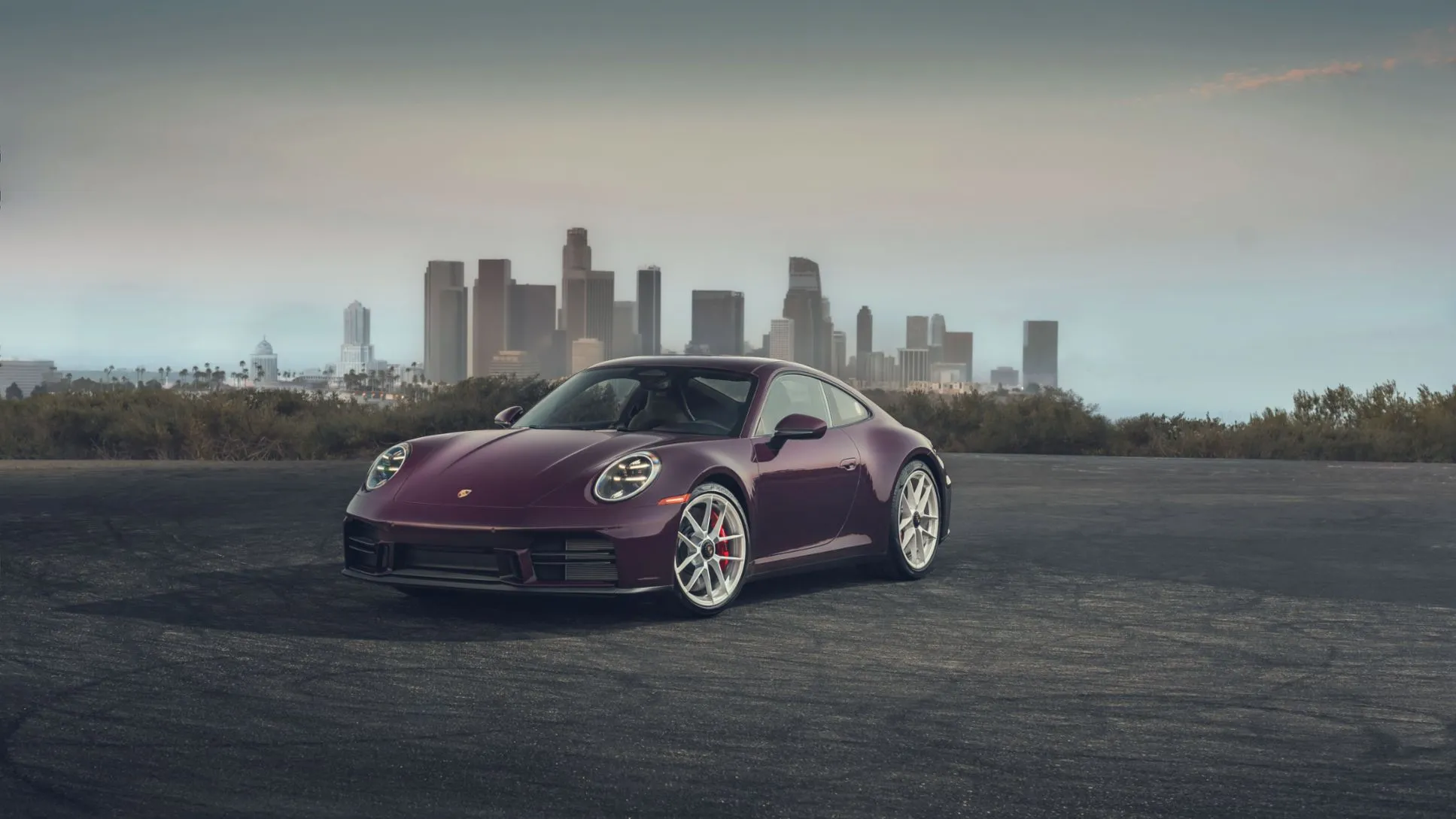
Photo: Porsche Cars North America. The 2027 Porsche 911 Carrera S with the manual transmission.
Few decisions shape a 911 more than its gearbox. Porsche still offers a choice, but both halves of it have changed since PDK first appeared on the 911: what the dual-clutch automatic does, and where the manual is available. The useful way to decide is to understand both.
PDK began as a racing project
Porsche's own history traces the dual-clutch idea to the end of the 1960s and to prototypes by engineer Imre Szodfridt. Rainer Wüst, a transmission test engineer at Porsche since 1971, became technical manager for PDK about a decade later. Porsche tested it in a 944 Turbo and on track in the 956, and in 1986 Hans-Joachim Stuck and Derek Bell won the 360-km race at Monza in a PDK-equipped 962 C. Porsche's PDK history
It was not ready for road cars then. Porsche says series production had neither powerful enough control electronics nor vehicle-compatible electrohydraulic valves, and the necessary wet clutch was not yet available. As Wüst put it, "We were at least 20 years ahead of our time." PDK became an option on the 911 in 2008. The principle is simple to state: the gears are split between two sub-transmissions, each with its own clutch, and a shift closes the newly active clutch while opening the previous one. Porsche's PDK history
How the current 911 range splits
The 992 generation launched with an eight-speed PDK, and Porsche said a manual would follow. Porsche's 2020 911 release The 992.1 Carrera models offered a seven-speed manual. For the 992.2, Porsche gave the Carrera T a six-speed manual as its only gearbox, using the first six ratios of that seven-speed, with an auto-blip rev-matching function that the driver can switch off. Porsche calls the T coupe the lightest Carrera variant, at 3,316 lb. Porsche's Carrera T release
The Carrera S entered the 992.2 generation with PDK only. For the 2027 model year, Porsche added a Carrera S with MT Package for North America, using the Carrera T's six-speed, and said that brought the number of North American 911 variants with a conventional manual to seven: the Carrera T coupe and Cabriolet, the GT3, the GT3 with Touring Package, the GT3 S/C, and the Carrera S with MT Package as a coupe and a Cabriolet. Porsche's Carrera S MT release
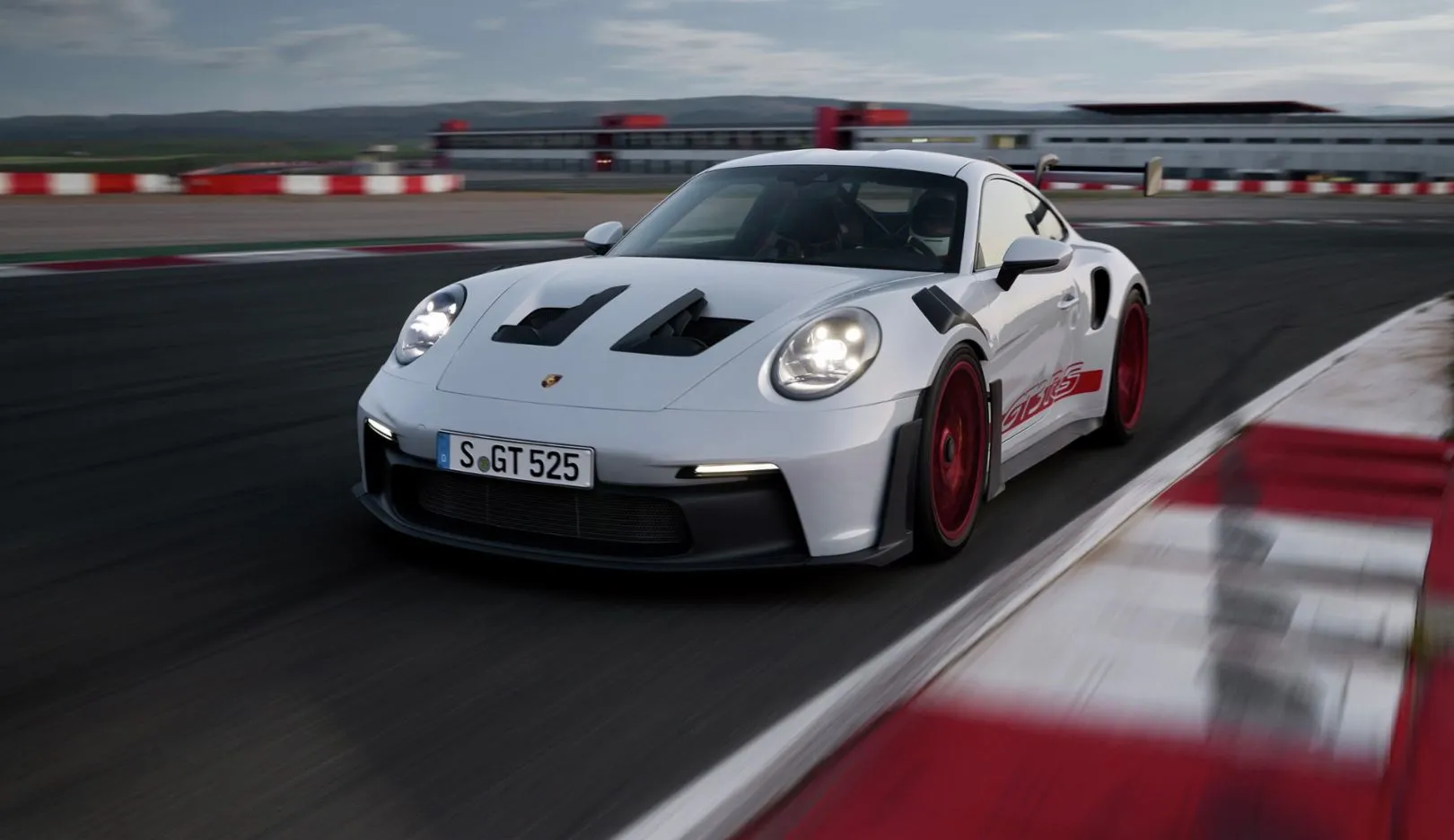
At the top of the range, the GT3 offers a seven-speed PDK or a six-speed GT Sport manual. Porsche's 2025 GT3 release Porsche's release for the 992 GT3 RS lists only the seven-speed PDK. Porsche's GT3 RS release
What the numbers say
The GT3 gives the cleanest comparison because it offers both. For the 2025 car, Porsche quotes 0-60 mph in 3.2 seconds with PDK and 3.7 seconds with the manual, and a top track speed of 193 mph with PDK against 195 mph with the manual. Porsche's 2025 GT3 release When the 992 GT3 launched, the manual car was also lighter, at 1,418 kg against 1,435 kg for PDK. Porsche's 2021 GT3 premiere
Porsche has also tuned manuals for response rather than outright speed. For the 911 S/T, it developed a lightweight clutch and single-mass flywheel that save 10.5 kg and, it says, reduce drivetrain inertia so the engine revs more freely. Porsche's 911 S/T powertrain details
Read together, the figures say PDK wins the standing start and the manual saves weight. None of them says which is more satisfying on the roads you drive.
Choosing for how you drive
If lap times and consistency matter most, PDK's case is strong, and it is telling that the track-focused GT3 RS is listed with it. If involvement matters more, the manual now spans enough of the range, from the Carrera T to the GT3, that wanting three pedals no longer limits you to a single model. Heavy traffic and daily use favor PDK, while rev-matching takes much of the effort out of a manual's downshifts.
On a used car, treat either gearbox as a component to inspect, not a box to tick. Ask for the transmission service history the car's maintenance schedule calls for, have a specialist assess clutch condition on a manual, and drive both types before committing. A test drive in traffic will tell you more about living with either one than a 0-60 time.
Buy the gearbox you will enjoy using on the roads you actually drive. The stopwatch favors PDK, but a 911 that stays in the garage because its gearbox does not suit you is slower than either.
Figures are Porsche's published data for the cars described. No TUNERS road or track test is claimed.