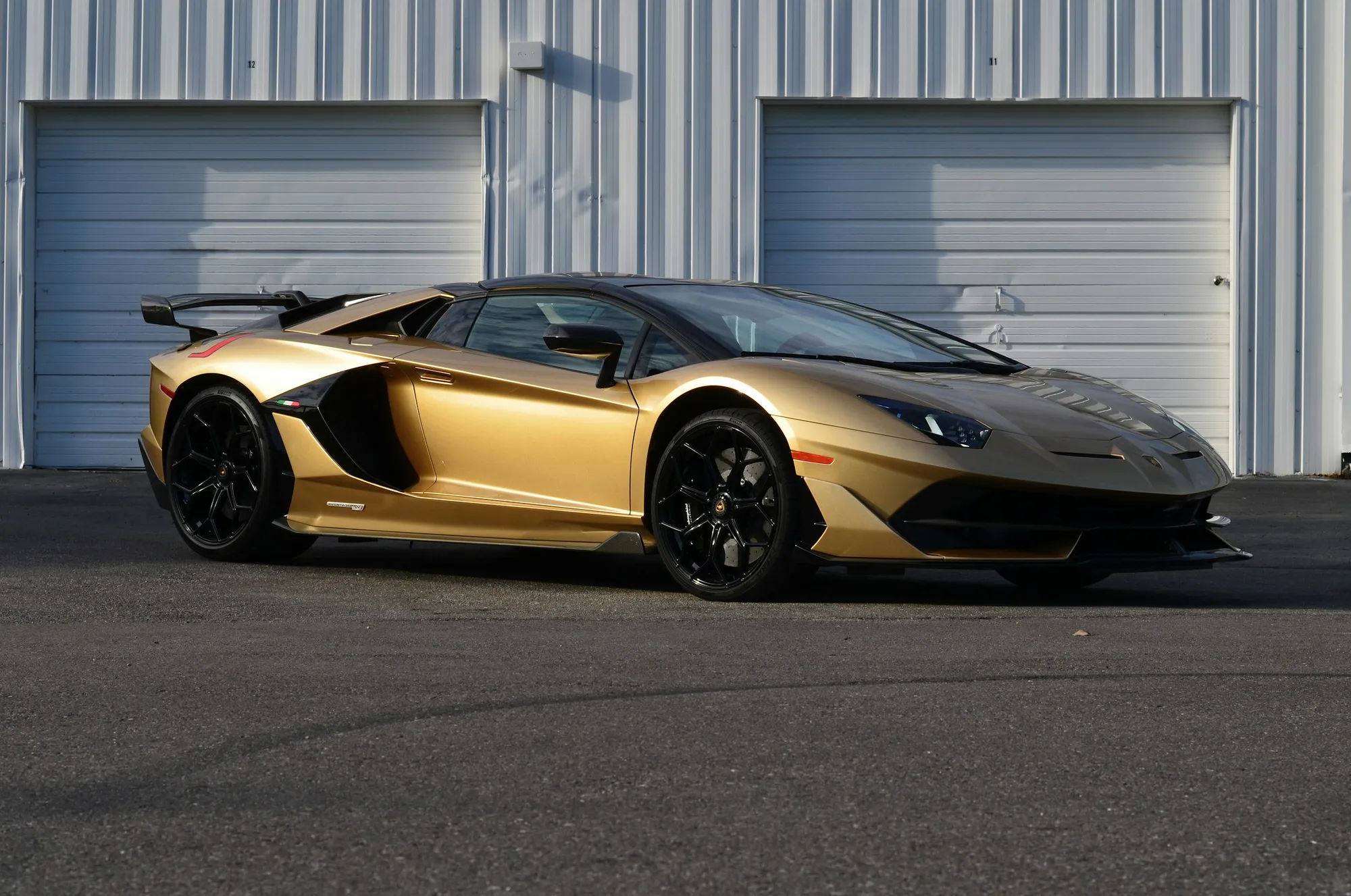
Lamborghini released the Aventador SVJ's résumé before it showed the car. On July 26, 2018, it announced that the not-yet-unveiled model had lapped the Nürburgring Nordschleife in 6:44.97, a production-car record. When the SVJ was revealed at Monterey Car Week that August, the rest arrived: 770 CV from a naturally aspirated V12, active aero that could work each side of the rear wing separately, and a 900-car production run. Here is what the name means, how the hardware works and why this is the Aventador at its peak.
What SVJ means
SV stands for Superveloce, Italian for superfast, and J for Jota. Lamborghini CEO Stefano Domenicali said the Jota suffix follows the brand's tradition of marking a car's "track-focused talent." The lineage runs back to the Miura. By Lamborghini's own count, four Miura SVJs were derived from the Miura Jota prototype.
The engine
The SVJ's 6,498 cc V12 makes 770 CV (566 kW) at 8,500 rpm. Torque is 720 Nm at 6,750 rpm. Titanium intake valves, reshaped intake runners, modified cylinder-head intake ducts and a lighter exhaust did the work. In US-market terms that's 759 hp and 531 lb-ft.
Lamborghini quoted a 1,525 kg dry weight, 1.98 kg per CV, 0-100 km/h in 2.8 seconds, 0-200 km/h in 8.6 seconds, more than 350 km/h flat out and a 30-meter stop from 100 km/h. The weak spot was the seven-speed ISR gearbox. The single-clutch unit was two generations behind the dual-clutch transmissions in a 911 or a Huracán.
ALA 2.0: aero that picks a side
ALA stands for Aerodinamica Lamborghini Attiva, and its first version appeared on the Huracán Performante. On the SVJ, electric motors open or close flaps in the front splitter and engine cover in under 500 milliseconds. With the flaps closed, the car makes high downforce and the rear wing works as a fixed wing. With them open, the front flaps cut drag and the engine-cover flaps stall the wing for speed.
Aero vectoring is the clever part. The wing's internal channel is split left and right, so the system can treat each side differently in a corner. Lamborghini claimed 30 percent more aero load on the inside wheel than its original system delivered. Overall downforce rose 40 percent on both axles versus the Aventador SV, with a 1 percent lower drag coefficient, and 70 percent of that gain came from the reshaped upper body.
The chassis was tuned to match. The anti-roll bars are 50 percent stiffer than the SV's, damping range grew 15 percent, and the magnetorheological suspension was recalibrated for track use. It all works alongside four-wheel steering and the omega-shaped rear wing Lamborghini lists among the SVJ's exterior changes.
The Nürburgring lap
Lamborghini driver Marco Mapelli set the 6:44.97 on the 20.6 km lap, on optional Pirelli P Zero Trofeo R tires rather than the standard P Zero Corsa. Remak handled timing and GPS certification with VBOX-Racelogic equipment, and the time beat the Porsche 911 GT2 RS's 6:47.3. The independent GPS timing followed skepticism over the video of Lamborghini's earlier Huracán Performante lap.
Two caveats apply. The Nürburgring only began officially recording and publishing lap records in 2019, measuring the full 20.832 km from the T13 start/finish line. And the record didn't last. In November 2020, the Mercedes-AMG GT Black Series ran 6:43.616 on the comparable shorter lap, about 1.3 seconds quicker than the SVJ. Over the full distance it ran 6:48.047, the Nürburgring confirmed.
How many were built
The coupe was limited to 900 cars at a US price of $517,770. Alongside it came the SVJ 63, a 63-car special edition with its own color and finishes. It marked the company's 1963 founding and used extra carbon fiber.
The Roadster debuted at the Geneva Motor Show in March 2019, limited to 800 cars. It weighed about 50 kg more than the coupe and carried a 12 kg carbon roof that stows under the front hood. There was also a 63-car SVJ 63 Roadster edition.
In July 2020 came the Xago Edition, 10 hexagon-themed roadsters sold only through Lamborghini's virtual Ad Personam studio, with no mechanical changes.
Why it's the peak
The Aventador's final version, the LP 780-4 Ultimae, made 780 CV, and Lamborghini calls it the most powerful Aventador ever made. But it went without the SVJ's big wing, weighed about 55 lb more than the SVJ and sat between the Aventador S and the SVJ in character. Lamborghini built 350 coupes and 250 roadsters.
So the Ultimae has the bigger number, and the SVJ is the one built around the lap: ALA 2.0 with aero vectoring, the big wing, track-calibrated suspension and a production-car record.
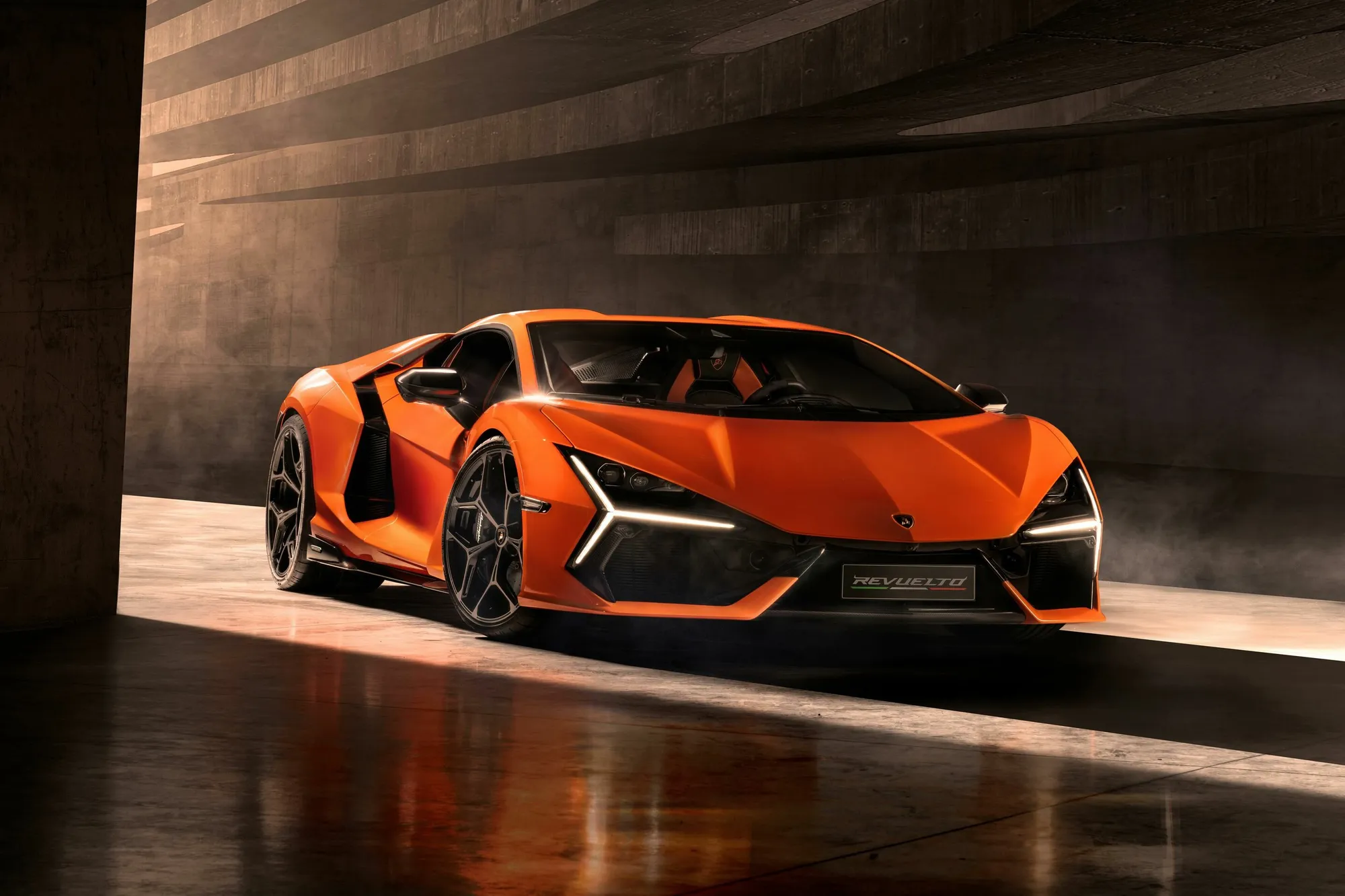
It also belongs to a closing chapter. The Aventador family ended with the Ultimae, and by 2023 Lamborghini's V12 came with three electric motors: the Revuelto plug-in hybrid makes 1,015 CV combined.