The Hilux reputation is real. It was also earned somewhere else, by trucks you cannot legally buy, under conditions your commute will never approximate. Everything since has been the sound of a used-truck market repeating a story to itself until the price went up.
Where the legend came from
Two things built it. The first was a famously televised attempt to destroy an old diesel Hilux with a wrecking ball, a fire, and a building demolition, after which it ran. The second was decades of documentary footage from places where a pickup is the only viable machine — the 1987 conflict between Chad and Libya was nicknamed the Toyota War because of what the fighting was done from.
That's a hell of a resume. It's also a resume built by a global-market truck with a diesel engine, leaf springs, and no computer worth mentioning.
Why it was actually true
The engineering reasons are boring and completely legitimate. Toyota's truck engines of that era made very little power for their displacement. The 22R and 22R-E, the 3RZ, the 5VZ-FE — all understressed, all running low cylinder pressures, all designed to be fixed with hand tools in a place with no dealer network.
Add body-on-frame construction, parts availability in essentially every country on earth, and service intervals a farmer could hit without a laptop, and you get vehicles that keep running because they were never asked for much and were always easy to repair. That's not magic. That's low specific output plus serviceability.
What the myth conveniently skips
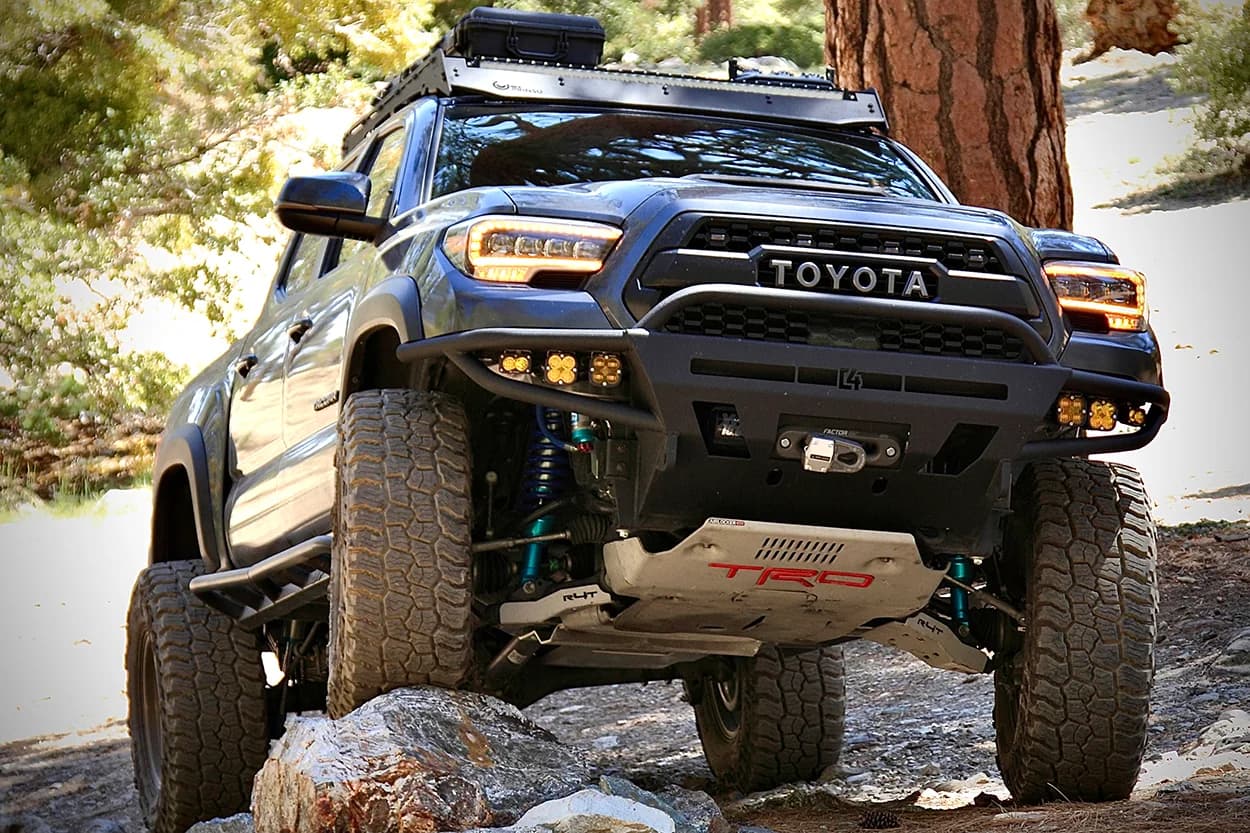
The Tacoma sold in North America is not that Hilux, and the North American ownership record has some large holes in it.
Toyota ran frame corrosion buyback and replacement programs on a generation of Tacomas and early Tundras because the frames rotted through. That is the single most expensive failure a body-on-frame truck can have, and it happened to the brand people cite as indestructible.
The 3.4-liter V6 in the first generation is a timing-belt engine with a head gasket reputation. The four-cylinders wore timing chain guides. Later trucks brought their own irritations, including transmission calibration that hunts and drivetrain slop that Toyota forums have argued about for years.
None of that makes a Tacoma a bad truck. It makes it a truck.
The part that costs you money
Reliability you pay for in advance is not savings. It's a subscription.
The resale premium on a used Tacoma is severe, and it's driven by reputation rather than by any measurable maintenance advantage over the competition today. Compare like for like and you can often buy a Nissan Frontier with the VQ40 or a Colorado of the same era for meaningfully less, sometimes thousands less, with the same seats, the same bed, and the same job description.
Those alternatives have their own homework. The 2005-2010 Frontier and Xterra had the radiator that could let coolant into the transmission cooler circuit and destroy the transmission, which the internet named after a milkshake. The five-cylinder Colorado has a head gasket reputation of its own. The difference is that you can buy the truck and the repair budget for what the Toyota costs by itself.
The take
The Hilux legend is a story about serviceability, not immortality, and the trucks that earned it were simple in ways nothing sold new today is allowed to be.
Reliability in 2025 terms is mostly a maintenance culture, not a badge. A Ford or Ram or Chevy owned by somebody who changes fluids early, fixes small leaks before they become big ones, and doesn't ignore a noise for six months will outlast a neglected Tacoma every time. The Toyota crowd tends to be the crowd that maintains things, and that correlation gets read as causation constantly.
Buy the Tacoma if you want one. They're good trucks with excellent parts support and they hold value like a mid-90s watch. Just be honest that you're buying a story alongside the truck, and that the story has a price tag printed on the windshield.