A pickup is a terrible starting point for a fast vehicle. It's heavy, it carries almost no weight over the drive axle, and the aerodynamics amount to a brick pushing a second brick. Building a quick one at the factory took either serious engineering or a total disregard for what a truck is supposed to do. The eight below had one or the other.
The one that broke the format
The GMC Syclone landed for 1991: a Sonoma with a turbocharged, intercooled 4.3-liter V6, all-wheel drive, and a quoted 280 horsepower that nobody in the aftermarket has ever believed. Its tow rating was an insult and its payload was a rounding error.
Didn't matter. All-wheel-drive traction off the line in 1991 was close to witchcraft, and the magazine drag tests that lined one up against contemporary exotics did more for GMC than a decade of Sierra advertising. Under 3,000 were built. Prices reflect that now.
The Typhoon arrived the following year with the same drivetrain under a two-door Jimmy body. Purists will tell you it isn't a truck. It's also the one you'd actually drive every day, and it's usually the cheaper way into the drivetrain.
Ford's answer, delivered twice
The first SVT Lightning (1993-1995) was a handling exercise before it was a drag truck. A 5.8-liter Windsor with GT40 heads made roughly 240 horsepower, which was not much even then, but the suspension work and the regular-cab shortbed proportions set a template that street trucks copied for the next fifteen years.
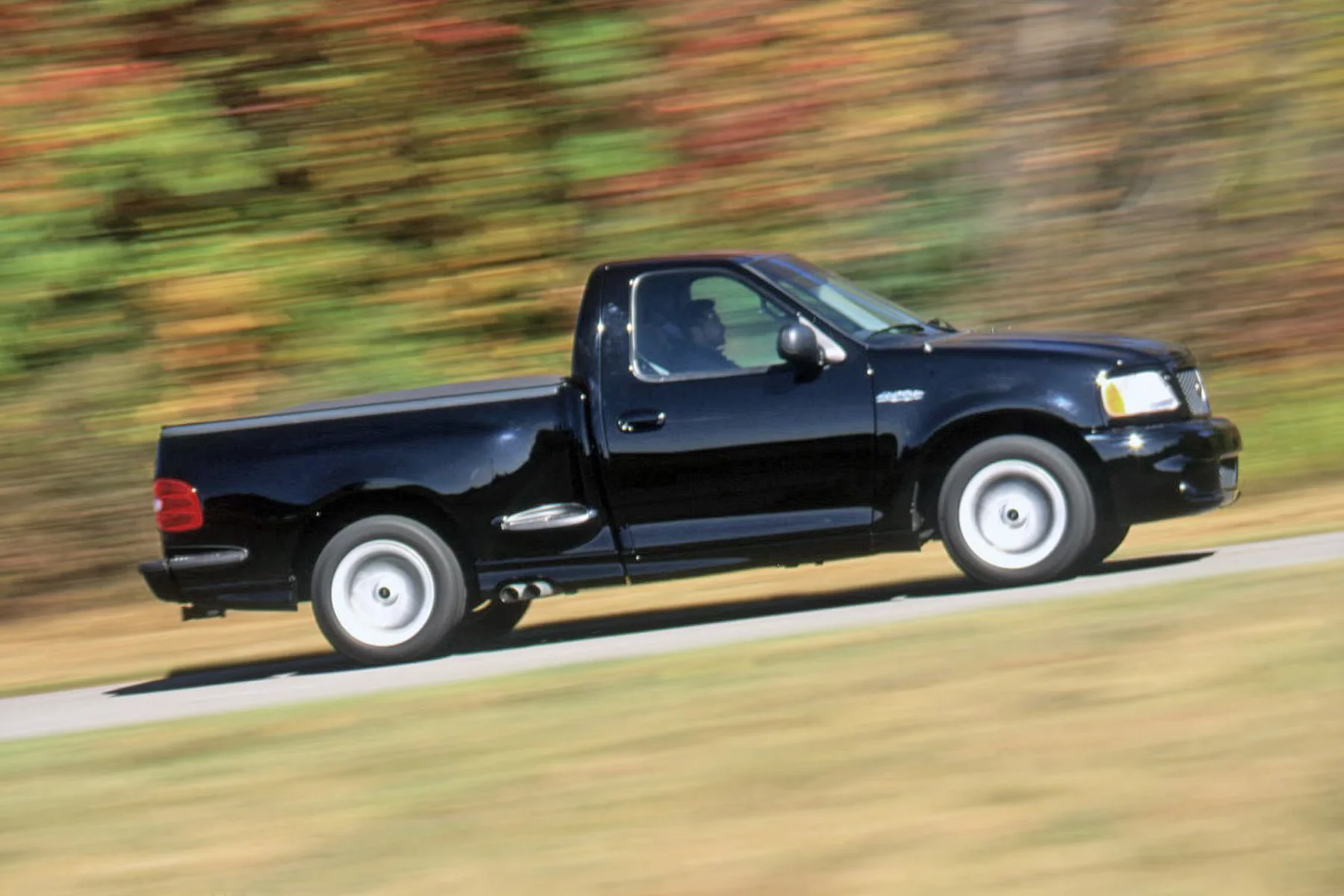
The second-generation Lightning (1999-2004) is the important one. Eaton supercharger on a 5.4 Triton, 360 horsepower at launch and 380 from 2001, a flareside bed, and enough stability to hold a top speed just under 150 mph. It briefly owned the production-pickup record. More usefully, it made wanting a fast street truck a normal thing rather than a niche one.
The big-block detour
Before either Lightning, Chevrolet dropped a 7.4-liter big block into a C1500 shortbed and called it the 454 SS. Onyx black, red interior, around 230 horsepower at launch with a little more later, and a three-speed automatic doing it no favors at all.
By any stopwatch it is slow. By ear it's still one of the best things GM ever sold to the public. Some of the appeal was never going to show up in a timing beam.
The value entries
Dodge's Dakota R/T stuffed a 5.9-liter Magnum V8 into a mid-size body: about 250 horsepower, rear drive only, no all-wheel-drive hardware waiting to eat your savings, and a curb weight well under the full-size crowd. It has always been the cheapest ticket into this club and it still is, mostly because the interiors dissolved and nobody kept them clean.
Chevrolet's Silverado SS covers the same idea on the full-size side. The LQ9 6.0-liter makes roughly 345 horsepower, all-wheel drive early and rear-drive later, and every consumable on it is a shelf item at any parts counter in the country. That last part matters more than the spec sheet.
The one that stopped making sense
The Ram SRT-10 put the Viper's 8.3-liter V10 in a pickup bed frame. Five hundred horsepower, a six-speed manual in the regular cab, a wing on the tailgate, and a top speed a little over 150 that took the production-truck record off Ford.
It is the least practical vehicle here by a wide margin. Fuel economy is a punchline, the clutch is heavy in traffic, and the regular cab rides like a shopping cart with a hangover. It is also the only one on this list that still feels genuinely violent by modern standards, and that counts for something.
How to rank them now
By what they're worth owning rather than what they're worth arguing about: Syclone first, because it changed what people thought a truck could do and the timeslips back it up. Gen 2 Lightning second, because it's the most usable fast truck ever built and prices haven't gone completely stupid. SRT-10 third, on spectacle alone.
Then the 454 SS for the noise, the Typhoon for the daily-driver case, the Silverado SS for parts availability, the Dakota R/T for the budget, and the gen 1 Lightning last, only because it asks you to appreciate chassis tuning you can't see from the driveway.
What links all of them is that none were rational. Each one existed because somebody inside a truck division wanted to find out what would happen and got a budget signed before finance asked for a business case. That approval doesn't get handed out much anymore, which is exactly why the used ones keep getting more expensive.