The number on the brochure is not the number that stops you. The number that stops you is printed on a yellow sticker inside your driver's door jamb, and it's usually about a third of what people assume it is.
Two ratings, two entirely different problems
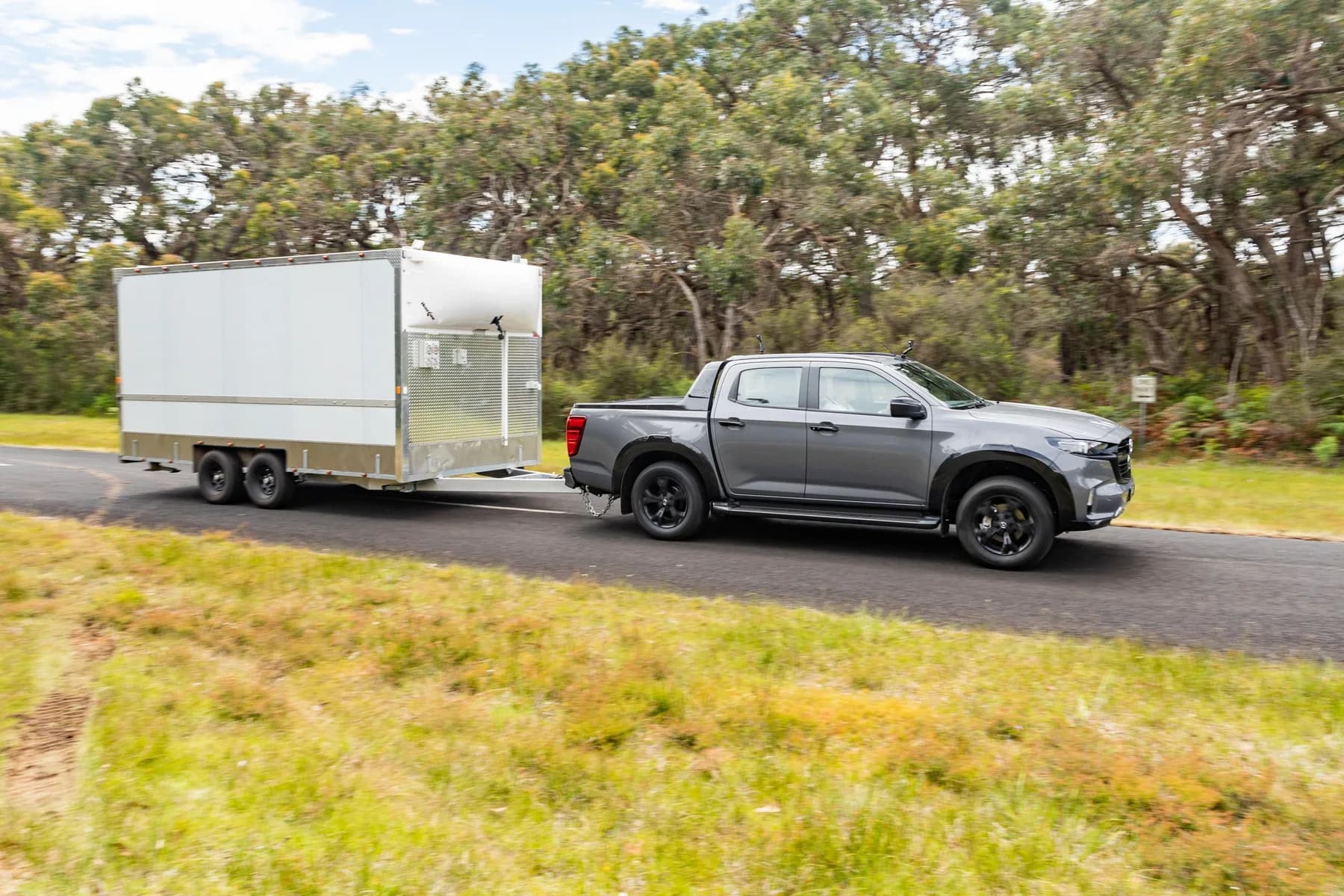
Towing capacity is the heaviest trailer the truck is engineered to pull. It's limited by engine output, cooling capacity, brakes, gearing, and frame strength.
Payload is the weight the truck itself can carry, and it's simple subtraction: GVWR minus curb weight. GVWR is the maximum the loaded truck is allowed to weigh. Everything you add counts against it — passengers, dogs, tools, the bed cover, the heavy bumper, and critically, the tongue weight of the trailer you're pulling.
There's a third rating, GCWR, that caps truck and trailer together. Almost nobody checks it, and it's the reason a truck that "tows 11,000 pounds" cannot tow 11,000 pounds while also carrying five people and a weekend's worth of gear.
Where the tongue weight actually lands
A conventional bumper-pull trailer puts roughly 10 to 15 percent of its weight on the ball. A fifth wheel or gooseneck drops 15 to 25 percent straight into the bed, right over the rear axle.
That load comes out of payload, not out of your tow rating. Run the math on a normal family setup:
- 7,000 lb travel trailer at 13 percent tongue weight: about 910 lbs
- Weight-distributing hitch head and bars: 80-100 lbs
- Four people: 600 lbs
- Cooler, generator, firewood, recovery gear: 300 lbs
That's roughly 1,900 pounds before anybody fills a jerry can. A crew cab 4x4 half-ton with leather and a sunroof frequently carries a payload rating somewhere between 1,400 and 1,700 pounds. You're over, and you were over before the trailer left the driveway.
Why the brochure figure is fiction for your specific truck
Maximum tow ratings get published for the configuration that tows best: regular cab, two-wheel drive, tow package, the shortest available axle ratio, one 150-pound driver, and no options. Order a crew cab with four-wheel drive and every comfort box ticked and you add several hundred pounds of curb weight, which comes directly out of payload while the tow figure barely moves.
Since the industry adopted the SAE J2807 test standard, tow ratings are at least comparable brand to brand. Payload never needed a standard because it's arithmetic, and the sticker in your door already did it for your truck with your options, as it left the factory. If a previous owner bolted on running boards, a steel bumper, and a spray-in liner, subtract again.
What actually fails when you're over
Exceeding payload rarely produces anything dramatic. It produces something slow and boring instead:
- Rear axle rating. The RGAWR is on the same sticker and it's the first thing a heavy tongue exceeds.
- Tires. Load range and the placard pressures are matched to that axle rating. Overloaded tires run hot and let go on the interstate in July.
- Brakes. Trailer brakes stop being optional a few thousand pounds in, and a controller costs less than a bumper.
- Steering feel. When the rear squats the front unloads, the steering goes light, and the truck starts reacting to the trailer instead of the other way around. That's the sensation people describe as being pushed around.
Airbags and helper springs fix the squat. They do not raise your payload or your axle rating by a single pound. They're a ride-quality product that gets sold as a capacity product.
How to plan a tow with real numbers
Weigh the truck loaded the way you actually tow it. A CAT scale at a truck stop costs about as much as lunch. Then weigh the trailer. Now you have facts instead of marketing.
Match the truck to the tongue weight rather than the trailer weight. If you're routinely over on a half-ton, the answer is a three-quarter-ton, and going from 1,600 pounds of payload to 3,000-plus changes more about your life than any engine upgrade will.
Use tow/haul mode too. It isn't decorative. It raises shift points, cuts hunting between gears, and holds a lower gear downhill so engine braking does work your brake pads shouldn't have to.
Here's the honest version: almost nobody tows their maximum, and an enormous number of people exceed their payload every single trip. Read the yellow sticker before you buy the trailer, not after you've already committed to it.