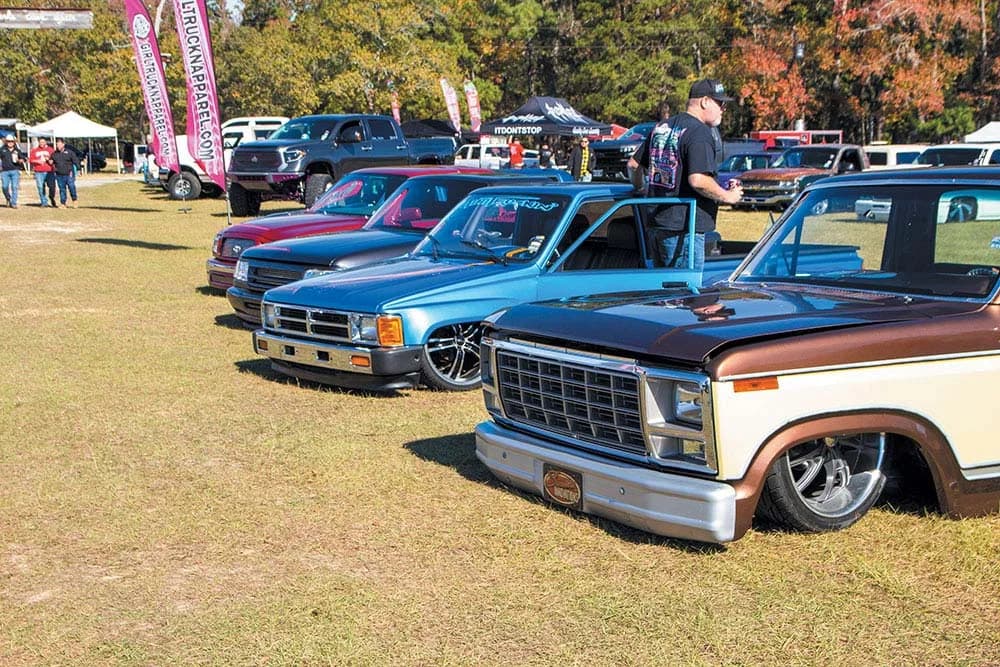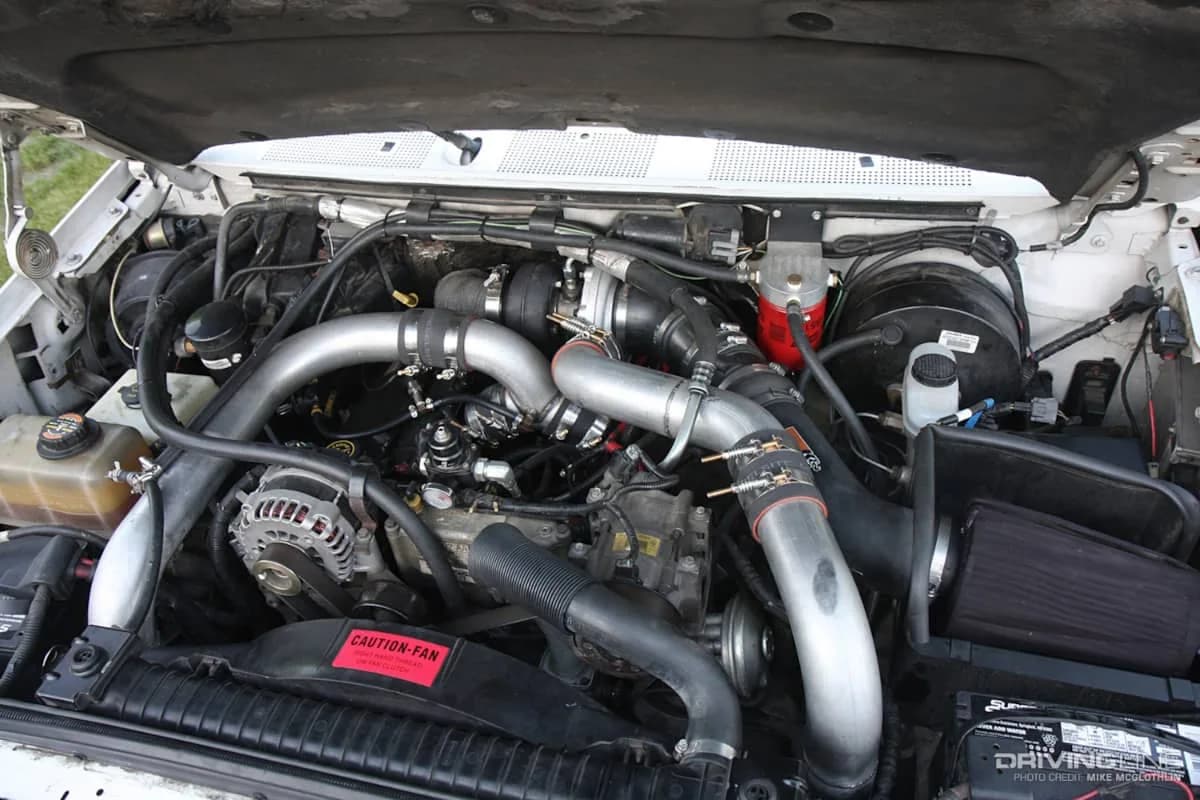
Lowering a truck is easy. Lowering a truck without wrecking the ride, the driveline, and your rear tires takes about four more parts than most people budget for. The difference between a good drop and a bad one is almost never the springs.
Front and rear are two separate projects
A pickup carries a wildly uneven weight distribution and uses different suspension types at each end, so nobody sells you one kit that solves both properly. Front is independent, rear is a solid axle on leaf springs, and they lower by entirely different mechanisms.
Getting them to drop by the same amount is the actual job. A truck that's two inches down in front and five in the rear looks like it's kneeling, and it drives that way too.
The front: spindles, coils, and the torsion bar trap
Drop spindles are the correct answer for one to three inches. They relocate the wheel hub upward on the spindle casting, which lowers the body without changing spring rate, shock travel, or suspension geometry meaningfully. Everything keeps working. They cost more than the alternatives because they're worth more.
Lowering coils replace the spring with a shorter one. Fine in moderation. Cutting stock coils is the free version and it stiffens the spring while removing travel, which is exactly the wrong trade.
Torsion bar adjustment on GM independent-front trucks is where people go wrong. Backing off the torsion keys does lower the front, and it does it by consuming droop travel. Go far enough and the suspension is sitting on the bump stops at rest, the ride goes to concrete, and the alignment can't be brought back into spec. Drop keys or spindles solve it correctly.
The rear: shackles, flip kits, and the notch
Lowering shackles and hangers get you one to two inches by shortening the effective mounting geometry. Cheap, reversible, mild.
Removing the factory lift blocks between axle and spring is free and typically nets an inch or two on trucks that have them.
A flip kit moves the axle from under the leaf spring to over it. That's the big one, generally five to six inches, and it's the standard move for a proper street truck stance.
Once the axle lives above the springs, it needs somewhere to go on compression, and that somewhere is currently occupied by your frame rail. A C-notch cuts a section of the frame and welds in a reinforced arch so the axle can travel without hammering the frame. Skipping the notch means every driveway is a collision.
The part everybody skips: shock length
This is the single most common failure in lowered trucks. You've reduced ride height by five inches, which means the shock now operates in the top five inches of its stroke. A stock-length shock in that position becomes the bump stop, and it will blow out, usually within a few months.
Buy shocks specified for your drop height. It's not an upgrade, it's a requirement, and it's the reason a well-built lowered truck can ride better than a stock one while a badly built one beats you to death.
Driveline angles and the vibration you will chase
Lowering the body changes the angle between the transmission output and the pinion. Get it wrong and you get a vibration that gets worse with speed and that no amount of tire balancing fixes.
The rules that matter: the transmission output shaft and the pinion should stay roughly parallel, and the u-joints at each end need equal and opposite working angles so they cancel each other out. Shims between the spring and the perch, or a rotated perch on a welded setup, are how you correct it. On a big drop you may need a carrier bearing spacer as well.
Also check brake line length, e-brake cable routing, exhaust clearance over the axle, and bump stop height before you call it finished.
Air versus static
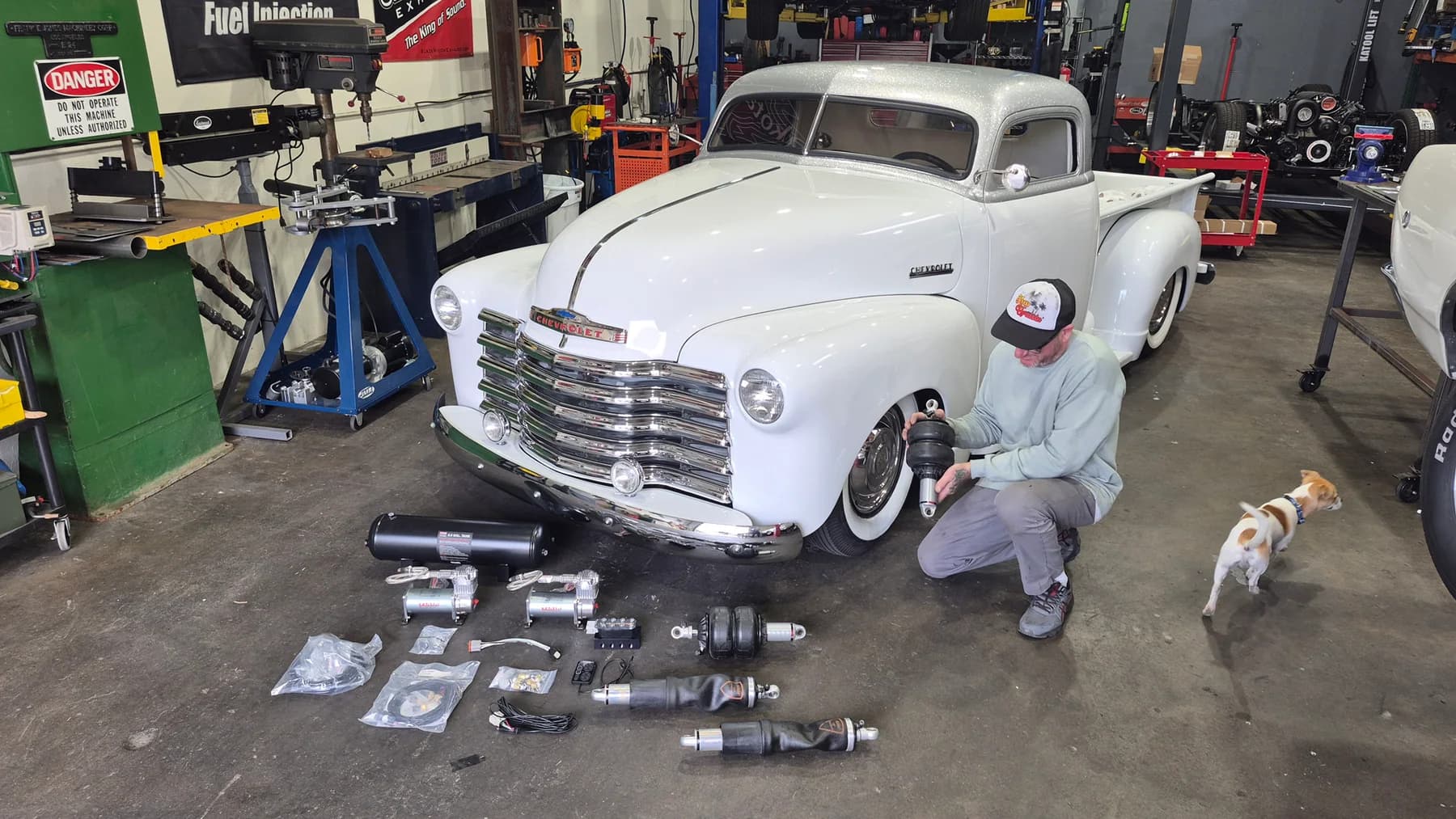
Bags aren't cheating and they aren't a shortcut. A proper air setup replaces the springs with bags, usually adds a four-link or parallel-link rear to control axle location, and requires a compressor, tank, valves, and lines that all need to live somewhere dry.
The advantage is real: adjustable ride height, a genuinely good ride when aired up, and the ability to lay a truck on the ground in a parking lot and still drive it home over speed bumps. The cost is complexity and money. A decent bagged rear with a four-link, done properly with welding you'd trust, runs several thousand dollars in parts alone.
Static is cheaper, simpler, and never leaves you stranded because a fitting let go on the interstate. It also asks you to negotiate with every driveway in your city for the rest of the truck's life.
Pick based on where you park, not on what looks best in photos.