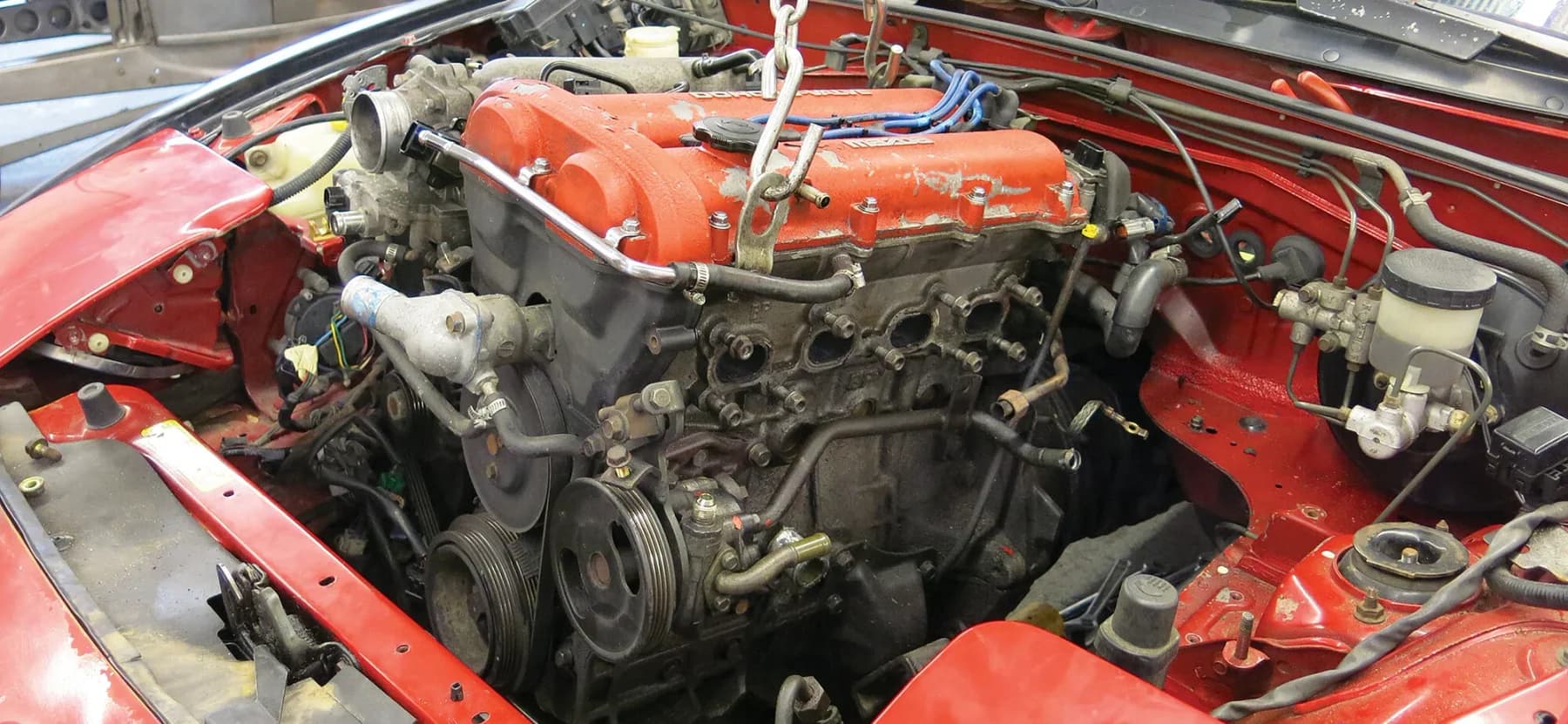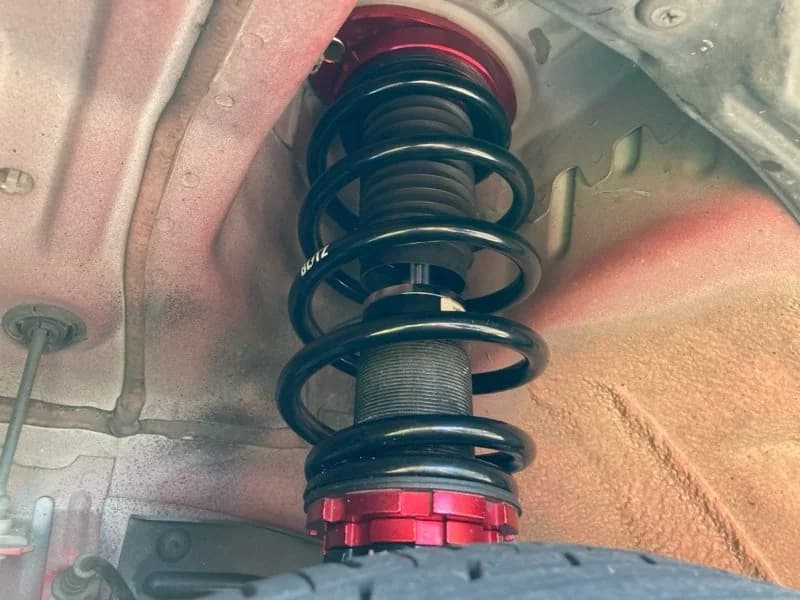
The arch gap is only one part of a suspension setup. On a G82, a Skyline or a freshly finished drift car, a good-looking ride height still has to leave the tires, body and suspension enough room to move. The useful question is what happens after the photograph, when the car meets a ramp, a compression or a broken section of road.
Give the parts their own jobs
A spring develops force as it is compressed or extended. A damper resists suspension movement and dissipates energy. Their behavior works together, but changing one does not reproduce every effect of changing the other.
There is no single spring rate that makes every car handle well. Vehicle load, suspension geometry, available travel, tire choice and intended use all belong in the selection. Compare complete applications rather than choosing the largest rate in a catalog.
Read what the adjuster actually changes
An adjustment knob needs an explanation. Some designs adjust rebound, some compression, and some affect both. The number of positions does not tell you the adjustment range or whether it suits your car.
BILSTEIN describes a design that adjusts rebound and compression together, with defined damper characteristics underneath the adjustment. That is a useful example of why the product documentation matters: it does not support assuming that every coilover knob works the same way. BILSTEIN damping adjustment.
Ask the installer to record the initial settings and the reference used to count them. “Twelve clicks” is incomplete without the manufacturer's counting direction and the exact damper. Use the supplied setup instructions and adjust only within their specified range.
Keep travel in the plan
Before choosing ride height, ask how the kit achieves its adjustment and what usable travel remains. Look at tire clearance, brake hoses, bodywork, suspension joints and the behavior of the bump stops. A tidy static gap cannot answer those questions on its own.
Öhlins' automotive Road & Track manual distinguishes spring preload from ride-height adjustment on length-adjustable designs. Follow the instructions for the actual kit; the relationship depends on its construction. Öhlins Road & Track owner's manual.
Buy around a specific brief
Tell the supplier about the road surfaces, passengers, wheel-and-tire package and events the car will see. Confirm the application, supported adjustment range, installation requirements and service options. Include any factory electronic damping system in the compatibility discussion.
Our preference is a documented package with a clear setup baseline and someone available to support it. A useful quote should include the work around the hardware: installation, clearance checks, alignment and any follow-up the installer recommends.
Change one thing you can assess
Record the setup before making changes. Give feedback in concrete terms: where the car bottoms, when a tire touches, or which road input produces the complaint. Have faults inspected before trying to tune them out with an adjuster.
The aim is a car whose appearance and behavior belong together. Settle the fundamentals, keep the records, and let the finished stance reflect a setup that works for its owner.
TUNERS technical overview; exact settings and installation procedures belong to the vehicle and suspension manufacturer's documentation.
Updated September 5, 2026.