Coilovers are the most commonly bought and most commonly regretted purchase in this hobby. The regret follows a script: a set arrives, goes on, the car looks right and drives worse, and the owner spends a year telling themselves it is fine.
Here is how to spend once.
First, decide what the car is for
This question determines everything and almost nobody answers it honestly before opening a browser tab.
- Street car you enjoy. You want compliance, sane spring rates, and a ride height that does not eat your travel.
- Street car that sees occasional track days. You want adjustable damping and a manufacturer that publishes spring rates for a reason.
- Dedicated track car. You want a rebuildable, revalvable damper and a spring rate chosen around your tire and your aero, not off a shelf.
- Stance. A different hobby with different rules. Honest people in that scene will tell you it is a compromise, and there is nothing wrong with that as long as nobody pretends it is a handling upgrade.
The budget tiers, honestly
Prices move constantly and vary by market, so treat these as rough bands rather than quotes.
Bottom tier, a few hundred dollars a set. Generic dampers, high spring rates, no published valving. They will lower the car. They will also ride badly, fade when hot, and weep oil inside a couple of years. If your budget only reaches here, buy quality lowering springs on good dampers instead and be happier.
Entry tier, roughly the mid hundreds into the low four figures. Real companies, published rates, a monotube damper, usually single-adjustable. This is the first level where spring and damper were designed as a system, and a good set here beats a bad set costing considerably more.
Mid tier, roughly the low to mid four figures. Rebuildable and revalvable, often with shortened bodies to preserve travel, and available in a range of spring rates. This is the tier where you can call the manufacturer and get a real answer about your valving.
Top tier. Custom valved for your car, your corner weights, your tire and your use case. Double adjustable. Worth it once you have run out of driver, and not one minute earlier.
What to check before you buy
- Are the spring rates published? A company that will not tell you what rate you are buying has told you what kind of company it is.
- Is the damper rebuildable? A rebuildable damper is a purchase. A sealed one is a rental with a two-year term.
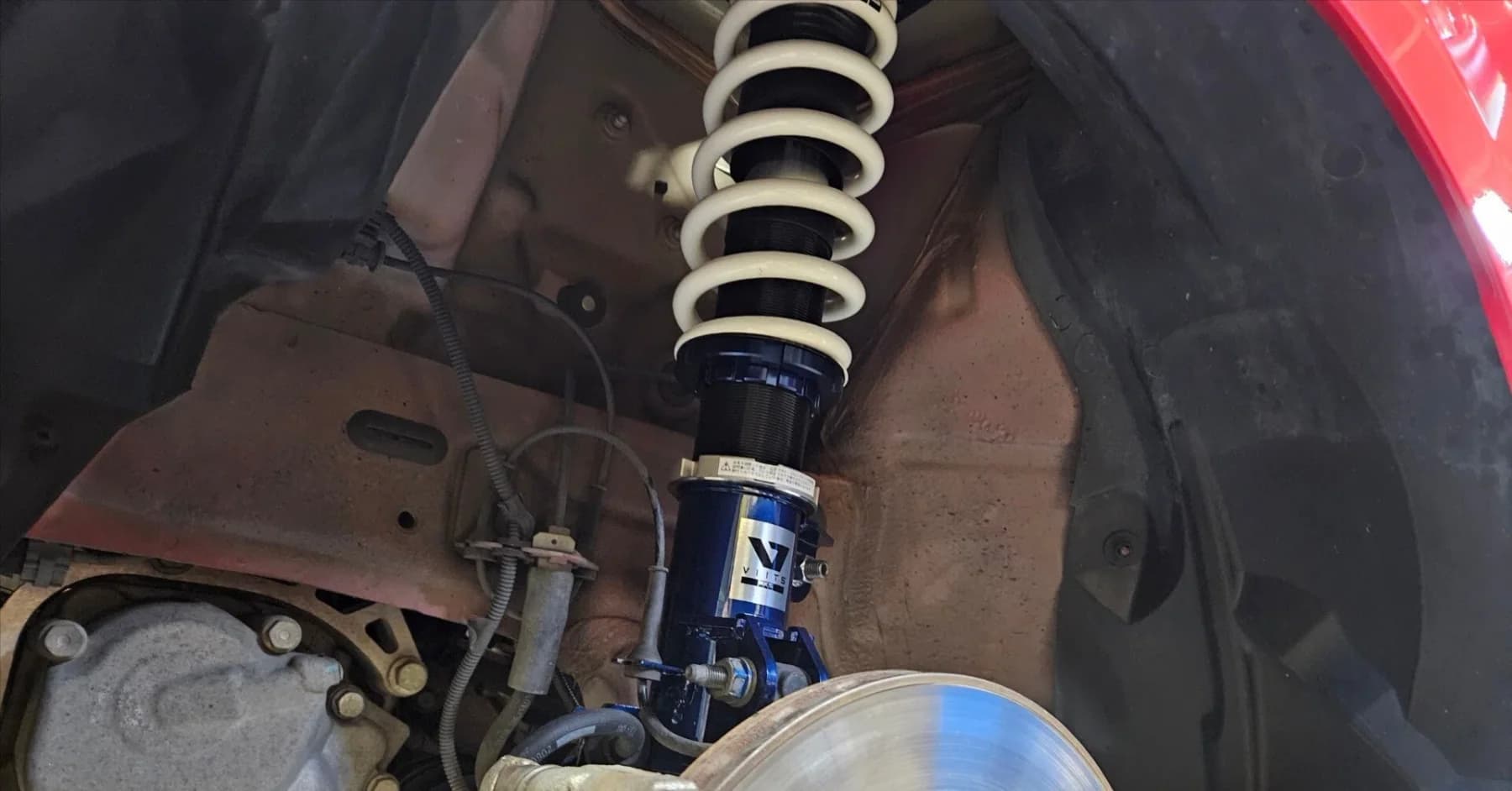
- Is ride height independent of preload? Kits that lower the car by winding the spring perch down cost you preload and travel together. Kits with a threaded lower mount let you set height and preload separately.
- How much travel remains at your target height? Ask about shortened shock bodies and bump stop length. After valving, this is the biggest single factor in how the car rides.
- What do the top mounts do? Camber plates are excellent on a track car and a source of noise on a street car. Rubber versus spherical is a genuine decision, not a detail.
- Does support exist for your platform? Spring options, spare parts, and a rebuild service that operates in your country.
Used coilovers: a specific warning
A used set has two possible outcomes. Either you found a lightly used set from someone who changed direction, or you bought tired dampers that need a rebuild costing more than you saved.
If you buy used, buy rebuildable brands only and price the rebuild into the purchase from the start. Look for oil weeping at the shaft seal, pitting on the shaft, and seized perch threads. Ask how old they are and how many miles they have covered. A vague answer is the answer.
Budget for the same-day extras
An alignment is non-negotiable. Ride height changes camber and toe, and driving on unknown geometry costs you a set of tires to learn nothing.
If your kit has separate perch and height adjustment, add a corner balance for anything you drive hard. Add new top mounts or bearings if the kit reuses factory ones, because the old ones are the same age as the car.
The one-line version
Buy the best damper you can afford at a spring rate you can live with, from a company willing to tell you exactly what you bought. Everything else, stance included, is downstream of that decision.