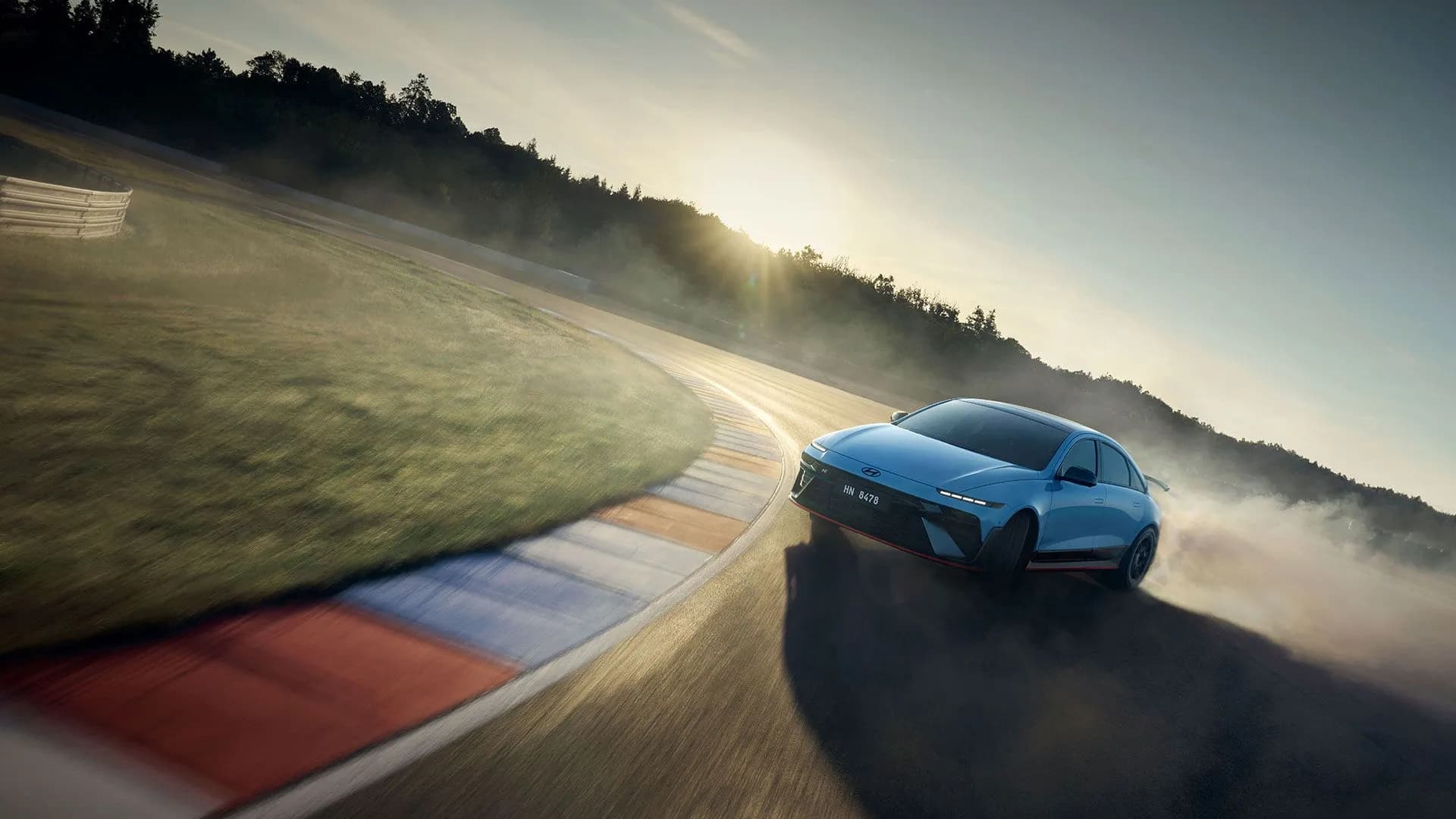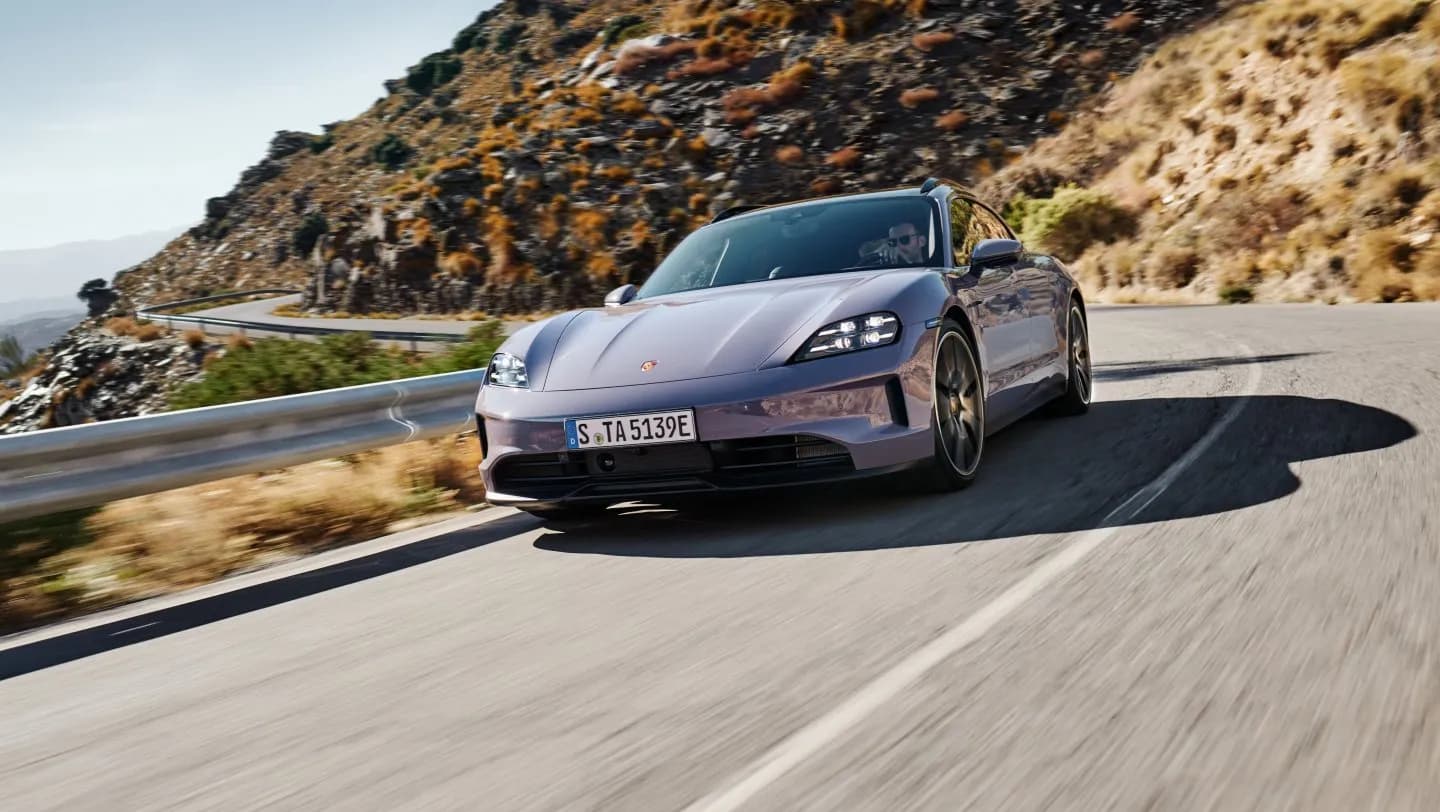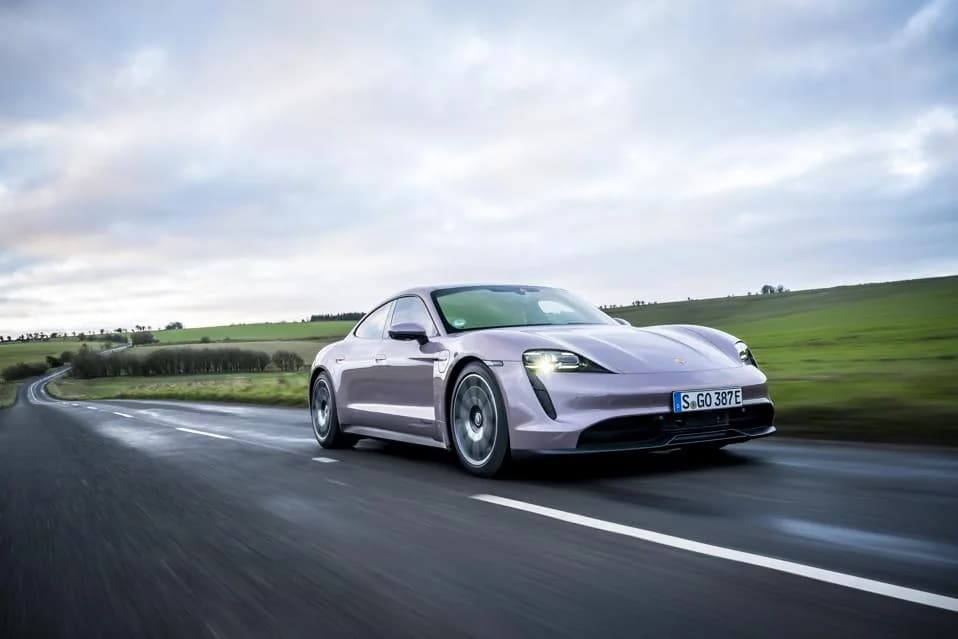
In June 2026, Porsche announced that the 2027 Taycan could be ordered with E-Shift, a system that fakes eight gears with paddles, shift shock and a virtual rev limiter. A month later, Hyundai cut $6,300 from the car that had already been doing that, in a crossover shape, for about a third of the price of a Taycan Turbo.
The 2026 Ioniq 5 N now starts at $59,900 plus a $1,600 destination charge, or $61,500 delivered. For that money the question is less whether it is quick than whether its odd mix of real hardware and theater makes sense to you.
The numbers, and when you actually get them
The two motors make 601 hp in normal running. Press the N Grin Boost button and output rises to 641 hp and 568 lb-ft for 10 seconds. Hyundai quotes 0-60 mph in 3.25 seconds and a 162 mph top speed, and the 60 mph figure applies only with the boost engaged.
The 40 hp gain is about 7 percent, so N Grin Boost is not a second personality. It is a timed reserve for launches, passes and the longest straight on a circuit. Ten seconds covers those, and the base 601 hp is the number that defines the car the rest of the time.
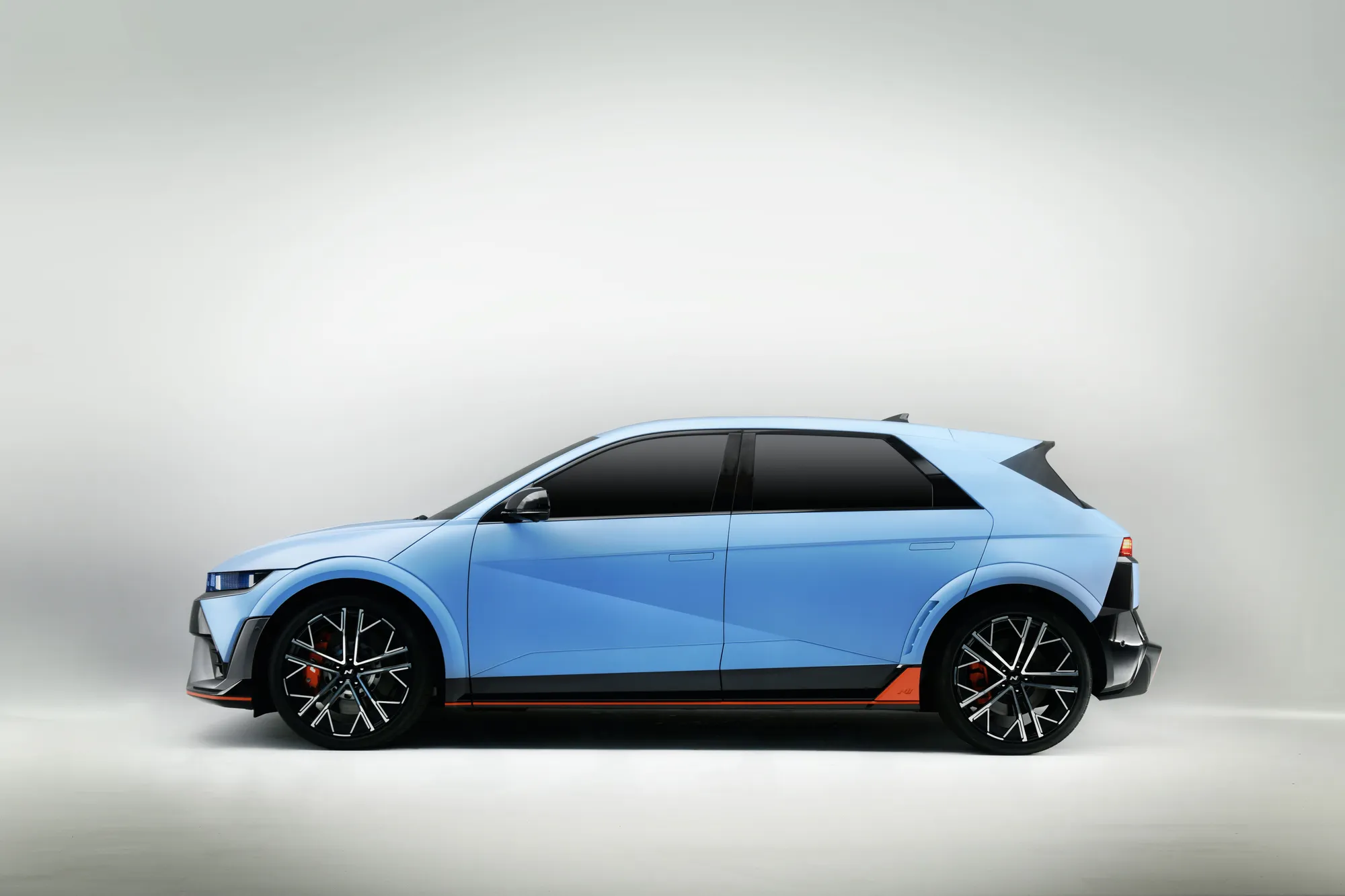
The hardware beneath those figures explains why the car has a following among people who usually ignore crossovers. The motors spin to 21,000 rpm, a rear electronic limited-slip differential is standard and the front-to-rear torque split adjusts across 11 levels. N Launch Control has three traction settings. Forged 21-inch wheels carry 275/35R21 Pirelli P Zero tires, and the body sits 20 mm lower and 50 mm wider at the bottom than a regular Ioniq 5.
What N e-Shift and N Active Sound+ really do
Nothing shifts in an Ioniq 5 N. N e-Shift uses the paddles to imitate an eight-speed dual-clutch gearbox by changing motor torque, including the small jolt you would feel between gears in a combustion N car. N Active Sound+ supplies the soundtrack through 10 speakers, eight inside and two outside, with three themes:
- Ignition: based on the 2.0-liter turbo i30 N and Kona N
- Evolution: inspired by the RN22e concept
- Supersonic: modeled on a twin-jet aircraft, with volume that changes through corners
It is easy to dismiss all of this as a toy, and the sound is one. The shift simulation has a better argument, because it gives the driver something electric cars usually take away: a torque curve with landmarks. A driver can brake for a corner and pick a "gear" by feel instead of working from one long, identical surge. It adds cues rather than speed, and Porsche building the same idea into the Taycan suggests the concept is more than a gimmick.
The real engineering is heat management
Hyundai's stated view is that fast EVs are harder to cool than combustion cars, and battery temperature shaped this one's development. Its answer starts with hardware. The N gets a larger cooling area, separate radiators for battery and motor, an enhanced motor oil cooler and a battery chiller. Hyundai ran the car through repeated 10,000-kilometer durability tests on the Nordschleife during development.
Two software controls let the driver choose how to spend that thermal budget:
- N Battery Preconditioning has two targets. Drag mode readies the cells for an immediate burst of maximum power. Track mode takes them to the lowest temperature it can, so the car can run more laps.
- N Race decides how the power gets used. Sprint is the default and gives full output on demand. Endurance limits peak power and sudden spikes, which slows heat buildup and stretches the session.
In use, that means a track day needs a plan. Drag and Sprint make sense for one big run, while Track and Endurance suit a longer session in which consistent laps matter more than the first one.
Braking is part of the same system. N Brake Regen can deliver up to 0.6 g through the motors alone, and it keeps up to 0.2 g active while ABS is working. That sends energy back to the pack and takes work away from the friction brakes, which are 400 mm discs with four-piston monobloc calipers up front and 360 mm discs at the rear. Hyundai says the lighter load extends their life compared with a combustion car's.
What it costs to live with
The 84 kWh battery gives an EPA-estimated 221 miles, which is the car's clearest drawback. That is modest for a nearly $60,000 EV, and it falls fast when the car is driven the way it invites. The offset is charging speed: on a 350 kW station, 10 to 80 percent takes about 18 minutes.
The 2026 update made that easier. A native NACS port replaces CCS and opens up Tesla Superchargers without an adapter, and Hyundai includes adapters for Level 2 and DC fast charging at other stations, plus a dual-amperage Level 1 and Level 2 charger. The other changes:
- A drift optimizer with 10 selectable stages instead of one mode
- A camera-based Forward Attention Warning
- Automatic up-and-down rear windows
- A new Performance Blue Pearl paint color
Which one to buy
There is no trim ladder to work through. The N comes one way, with no option packages, and paint is the main decision, at up to $1,000 extra depending on color.
A new 2026 is the default choice. After the price cut it undercuts the Chevrolet Blazer EV SS, its obvious American rival, and it has the better charging port for a car likely to spend time on public stations. A 2025 is worth considering only if the discount clearly covers the $6,300 gap and you accept the CCS port and the simpler drift software.
The harder question is whether you will use what you're paying for. Someone who only commutes gets a very fast crossover with short range on expensive 21-inch tires, and a Tesla Model Y Performance or a Mustang Mach-E GT makes more rational sense for that job. The N's case rests on track days, preconditioning menus and a driver who wants to work a set of paddles. If that describes you, nothing else at this price offers the same combination.