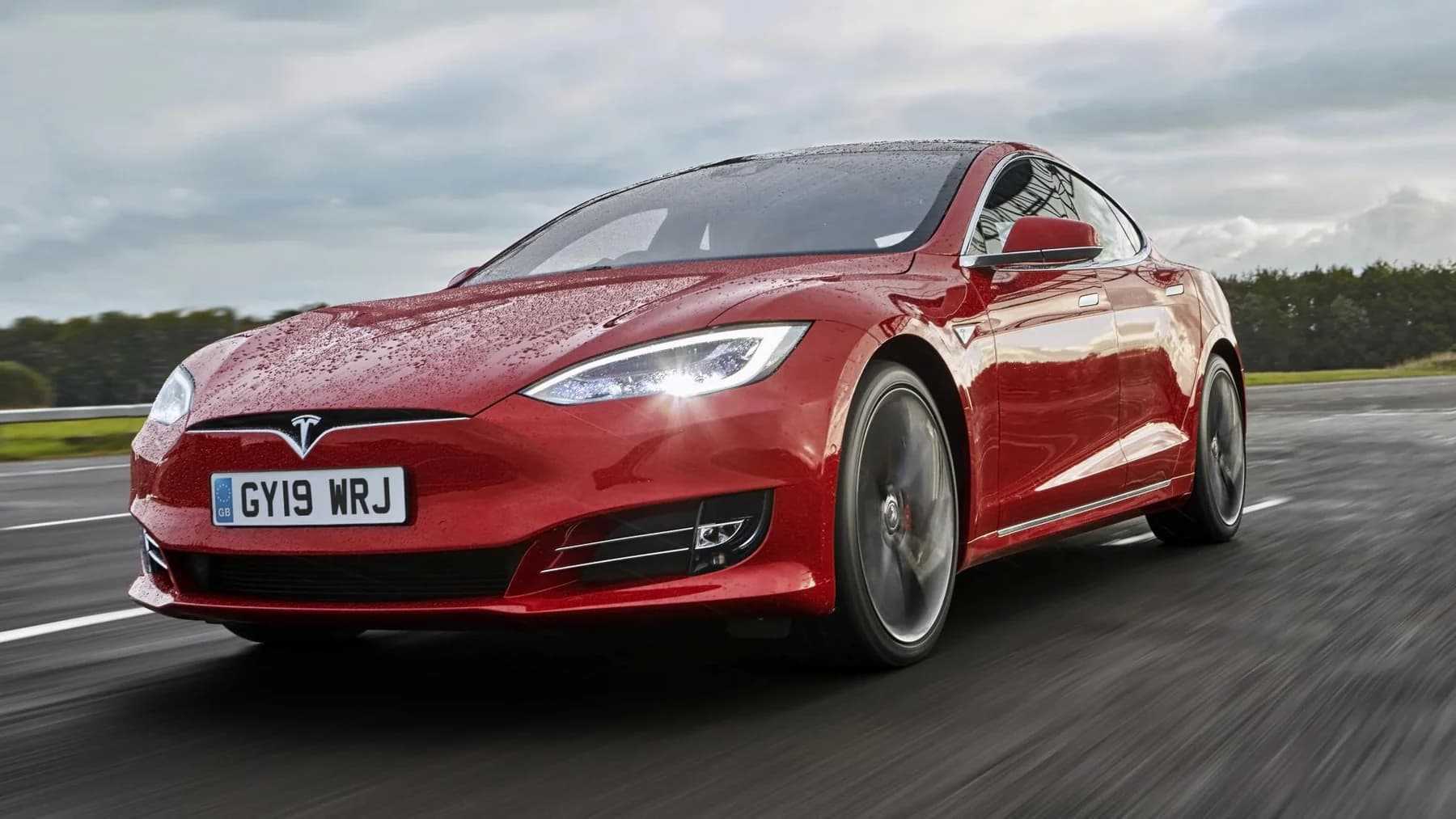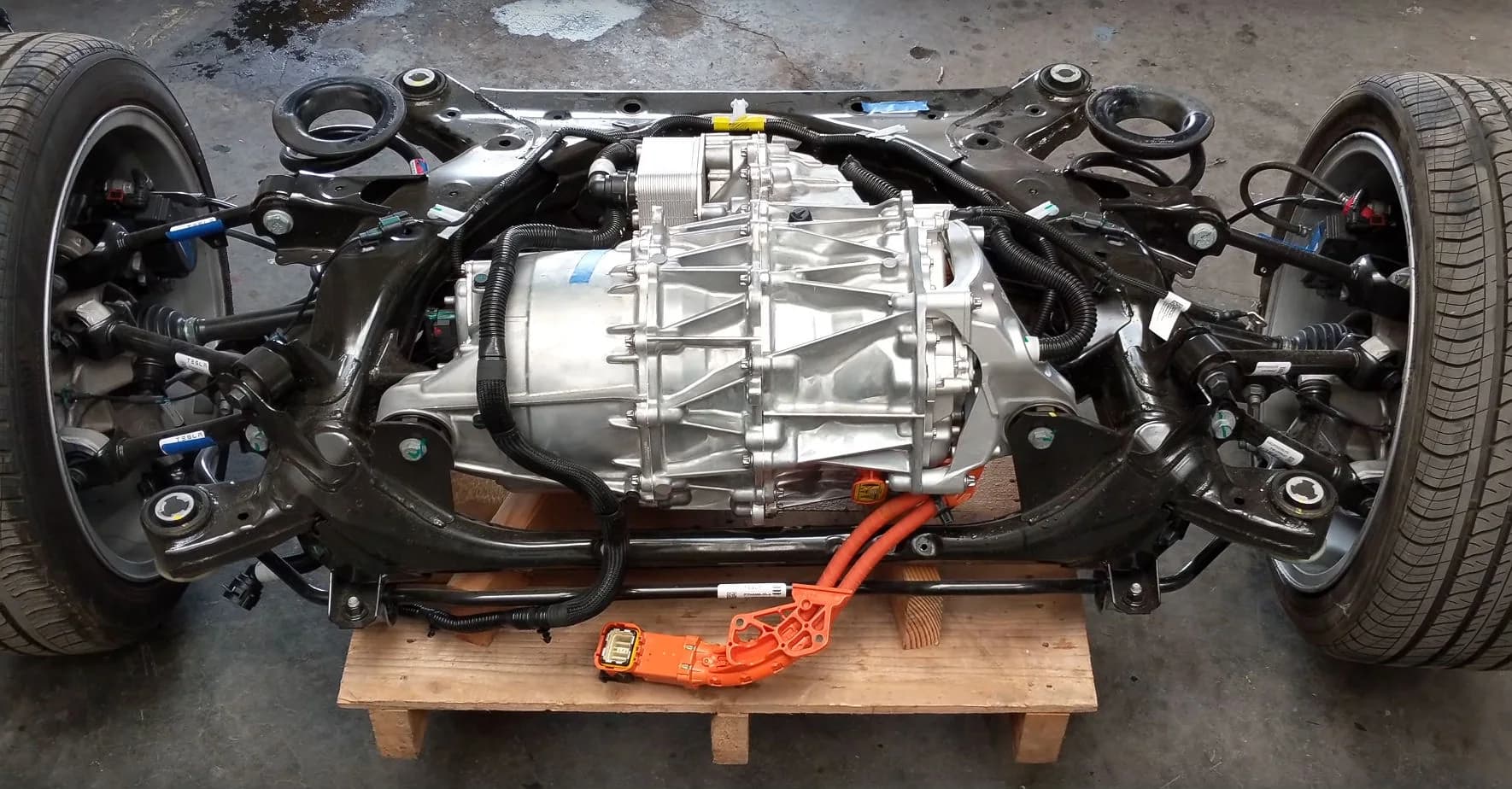
Photo: Porsche AG. A Porsche Taycan 4S Sport Turismo on the move.
Every electric car can run its drive motors as generators. Most owners meet that ability as a range feature: lift off, the car slows, and a little energy returns to the pack. Engineers building fast EVs see it as something more demanding. For them, regenerative braking is part of the brake system, with its own limits and calibration choices, and those choices shape how a car behaves at the end of a straight as much as how far it goes on a charge.
Where the energy comes from
Under regenerative braking, the car's momentum spins a motor-generator, and the electricity it produces is stored in the battery for later use. The federal fuel economy site notes that the benefit is greatest in stop-and-go traffic, where braking is frequent, and small on the highway. fueleconomy.gov on electric vehicles
Speed changes the size of the job. Porsche points out that doubling speed quadruples the energy available for recovery, because kinetic energy rises with the square of velocity. It also notes that a full stop from top speed in a fully loaded Taycan can demand more than two megawatts of braking power, far more than the motors can absorb on their own. Porsche on Taycan recuperation
That gap defines performance regen. The motors can take most routine braking, but the hardest stops still belong to the pads and rotors.
The blend you are not meant to feel
Porsche's 2022 explainer puts the Taycan's recuperation at up to 290 kW and says roughly 90 percent of everyday braking is handled electrically. The car's electronics divide each stop between the motors and the hydraulic brakes within milliseconds; the driver cannot feel the split but can watch it on the power meter. The hydraulic brakes take a larger share in extreme stops, and they also step in when the battery is full and cannot accept more charge. Porsche on Taycan recuperation
For the revised Taycan of 2024, Porsche raised maximum recuperation during deceleration from high speed to as much as 400 kW. Porsche's Taycan press kit
Porsche also made a deliberate choice about pedals. The Taycan is not designed for one-pedal driving: most recuperation happens through the brake pedal, and lifting off the accelerator produces only limited regen so the car can coast. Porsche on Taycan recuperation
One pedal, two pedals or a dial
Hyundai went the other way with the IONIQ 5 N. Its N Brake Regen system makes regeneration the primary source of braking and brings in the friction brakes only when needed. Hyundai says it can slow the car at up to 0.6 g on regen alone, keeps working during ABS activation at up to 0.2 g, and allows for left-foot braking. A separate N Pedal setting uses off-throttle deceleration to move weight onto the front tires for quicker turn-in. Hyundai's IONIQ 5 N launch release
The later IONIQ 6 N keeps the 0.6 g figure, raises regen during ABS to 0.35 g, and offers N Pedal in three levels. Hyundai Motor Group on the IONIQ 6 N
Tesla leaves the decision to the driver. According to its manual for the 2017 to 2023 Model 3, Track Mode on the Performance version lets the driver set regenerative braking anywhere from 0 to 100 percent in 5 percent steps, and Tesla recommends 100 percent to help keep the brakes from overheating. Tesla's Model 3 Track Mode manual
The common thread is heat. Every kilowatt the motors absorb is energy the friction brakes do not have to shed.
What racing does with it
Formula E shows where the idea goes when the rules allow it. The Gen3 car combines a 350 kW rear powertrain with a front unit that adds 250 kW of regeneration, for 600 kW in total. It has no rear hydraulic brakes, and the series says more than 40 percent of the energy used in a race is recovered under braking, compared with about 25 percent for the previous generation. Formula E's Gen3 facts
Road cars are heading toward tighter integration as well. BMW's Heart of Joy control unit, developed for its Neue Klasse models, manages the drivetrain, brakes, charging, recuperation and steering functions. In the Vision Driving Experience test car, which BMW says is not destined for production, the friction brakes are needed only for heavy braking such as an emergency stop. BMW on the Vision Driving Experience
Reading regen from the driver's seat
Three habits follow from all of this. First, treat regen strength as a chassis setting rather than an efficiency preference. Hyundai's N Pedal makes the connection explicit: off-throttle deceleration changes how the car pitches into a corner, so changing the level mid-session moves your reference points.
Second, know when the hand-off happens. A full battery shifts work to the friction brakes, and so does any stop harder than the motors can manage. In the N cars, that line is Hyundai's own 0.6 g figure; anything firmer is friction-brake territory.
Third, ask a better question of any performance EV. Peak regen output is only part of the answer. What matters on a fast road or a track is how predictably the car moves from motor braking to friction braking, and whether you can tell in advance when it will.