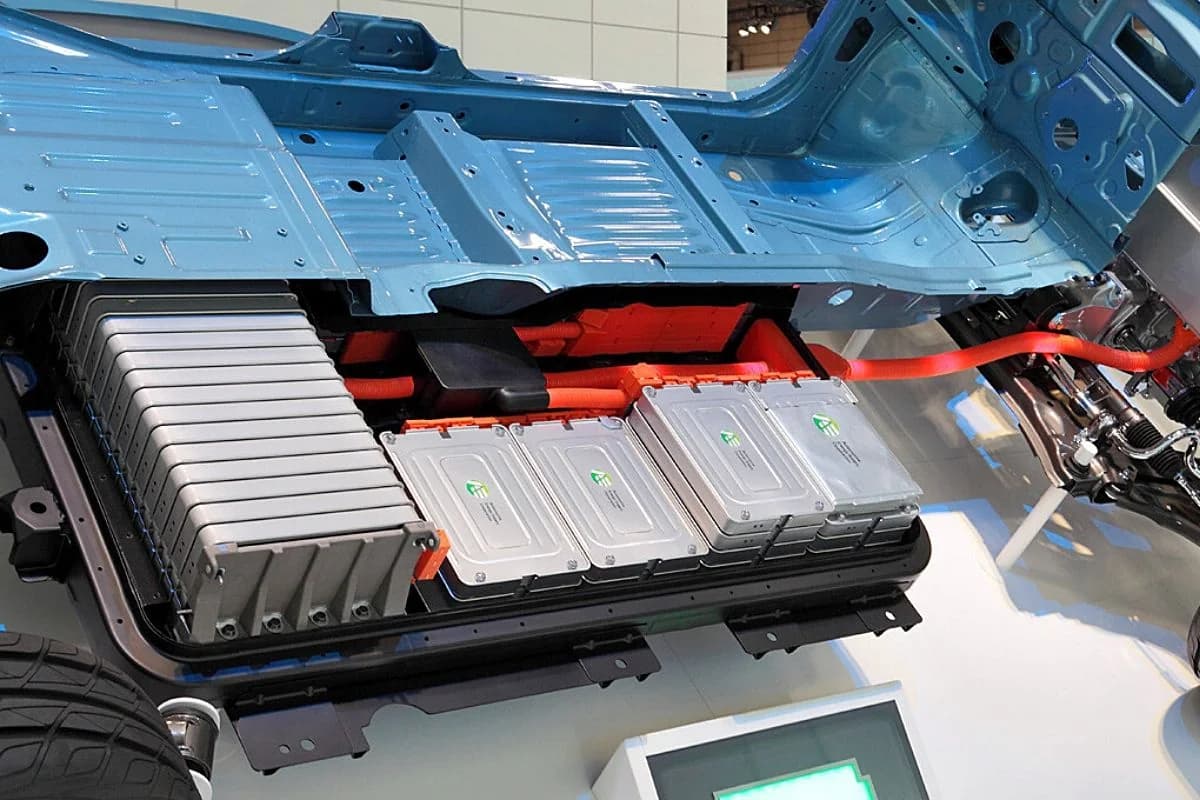
An EV's drivetrain layout tells you more about how it drives than its power figure does. Two cars making the same 500hp can behave like completely different machines depending on how many motors are making it and which axles they sit on.
One motor: the honest one
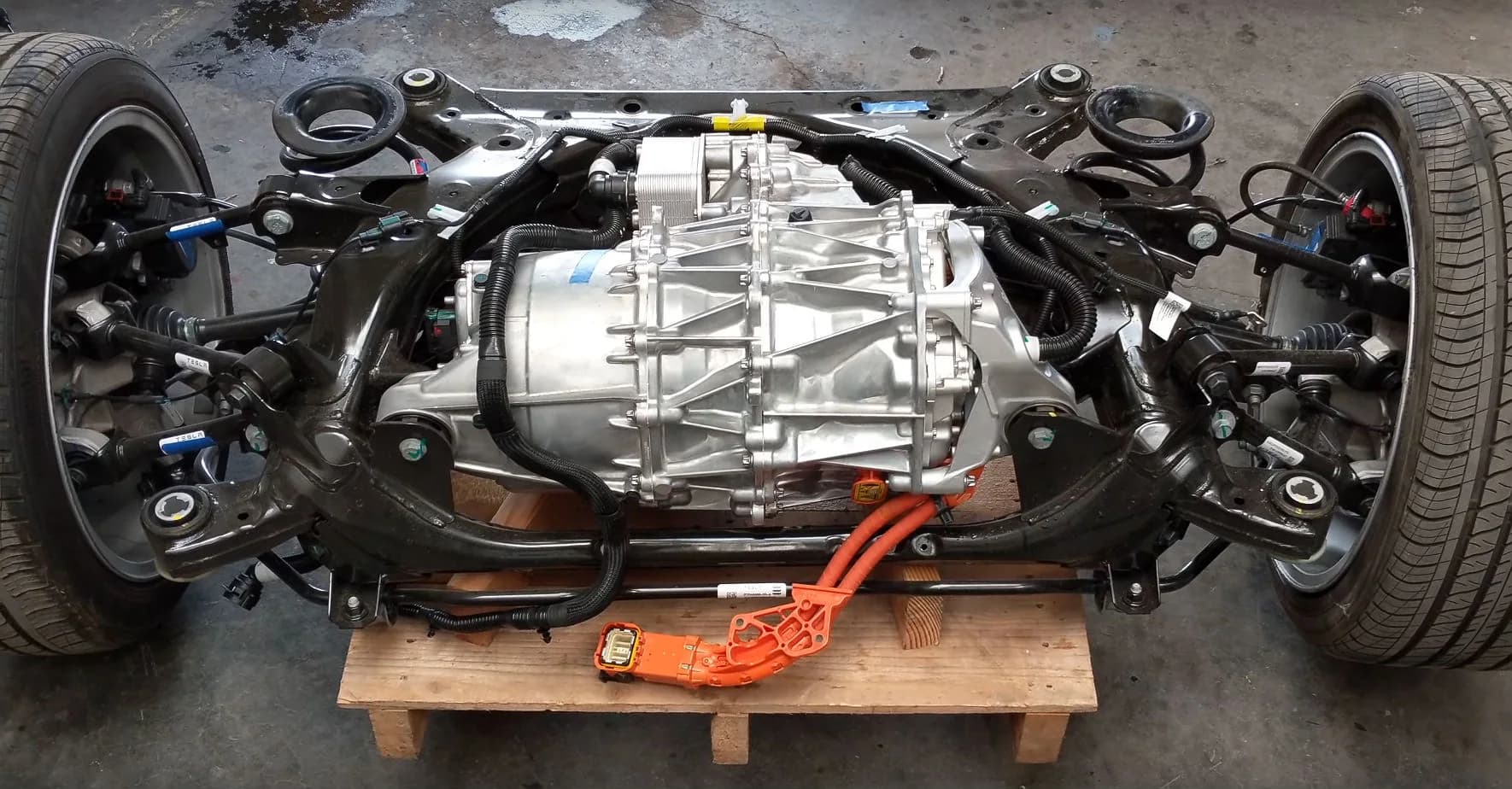
A single-motor EV is the closest thing to a traditional layout. Motor on one axle, single-speed reduction gear, open or limited-slip diff, done.
Rear-drive single motor is the enthusiast's pick and it isn't close. You get throttle-adjustable balance, less weight over the nose, and steering that isn't fighting a driven axle. A rear-drive Model 3 or a base Ioniq 5 will step out on a wet roundabout like any other rear-drive car. The difference is that torque arrives fast enough that you have to be smoother than you would be in a naturally aspirated car, not less smooth.
Front-drive single motor exists mostly in cheap hatchbacks and it drives exactly how you'd guess. Instant torque plus front wheels plus a heavy pack equals wheelspin and torque steer at speeds where a gas hatch would be perfectly composed.
Two motors: the default
One per axle. This is where nearly every performance EV lives, and it's the layout responsible for the unfair-feeling acceleration everyone talks about, because you're putting power down through four contact patches from a standstill.
The interesting detail is that the two motors usually aren't the same. Tesla's dual-motor cars pair an induction motor at the front with a permanent-magnet motor at the rear. The induction unit can spin down to near-zero drag while cruising, so the efficient magnet motor does the work and the front axle only wakes up when it's needed. Other manufacturers chase the same result with clutches or decoupling hardware.
What matters to you is the split. A dual-motor car calibrated rear-biased feels like a rear-drive car with a safety net. One calibrated to protect the driver shuffles torque forward the instant yaw exceeds what the software likes, and the car pushes. Same hardware, opposite character, and the difference is a calibration engineer's decision rather than a mechanical one.
Three and four: yaw as a product feature
Tri-motor cars run one at the front and two at the rear. Quad-motor setups put one at every corner. Now the car can genuinely torque vector: add drive to the outside wheel to help rotation, or to the inside to stabilize.
This is the real thing, not the brake-based imitation. Brake-based systems create yaw by slowing the inside wheel, which works but costs speed and heats your brakes. Motor-per-wheel systems add drive to one side instead of subtracting it from the other. It's why a quad-motor truck can spin itself in place for a manufacturer's demo video, and why a car like that can be programmed to behave like anything from a stable all-weather wagon to something that will hold a slide on command.
The catch is complexity, cost and weight. Four motors and four inverters weigh more than two, and every one of them is a thing that can fail.
The fake version, and why it still works
Most cars advertised with torque vectoring have one motor per axle and are doing brake-based vectoring or a very fast front-to-rear split. The EV6 GT and the Ioniq 5 N both work this way, and both will happily oversteer, because the software permits it rather than because each wheel is individually driven.
Don't dismiss the software. A well-calibrated axle-split system reacts in milliseconds, far quicker than any mechanical center differential, and it can change a car's entire personality with a drive mode selection. The reason so many EVs feel numb isn't that torque vectoring is fake. It's that most manufacturers tune for stability, because the average buyer is not you.
Reading the spec sheet
- Single motor, rear: best steering feel, least weight, most fun per horsepower. The enthusiast bargain nobody advertises.
- Dual motor: the all-weather default. Ask about the bias and whether there's a rear-biased mode you can actually reach.
- Tri-motor: almost always about straight-line numbers first and cornering second. Enormous, and rarely delicate.
- Quad-motor: genuine per-wheel control, mostly on trucks and SUVs where the weight penalty is already lost in the noise.
So when someone tells you their EV makes 600hp, the useful follow-up isn't how fast it is. It's where it sends the power, and who decides. That answer separates a fast appliance from a car you'd choose for a good road, and it's printed nowhere on the window sticker.