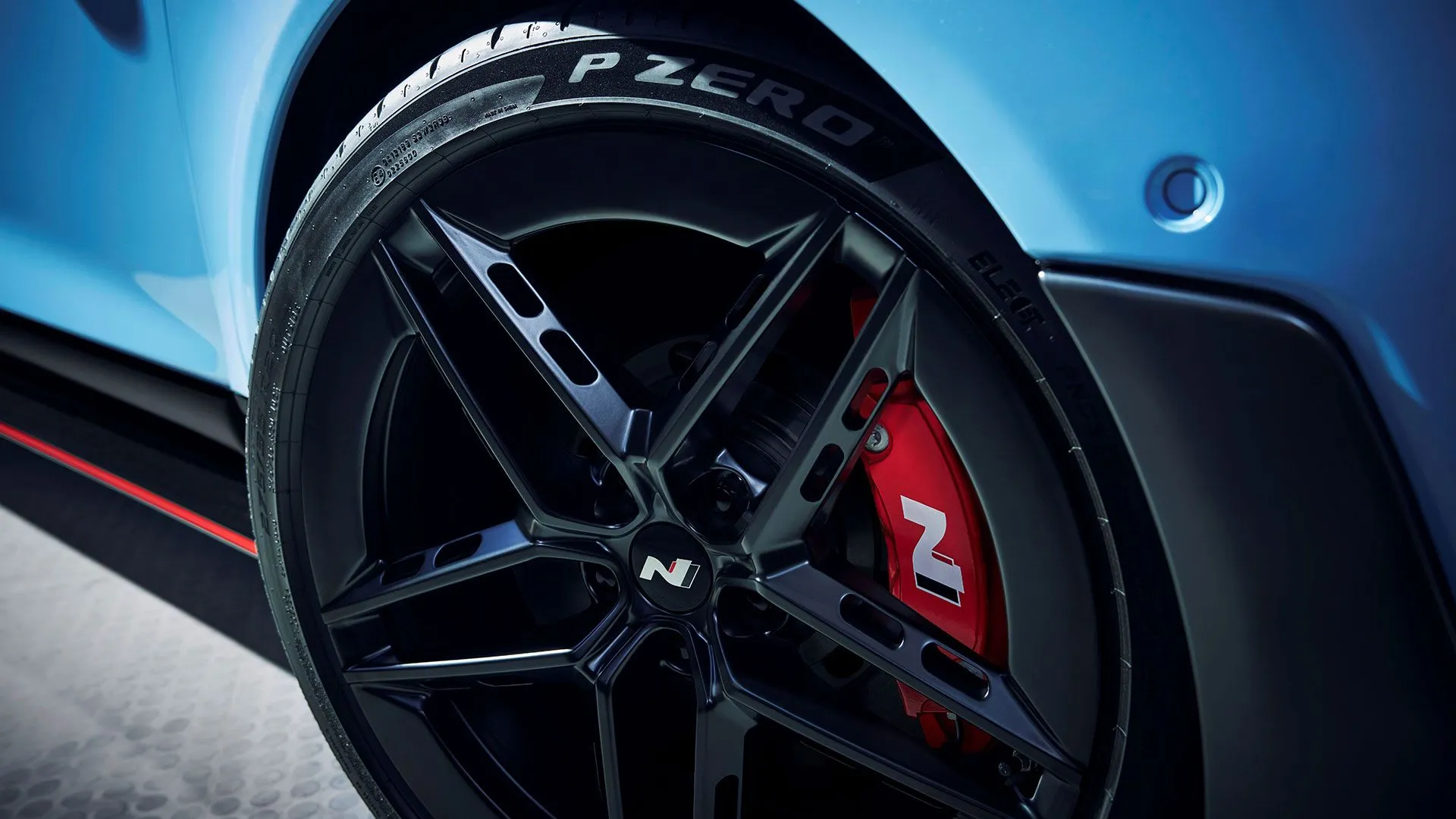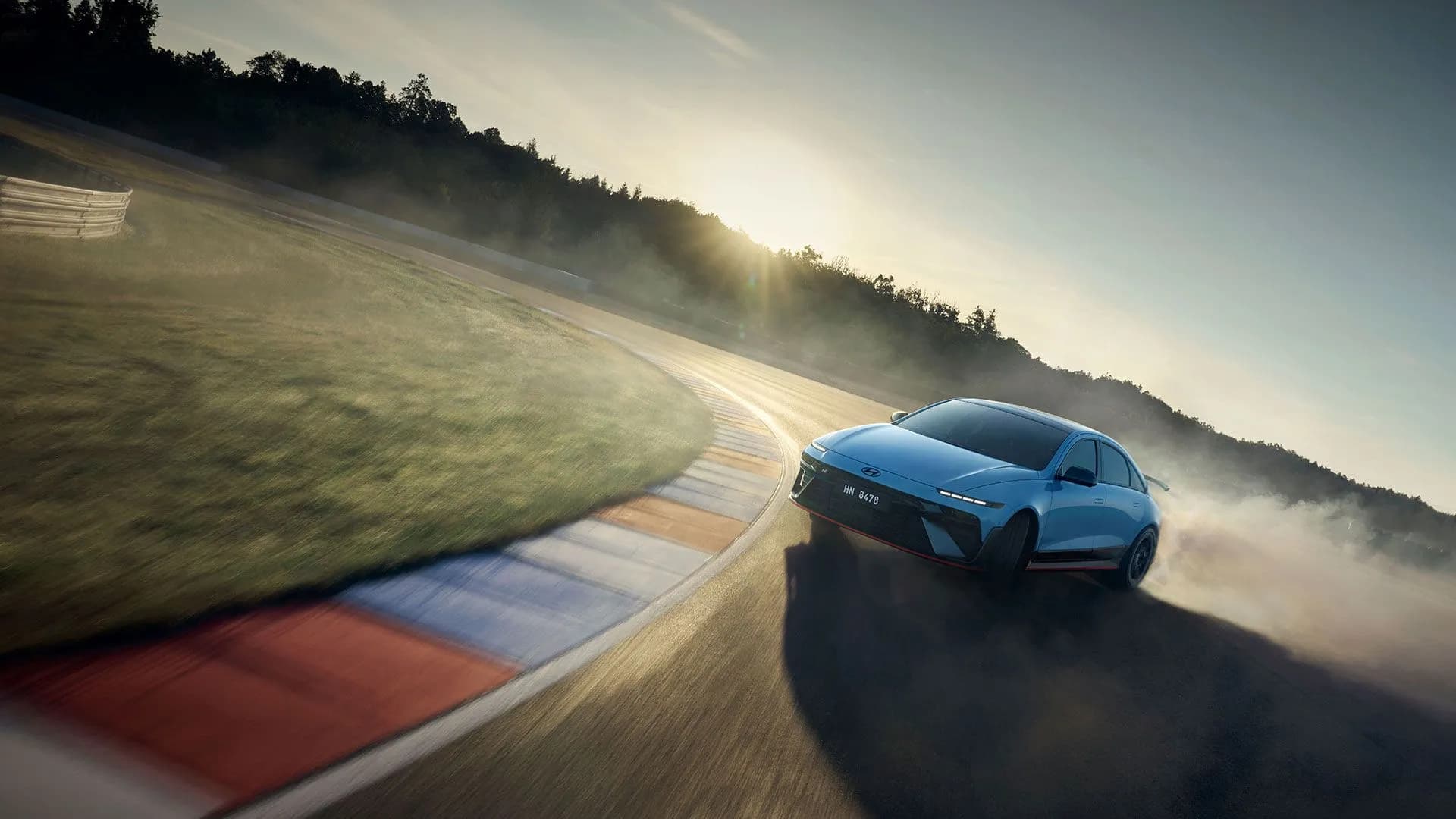
Photo: Hyundai Motor Company. The Hyundai IONIQ 6 N on the move.
A rear-drive car with a good limited-slip differential drifts because the driver makes it happen: a weight transfer, clutch kick or handbrake to break traction, then throttle and steering to hold the angle. A dual-motor electric car can be driven the same way, but much of what happens in the slide is decided by software that sets each motor's torque and how much the stability systems step in. A drift mode is that software made visible. Knowing what it adjusts makes it far easier to use well.
The torque split is a setting
With one motor per axle, how torque is shared between front and rear is a calibration choice rather than a fixed mechanical ratio. Hyundai's IONIQ 5 N hands that choice to the driver. Its N Torque Distribution offers a fully variable front-to-rear split in 11 levels, and the rear axle carries an electronic limited-slip differential. The motors are rated at 166 kW front and 282 kW rear, 448 kW combined, with a temporary boost to 478 kW. Hyundai's IONIQ 5 N launch release
Hyundai Motor Group describes the split as adjustable through the infotainment screen, letting the car behave like a front-drive, rear-drive or all-wheel-drive machine. Hyundai Motor Group on N performance
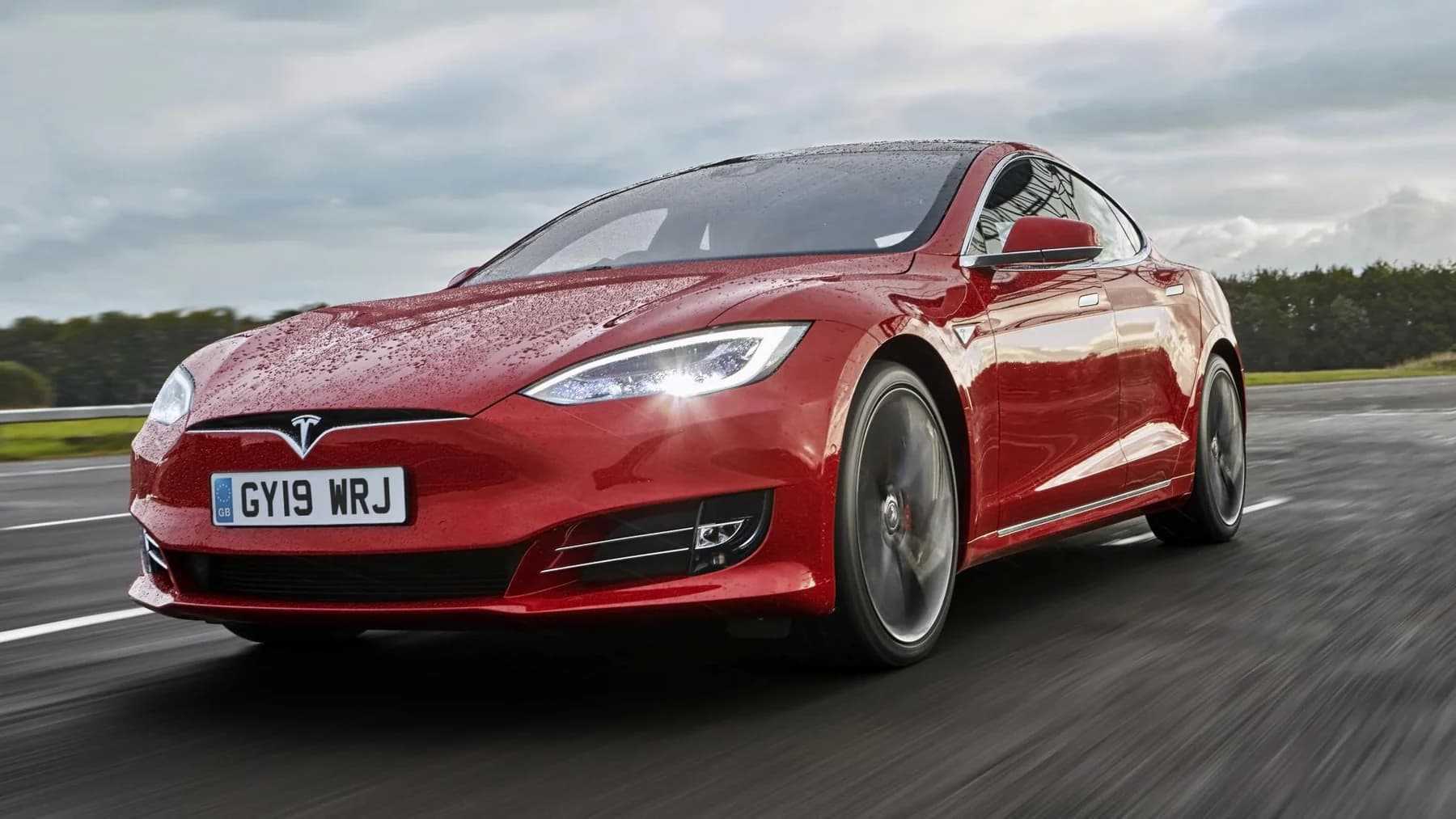
Tesla's owner's manual for the 2017 to 2023 Model 3 describes a comparable control in the Performance version's Track Mode. Its Handling Balance setting moves the bias in 5 percent steps from fully front to fully rear, and the manual suggests more front bias if the car feels loose and more rear bias if it resists turning in. Tesla's Model 3 Track Mode manual
What a drift optimizer adds
A torque split alone does not hold a slide. Hyundai's N Drift Optimizer coordinates several vehicle controls in real time to help maintain a drift angle. A companion function, Torque Kick Drift, imitates the clutch kick that drivers of rear-drive combustion cars use to start a slide more quickly. Hyundai's IONIQ 5 N launch release
Hyundai Motor Group summarizes the logic in two steps. Through the corner, the system sends power to the rear motor to provoke oversteer. On the exit, it shifts drive toward the front wheels so the car accelerates out of the slide. Hyundai Motor Group on N performance
That is a useful mental model. The mode is not taking the driver's job away; it is sharing it, and the share changes from entry to exit.
Stability control is the real dial
The IONIQ 6 N, revealed in July 2025, makes that sharing explicit. Its N Drift Optimizer has separate settings for initiation, angle and wheel spin, and Hyundai names the system behind each: initiation through a function it abbreviates RTO, angle through electronic stability control and wheel spin through traction control. The same car adds three levels of N Pedal, redesigned suspension geometry with a lowered roll center, and stroke-sensing electronically controlled dampers. Hyundai Motor Group on the IONIQ 6 N
Hyundai N presented the update as a broader range of drift settings that drivers can match to their own skill. Hyundai N on the IONIQ 6 N debut
Tesla's version is a single Stability Assist scale from -10 to +10. At +10 every stability system stays engaged, at -10 all of them are off and stability is the driver's responsibility alone, and the default of 0 splits the work. Tesla's Model 3 Track Mode manual
Read together, these controls suggest a sensible way to learn. Start with the most assistance and get consistent, then hand back one piece of the job at a time: wheel spin first, then angle, then the entry.
Heat, hardware and where to use it
Repeated slides are a sustained load on motors, inverters and battery. Hyundai gave the IONIQ 5 N a larger battery cooling area, a bigger motor oil cooler, a battery chiller and separate radiators for the battery and the motor. Its N Battery preconditioning includes a Track setting that targets the lowest practical battery temperature for more laps, and N Race offers an Endurance mode that limits peak power to slow heat buildup. Hyundai's IONIQ 5 N launch release
The car Hyundai built for drift demonstrations is a useful reality check. Hyundai Motor Group says the IONIQ 5 N Drift Spec kept the production car's power electric system, motor and output, with changes concentrated on the suspension and a hydraulic handbrake, plus bucket seats and a roll cage. Hyundai Motor Group on N performance The drift software was already in the road car. What the demonstration car added was hardware for starting slides on demand and protecting the person doing it.
Venue matters as much as settings. Tesla's manual says Track Mode is for closed circuits only, and that the warranty does not cover damage from excessive use, racing, autocross or competition. Tesla's Model 3 Track Mode manual
Treat a drift mode as adjustable assistance rather than a party trick. Learn which system each setting touches, use it at a closed venue, budget for tires, and take the help away gradually. The goal is the same as in any rear-drive drift car: clean entries and a slide you control, with the software doing a little less each session.