Ranking EVs by 0-60 wastes everyone's time. They're all quick, and most of them are quick in the same flat, undramatic way. The better question is which ones give you something to do once you're already moving.
Eight cars, worst to best, judged on how they drive rather than what they'd do to a stock GT-R in a straight line.
8, 7 and 6: quick, and not a great deal else
Ford Mustang Mach-E GT. Fast, competent, about as engaging as a good office chair. The Performance Edition's front Brembos are legitimately good and the chassis holds more grip than the badge implies, but the steering tells you nothing and the whole car is calibrated to feel calm. Deeply fine. Nobody is putting a poster of it on a wall.
Tesla Model S Plaid. The most absurd accelerative device here and the least interesting one to drive slowly. Tri-motor, four figures of horsepower, and a chassis that spends its life managing a problem it didn't create. A physics demonstration with seats, magnificent at exactly one thing.
Kia EV6 GT. Credit Kia for the intent: a drift mode that genuinely unlocks the rear axle, comfortably over 550hp, and a willingness to be silly that most of the industry avoids on principle. Damping is the weak link. Body control runs out before the grip does, and it rides badly for the payoff.
5 and 4: set up by people who cared
Polestar 2, Performance Pack. The one that went about it the old way. Manually adjustable Ohlins dampers, Brembo front brakes, and a chassis tuned by people who clearly gave a damn. It's still a tall, heavy hatchback with a numb rack, but it corners honestly and it doesn't lie to you about available grip. Cheap now, too.
BMW i4 M50. The most conventional-feeling car here, which is either the point or the problem. It steers like a heavy 4 Series, which means it steers better than almost everything else on this list. It isn't an M car and BMW never seriously claimed it was. Roughly 5,000 pounds of it announces itself in quick direction changes.
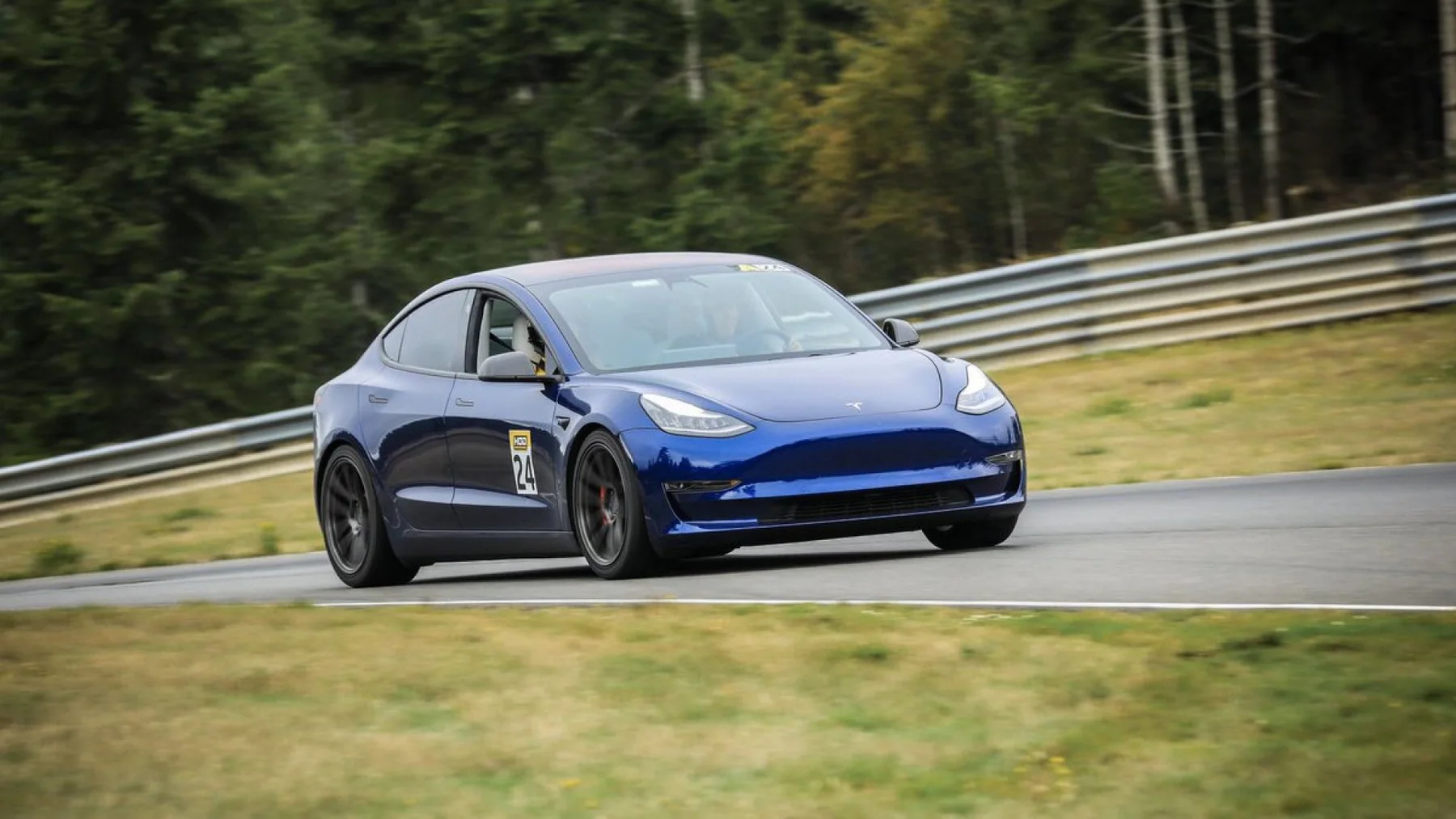
3. Tesla Model 3 Performance
The value benchmark, and the chassis is far better than its reputation. Rear-biased, willing to rotate, small enough to place accurately on a road, and light by EV standards. What holds it back is the interface. Steering weight is a menu setting, the seat sits you too high, and the factory tire choice exists to protect a range figure. Fix the tires and it climbs this list a place or two.
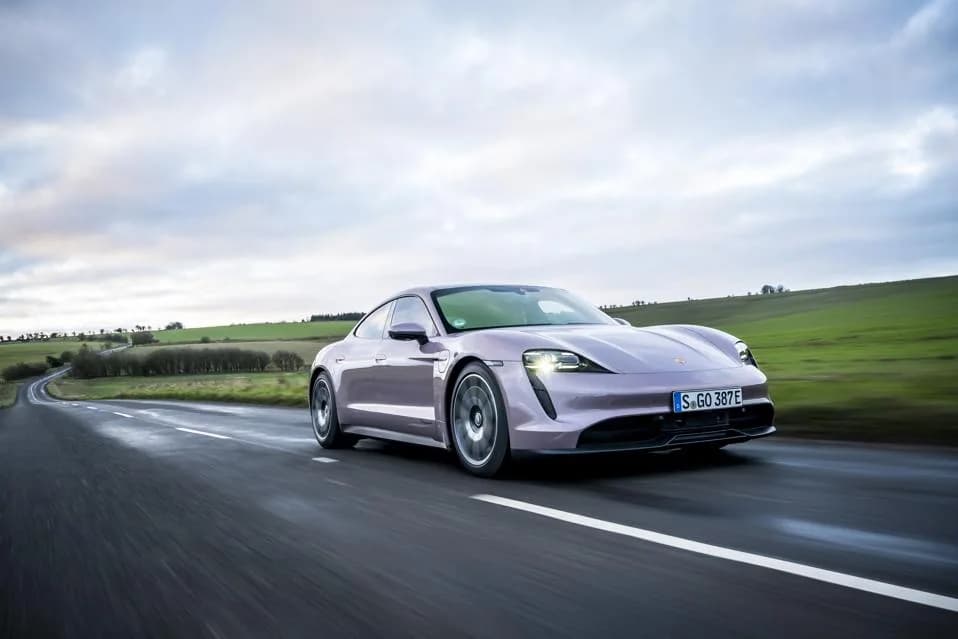
2. Porsche Taycan
The best-engineered car in the segment, and it isn't close. Two-speed rear gearbox so the shove keeps arriving past 80, brakes that survive repeated abuse, steering with actual information in it, 800-volt architecture, and body control that disguises the mass better than it has any right to. It also costs Taycan money, and the cheap used ones are cheap for reasons that involve repair invoices.
1. Hyundai Ioniq 5 N
Here's the argument. The Taycan is the better car. The Ioniq 5 N is the better answer to the question this list is asking, because every decision in it was made for a driver instead of for a spec sheet.
Simulated eight-speed shifts that genuinely interrupt torque, so the car pitches and settles like it has a gearbox. Piped sound, unapologetically. A track mode that preconditions the pack for a set number of laps rather than derating you on lap three. A rear-biased drift mode that works. It's heavy and it's shaped like a hotel lobby, and none of that stops it being the most deliberately entertaining EV anyone has built.
The car this list is missing
The cheapest interesting EV is a single-motor rear-drive car. A base rear-drive Model 3, an Ioniq 5 RWD, a used i3 on its absurd skinny tires. None of them are fast the way the cars above are fast. All of them are lighter, better balanced and more honest about what they're doing.
That's the tension buried in every ranking like this. Fun scales with driver involvement, and involvement scales inversely with almost everything the industry keeps adding. If you want to know which EV is worth arguing about, start with the one carrying the fewest motors and work up from there.