The cheapest mistake in motorcycling is buying a bike you're bored of in eight months. The second cheapest is buying one that scares you, which usually costs the same money plus some skin.
So here's a ranking nobody bothers with: not horsepower, not lap times, but how long a new rider actually keeps the thing before the itch starts. A good first bike teaches you something in month one and still has something left in month twenty. Everything below is beginner-appropriate. What separates them is the ceiling.
The bottom three: good bikes, short relationships
8. Honda Rebel 500. Low seat, 471cc parallel twin, genuinely friendly, and the right answer for a nervous first-timer who needs both feet flat. The ceiling is the issue. Cruiser ergonomics and limited lean clearance mean the week you start enjoying corners is the week you start browsing listings. Keep it if cruising is actually the point. Plenty of people discover it isn't.
7. KTM 390 Duke. A 373cc single with sharp brakes, a featherweight chassis and more personality than the spec sheet suggests. It is the most fun per dollar here. It's also buzzy above 70mph and short on legs, so the first two-hour ride out of town starts the countdown.
6. Kawasaki Ninja 400. Close to perfect at its job. The 399cc twin is flexible, forgiving, revs happily and never punishes a clumsy input. Best-handling bike on this list for someone still learning where the grip is. You'll want more engine inside a year, and you'll be right to.
The middle: bikes that survive year two
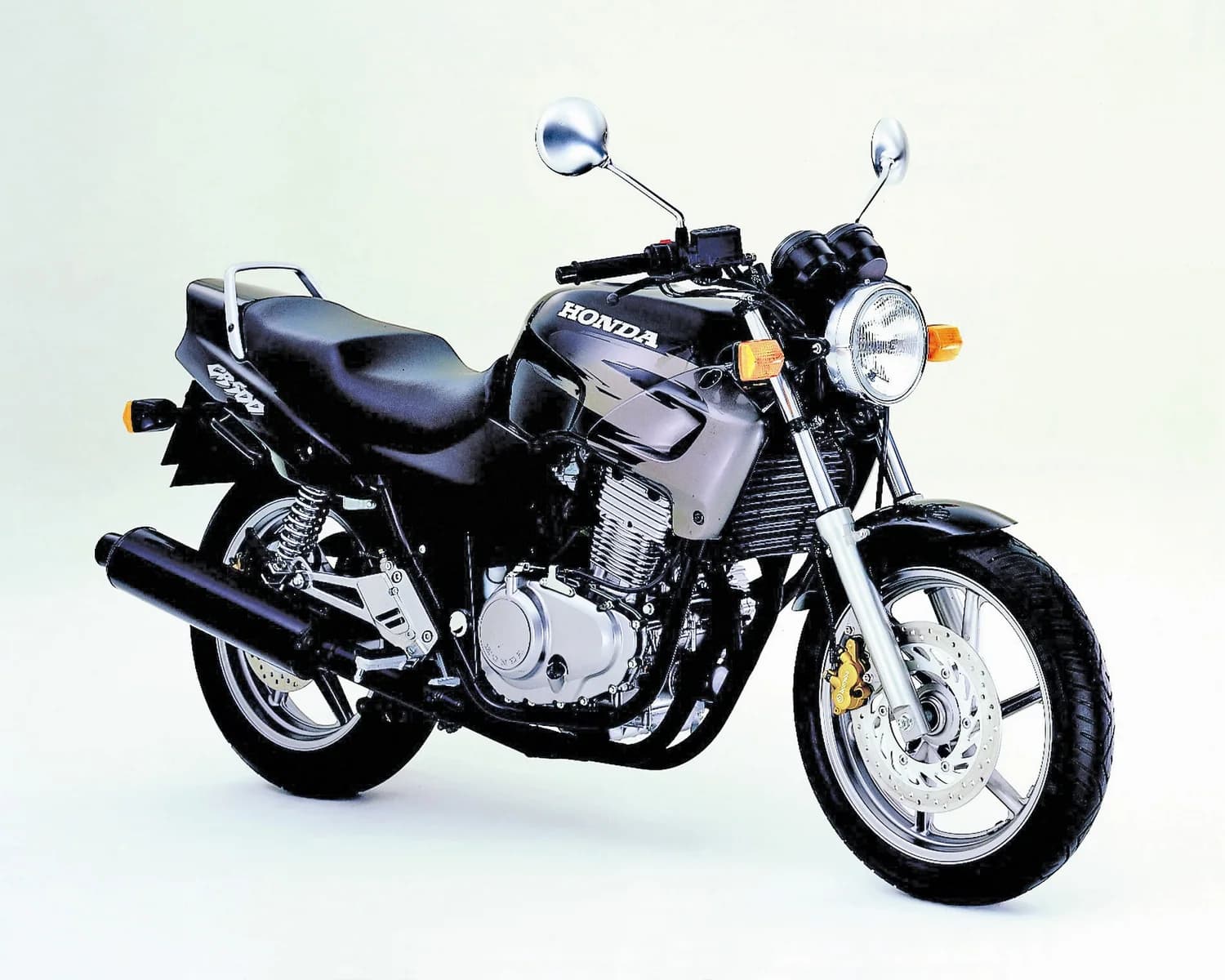
5. Honda CB500F and CBR500R. 471cc, somewhere around 47 horsepower, A2-legal in Europe, and built like Honda expects you to still own it in a decade. Nothing about it is thrilling on paper. Everything about it works, which is a different quality and an underrated one. The suspension is the obvious upgrade path.
4. Royal Enfield Interceptor 650. A 648cc air-cooled twin with an easy spread of torque and no interest in revving. Suspension and brakes are the weak points and both are fixable for less than you'd think. It stays interesting because it's pleasant rather than fast, and pleasant ages well.
3. Kawasaki Z650 and Ninja 650. The 649cc parallel twin is a grown-up engine in a light frame. Enough poke to keep you honest on a back road, calm enough to sit in traffic without cooking you. This is the bike that ends the "is a 400 enough" argument permanently.
The top two, and why
2. Suzuki SV650. The 645cc 90-degree V-twin has been in production since 1999 and the reason is simple: it is torquey, light, cheap to run and almost impossible to get bored of. Used parts are everywhere. Club racing paddocks are full of them, which tells you the chassis is honest. You can buy one, drop it, and replace what broke for the price of a decent set of tires.
1. Yamaha MT-07. The 689cc CP2 twin with its 270-degree crank does the thing nothing else at this money does. It feels fast at legal speeds. It pulls from anywhere so a lazy gear choice never leaves you stranded. Around 70 horsepower is enough to be genuinely entertaining and not so much that a damp manhole cover becomes a life event. The stock suspension is soft and always has been. Sort that and the bike is still relevant three years in, which is the entire argument of this list.
What the ranking is actually measuring
Every bike here is one you can learn on without the machine fighting you. That's the price of entry. The ranking is about whether it still gives you something once you can ride.
The trap is assuming the answer to boredom is more power. It isn't. A rider on an SV650 who has spent a season working on throttle control and corner entry will vanish up the road from an inexperienced rider on a 200-horsepower liter bike, on any road with corners in it. Power scales with money. Skill is the part that scales with you.
Buy used. Buy something with a deep used-parts market, because you will drop it in a parking lot at some point and everybody does. And budget for gear before you budget for the bike. If your money forces a choice between a nicer machine and a helmet and jacket that will actually do their job, that isn't a real choice, and pretending otherwise is how people end up in a hospital in shorts.