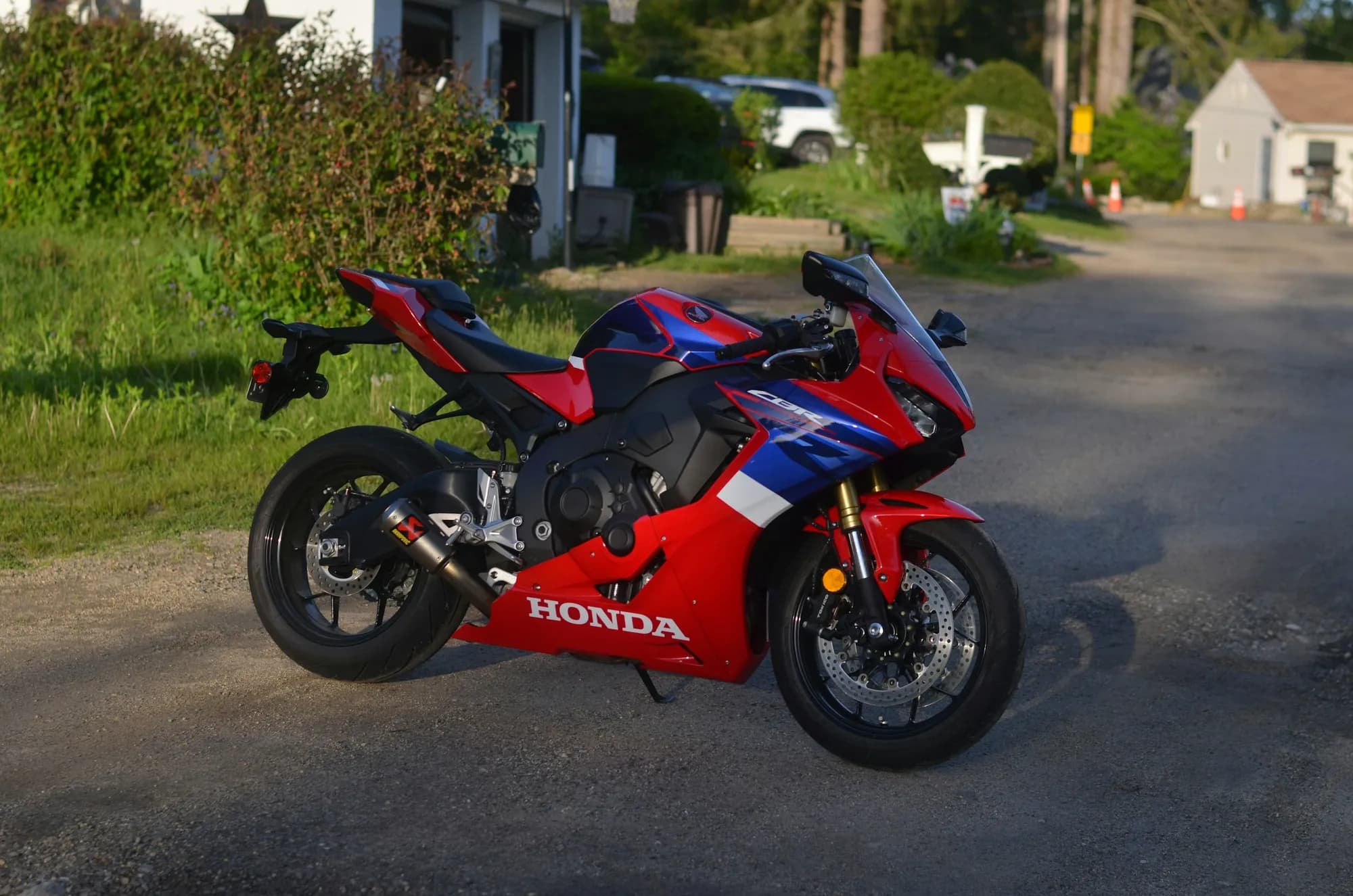
Photo: Anbinh Pho / Unsplash. A Honda CBR1000RR Fireblade.
By the early 1990s, the fast end of the motorcycle market had split in two. Pirelli's retrospective on the period describes 750cc superbike replicas on one side and 1,000cc-plus "maxi" bikes on the other, with the big bikes holding the performance edge and gaining power each season. They were also getting heavier and harder to ride, especially on the road. Pirelli's Fireblade retrospective
Honda's response arrived in 1992 as the CBR900RR FireBlade. Its premise was that less weight and a manageable chassis would deliver more usable performance than another jump in power. More than three decades later, that premise still explains the bike and the family it started.
A 750 chassis with a bigger engine
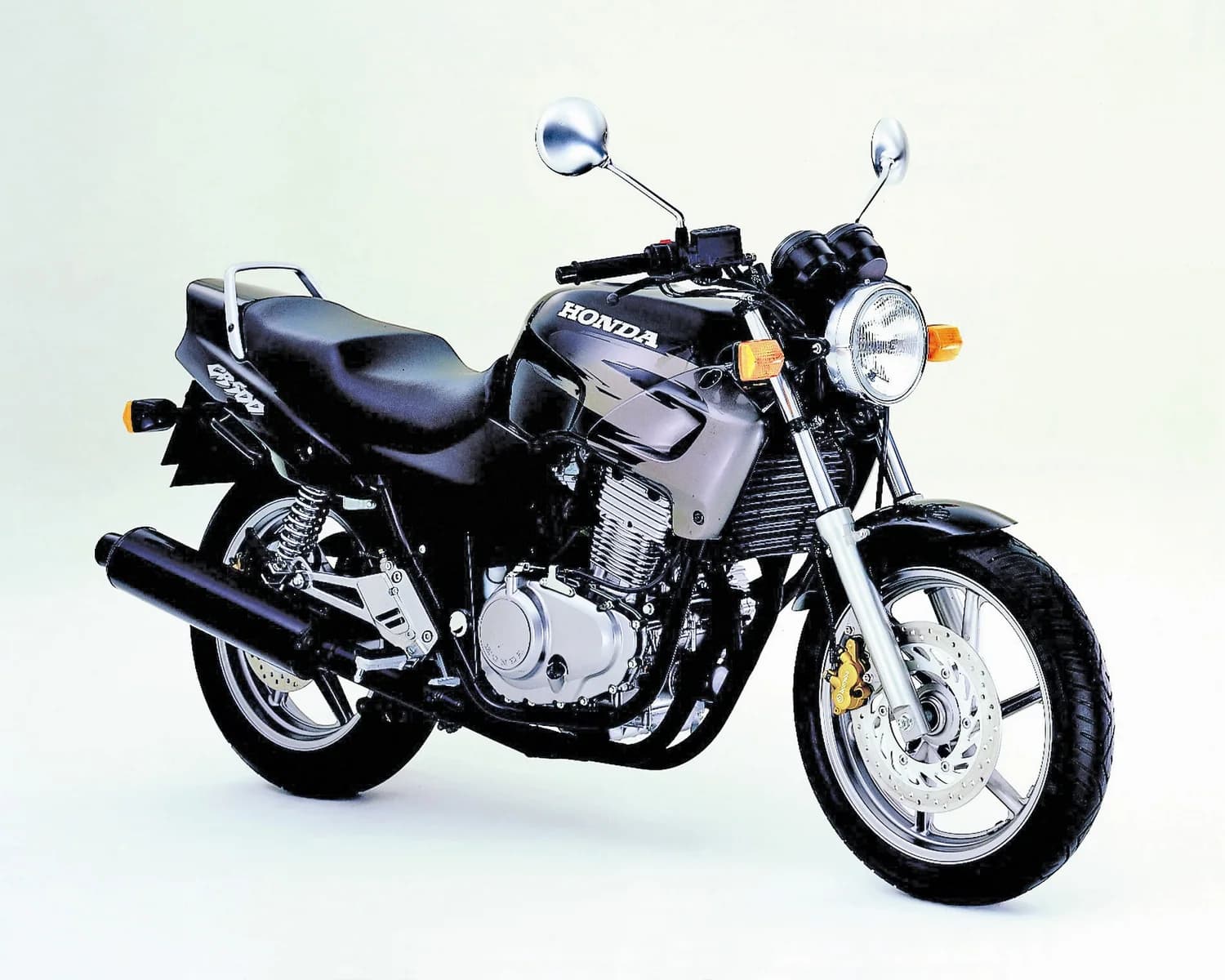
Honda UK's history of the model says the frame and chassis came from a 750cc prototype, with an 893cc engine fitted between the frame rails. The bike made around 120 bhp, rode on a 16-inch front wheel and used conventional forks, because project leader Tadao Baba considered upside-down forks too heavy. HRC's Yoichi Oguma led the project for its first six months before Baba took over, and development ran for more than three years. Baba's stated aim was a bike that was "good into the corners," with strong power and brakes. Honda UK's Fireblade history
Honda's own 30th-anniversary history supplies the numbers behind the idea. The 750cc inline-four was enlarged to 893cc to match the acceleration of bigger rivals, while dry weight was held to 185 kg (about 408 lb) on a 1,405 mm wheelbase. Honda describes the result as the lightest and most compact supersport in its class. Honda's 30th-anniversary history, in Japanese
Pirelli frames Baba's Total Control project the same way: performance close to a maxi bike, in a machine that was easy and enjoyable to ride. Pirelli's Fireblade retrospective
A decade of getting lighter
The early updates show how seriously Honda took the weight target. By Honda's figures, the 1996 bike grew to 918cc and 128 PS while dry weight fell to 183 kg. The 1998 version, with more than 80 percent new parts, weighed 180 kg and made 130 PS. The 2000 model brought a new 929cc engine with PGM-FI fuel injection, 148 PS and 170 kg, and the final CBR900RR of 2002 had 954cc, 150.9 PS in European trim and a dry weight of 168 kg. Honda's 30th-anniversary history, in Japanese
That is 17 kg removed over a decade while claimed output climbed past 150 PS. Honda UK adds that the 2000 bike switched to a 17-inch front wheel and upside-down forks, and that the 954 was Baba's last Blade. Honda UK's Fireblade history Honda's CBR history describes the 954 as continuing the Total Control concept of maximizing the riding experience. Honda's CBR history
Liter bikes, electronics and the track
The 2004 CBR1000RR was a different kind of machine. Honda says it developed a new 1000cc model in response to rival liter bikes and growing rider demand for track performance, carrying over ideas from its RC211V MotoGP bike such as unit Pro-Link rear suspension and a centrally mounted, upswept exhaust. Honda also says it was the world's first production bike fitted with HESD, its electronic steering damper. Honda's CBR history Racing followed. Honda UK notes that World Superbike rule changes in 2003 opened the class to liter bikes, that Ten Kate ran the CBR1000RR from 2004, and that James Toseland won the title with the team in 2007. Honda UK's Fireblade history
Electronics arrived in stages. Honda describes the 2009 CBR1000RR with combined ABS, which used brake-by-wire, as the first supersport with electronically controlled combined ABS. Honda's 30th-anniversary history, in Japanese The 2017 redesign added a five-axis IMU, nine-level torque control, wheelie control and rear lift control. Honda UK's Fireblade history
The 2020 CBR1000RR-R moved the emphasis to the circuit. Honda named its development concept Total Control for the Track, drew on technology from the RC213V MotoGP bike, and says HRC racers based on the model won the Suzuka 8 Hours from 2022 to 2025. Honda's 2020 CBR1000RR-R page Honda UK puts its output at around 215 bhp at 14,500 rpm, roughly 100 bhp more than the original. Honda UK's Fireblade history
What the idea still teaches
The original FireBlade's lesson is that usable performance depends on mass and chassis at least as much as on peak power. That is a good lens for judging any sportbike, new or used: weight, steering and how confidently a bike lets you use its performance tell you more than a dyno sheet does.
It also matters when shopping for an older Blade, because the name covers very different machines. The bikes before 2000 ran a 16-inch front wheel and predate fuel injection; the 2000 model brought injection and a 17-inch front; 2004 brought the liter engine; a combined-ABS version arrived in 2009; and IMU-based electronics came with the 2017 redesign. Identify the exact year and specification before comparing prices or buying parts. The badge tells you the family. The details tell you which motorcycle you are actually looking at.