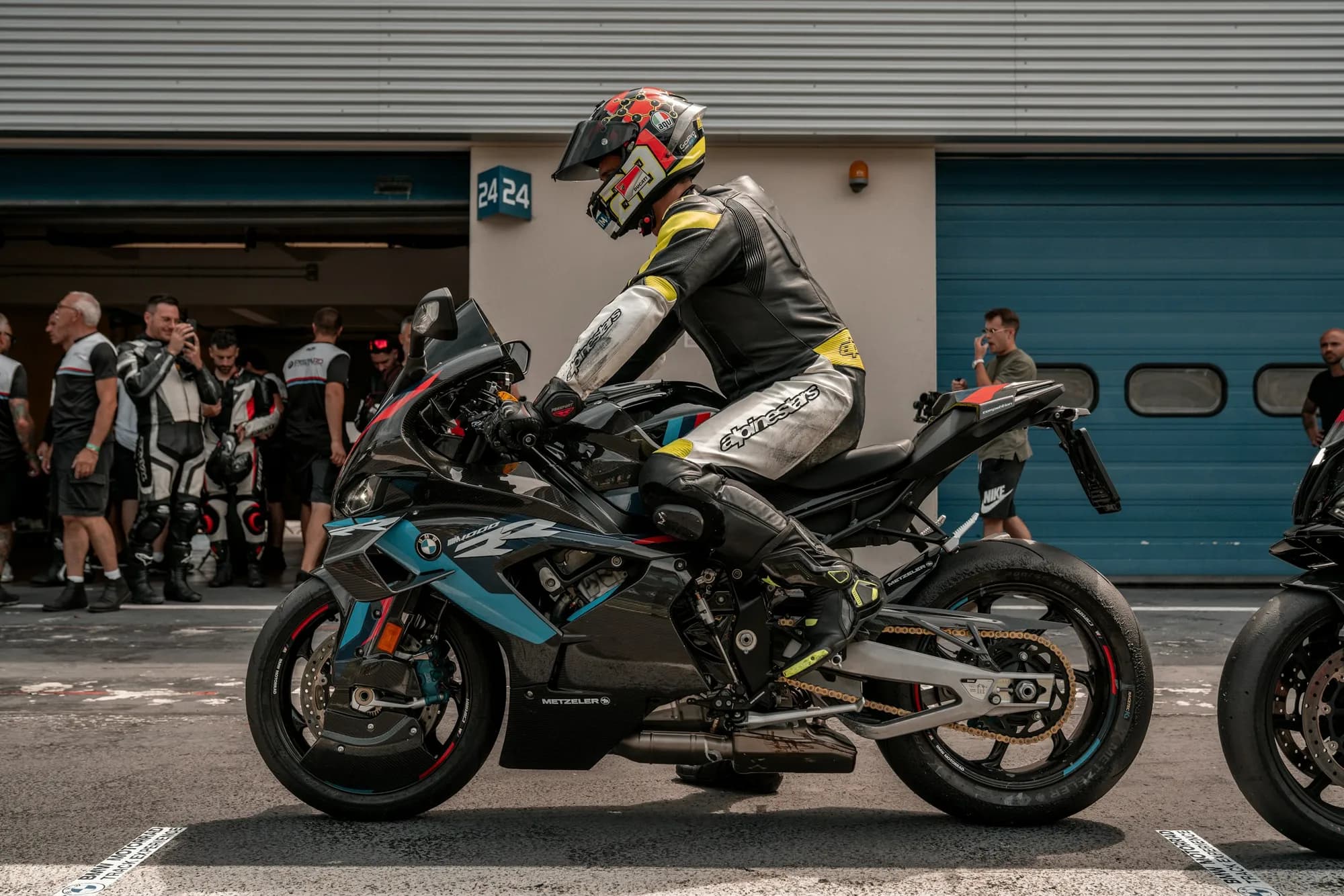
Photo: Federico Vitale / Unsplash. A rider at the Vallelunga circuit in Italy.
A track day gives riders a controlled place to explore what a motorcycle can do: one direction of travel, corner workers, run-off and short sessions grouped by experience. It is not a learn-to-ride course, and most of the work happens before you arrive. Two US organizers, Sportbike Track Time (STT) and N2 Track Days, publish their requirements in detail, and together they make a good map of what to expect.
Know what you are signing up for
STT is explicit that it does not teach people to ride. Riders should already be comfortable in moderate traffic at highway speeds, and anyone new to track time or with limited experience must start in the Novice group. A typical STT day starts with a mandatory riders' meeting at 8:15, sends the first group out at 9 and runs until 5 p.m., with an hour for lunch. STT's guide for new riders
N2 plans on seven to nine 20-minute sessions per event, a roughly half-hour riders' meeting focused on learning the track, and Control Riders in orange shirts who answer track and tech questions. N2's typical track day Its Intro program, built around a beginner classroom session and two 20-minute beginner sessions in the morning, needs no special bike preparation beyond passing tech. Passing rules tighten as experience drops: Novices may pass anywhere except in corners, Intermediates anywhere except the inside of a turn, and Advanced riders anywhere. N2's FAQ
Prepare the bike at home
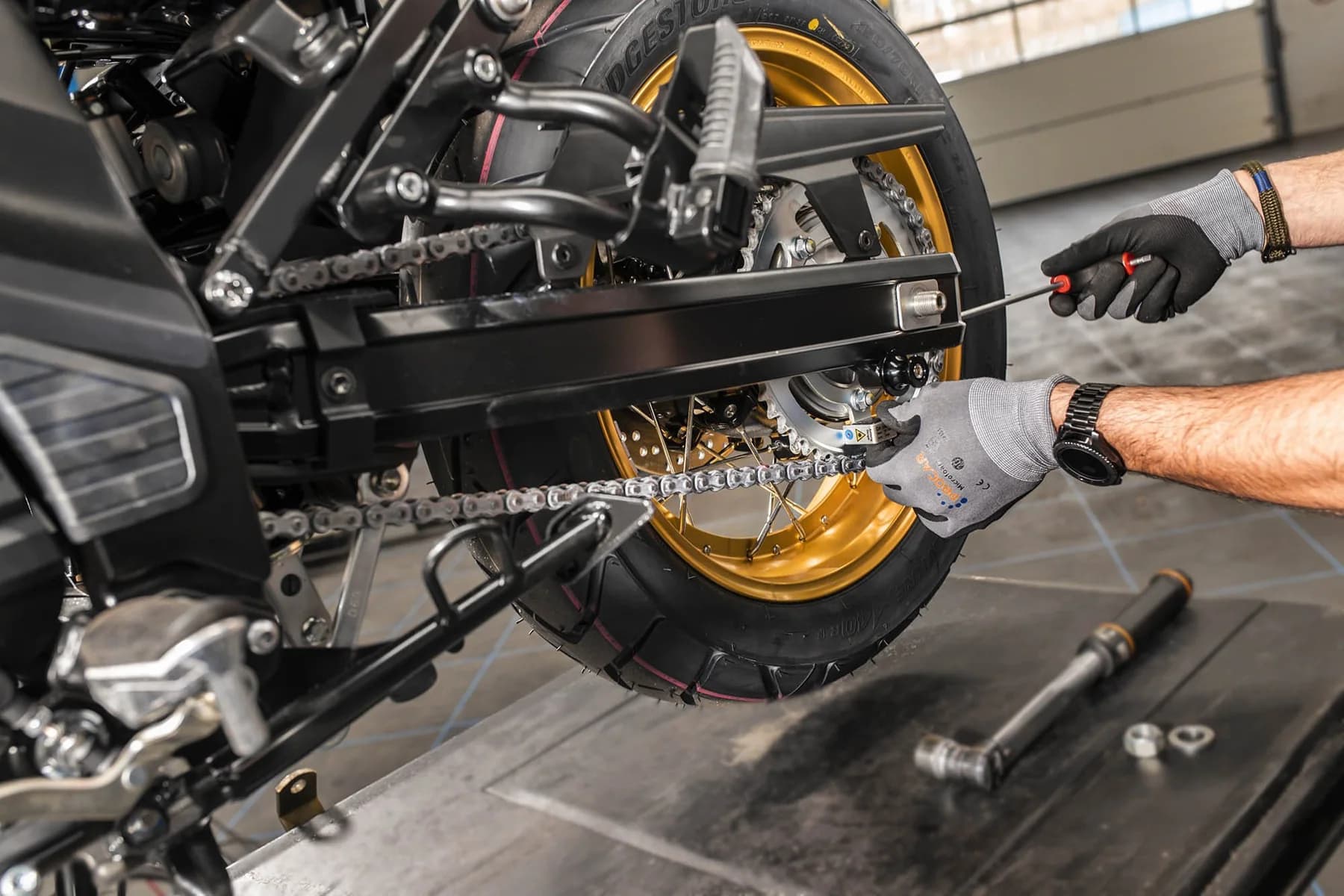
STT warns that a bike that fails tech inspection may not ride that day. STT's guide for new riders STT's rules require headlights, turn signals, glass and plastic lenses to be taped over or removed, mirrors removed for Advanced and at least taped for other groups, and the license plate removed or its bolts taped. It also lists valve stem caps, wheel weights secured with duct tape, a working kill switch and a self-closing throttle. STT's tech and gear requirements
N2 accepts taped lights but asks riders to unplug them, because bulbs can overheat under tape, and it requires mirrors to come off for everyone except Intro riders. N2's FAQ
Coolant is where the two differ most. STT requires Intermediate and Advanced bikes to run water, water wetter or an approved coolant that is not ethylene glycol, naming Evans, 7th Gear, Liquid Performance and Engine Ice, and it bans automotive ethylene glycol antifreeze. STT's tech and gear requirements N2 requires only Advanced riders to switch from antifreeze to water and does not permit Engine Ice or Evans. N2's FAQ The lesson is to read your organizer's current rules rather than a generic checklist.
Safety wire also depends on group. STT's Advanced riders must wire oil drain plugs, oil filters and oil fill caps, while Intermediates seal the drain plug and filter with RTV or silicone. For tires, STT wants at least 50 percent of new tread remaining. STT's tech and gear requirements N2 requires wiring only in Advanced, though it strongly recommends it for everyone, and it suggests at least 2/32 inch of tread above the wear bar for each day you plan to ride. N2's FAQ
Gear that passes the first time
STT asks for an undamaged full-face helmet with a face shield, rated to BSI, ECE 22.05, DOT or Snell; one- or two-piece leathers, with two-piece suits zipped together; gauntlet gloves with full wrist coverage; and boots that fully cover the ankle. Textile suits are allowed only in Novice, and only with padded, reinforced shoulders, elbows, hips and knees. A back protector is required in Intermediate and Advanced, and a soft pad sewn into a suit does not count. STT's tech and gear requirements
N2 requires an undamaged helmet with eye protection, a full-circumference leather suit, boots and gloves. It strongly recommends a back protector and does not allow jeans. N2's FAQ
Pressures come from the tire maker
Pressure advice should come from the company that made your tires, not the next pit over. Dunlop says it designed its Sportmax Q5 and Q5S to use near-street pressures on track. Its track-day chart lists 30 to 32 psi cold at the front and 28 to 32 psi cold for most rear sizes, rising to 34 to 36 psi hot. Dunlop says those tires do not need warmers; if you use them, it suggests 70 to 80°C (158 to 176°F) for 45 minutes to an hour at most, and warns that repeated warming cycles can degrade the tire. Dunlop's track-day tire page
Michelin's track guidance covers procedure. Measure cold pressure with tire and rim at ambient temperature, just before the first ride or before fitting warmers. For its track tires, compare hot pressure with the target after six laps, and resist bleeding air during a session just because a hot reading looks high. Take the first two or three laps progressively, with moderate lean and gentle braking, and reset to the motorcycle maker's cold road pressure before riding on public roads. Michelin on track tire pressure
Treat the first day as practice
Group placement is not fixed. N2's Control Riders can move a rider up or down based on skill and comfort. N2's FAQ STT says most group changes require an on-track evaluation by a coach. STT's guide for new riders
Use that structure. Start in Novice even if you are quick on the street, ask a coach to watch you for a session, and sit one out when you are tired. A good first track day ends with the motorcycle you arrived on, a short list of things to work on and a reason to come back.