Ask ten riders how they turn a motorcycle and eight will say they lean. They're describing the result, not the input, and the gap between those two things is where a lot of riders run wide into an oncoming lane.
Above walking pace, you steer a bike by briefly turning the bars the wrong way. You already do it. Your hands worked it out on a bicycle when you were seven and never told you.
Push right, go right
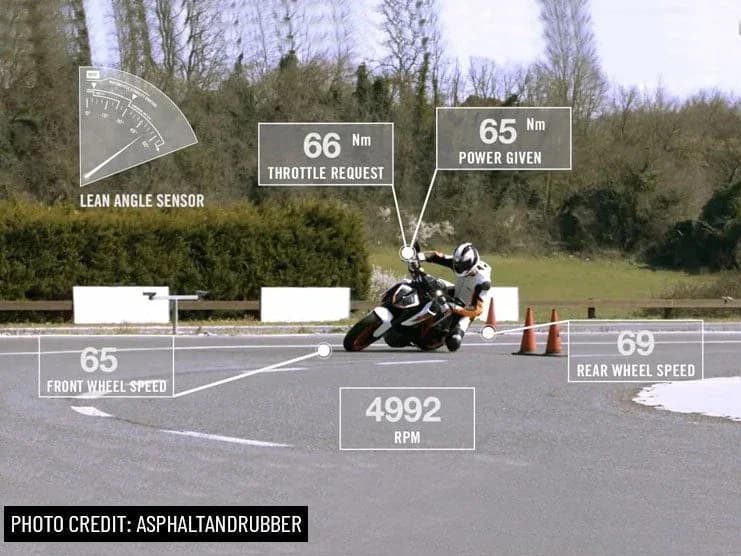
To turn right, you push the right bar forward. That momentarily points the front wheel slightly left, which drives the contact patch out from under the bike's center of mass. Gravity does the rest and the bike rolls into a right-hand lean. Once it's leaned, the front wheel trails back into the turn and the bike holds an arc.
That's it. Everything else — throttle, body position, brakes — is refinement on top of that one input.
The reason it matters is that a rider who doesn't know they're countersteering has no conscious lever to pull in an emergency. A rider who does can steer harder, deliberately, at the exact moment steering harder is the only thing that helps.
The drill
Empty road, no traffic, about 40mph, straight line. Press gently forward on the left bar with the heel of your hand. The bike moves left. Press the right, it moves right. Do it until it stops feeling like a trick.
Then do it while consciously keeping the rest of your body still, so you learn that the bars are doing the work and shifting your weight around is not what turns the motorcycle.
Your eyes drag the bike with them
Target fixation is not a myth and it isn't a failure of nerve. Vision drives steering input at a level below conscious thought, and you will steer toward whatever you're staring at. The gravel on the outside of the corner. The guardrail. The car.
Look through the corner to where you want to exit, turn your head rather than just your eyes, and get that head turn done early — before you tip in, not halfway through. The single biggest improvement most street riders can make is looking further ahead than feels natural.
Body position isn't posing
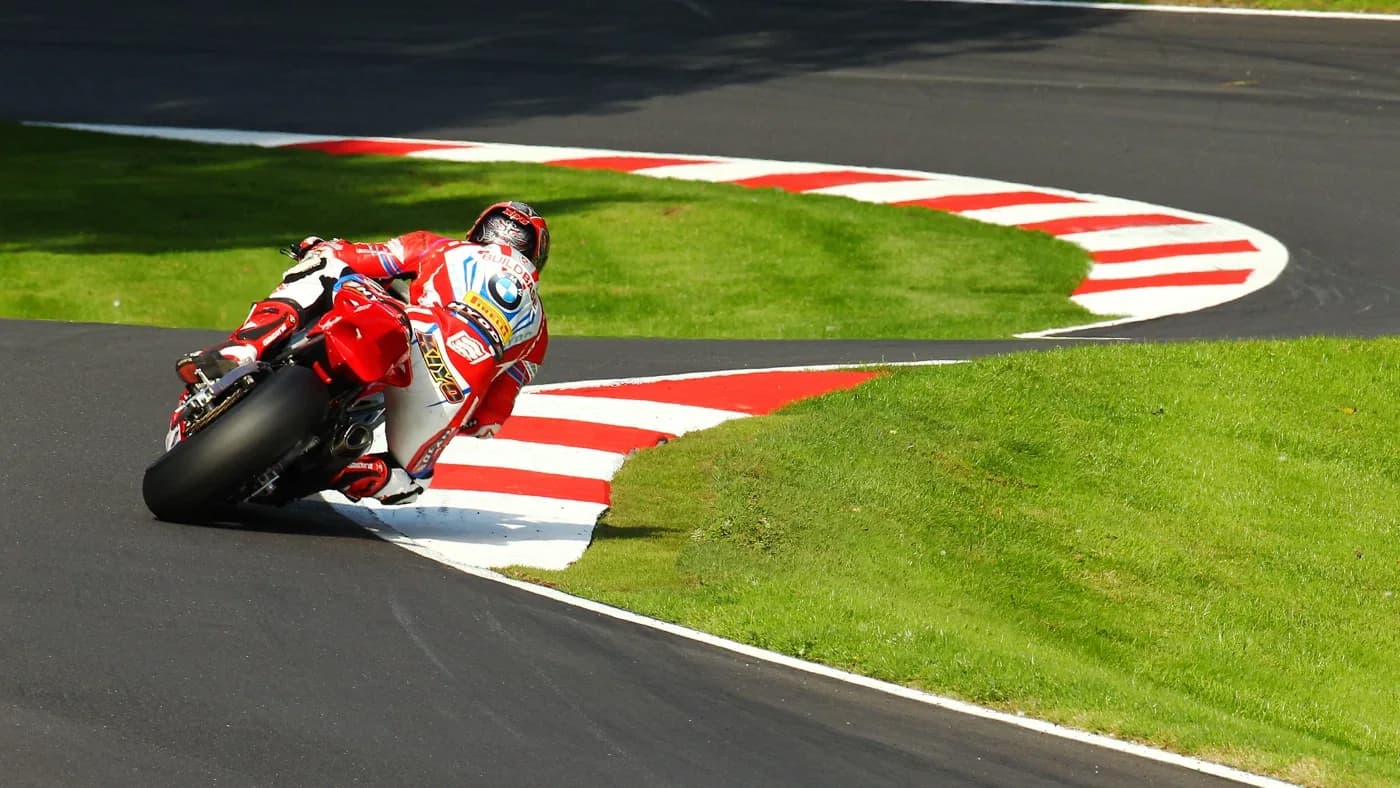
Hanging off looks like a track affectation. The physics are simple: moving your body inside the turn shifts the combined center of mass of bike and rider inward, so the bike needs less lean angle for the same speed and radius. Less lean angle means more tire in reserve, which is margin for the mid-corner surprise.
The basics, in order of value on the road:
- Grip the tank with your outside knee. That's what holds you on the bike.
- Weight on the pegs, not the bars. Stiff arms send every bump into your steering input.
- Keep your head upright and level with the horizon. Your inner ear works better that way.
- Move your hips before you tip in, not after. Loading the bike mid-corner unsettles it.
You don't need a knee down on a public road, and chasing one there is a category error. What you want is the ability to add lean without drama.
The corner you entered too fast
Here's the sequence almost every solo corner crash follows. Rider enters faster than expected, panics, stiffens on the bars, stares at the outside of the bend, stands the bike up, and either runs into the opposite lane or grabs the brake and washes out.
The bike almost always had more lean angle available. Street riders rarely use more than half of what a modern sport tire will give. The fix is unglamorous and it has to be practiced before you need it: relax your outside arm, look at your exit, and push the inside bar. Harder than feels comfortable. The bike will turn.
Trail braking — carrying a light, progressively released front brake into the turn — is the next layer, and it's worth learning properly rather than approximating. Get most of your braking done before the corner, then bleed pressure off as lean increases.
The cheapest performance upgrade available to you isn't a $900 exhaust. It's a day at a track or a proper riding course, on your own bike, with someone watching your inputs and telling you what your hands are actually doing. Two days of that will make you faster and considerably harder to kill than any part you can bolt on.