Jeep and Ford ask the same money for their off-road halos: $79,995 before destination. The catch is that the Jeep at that price is no longer called a Rubicon 392.
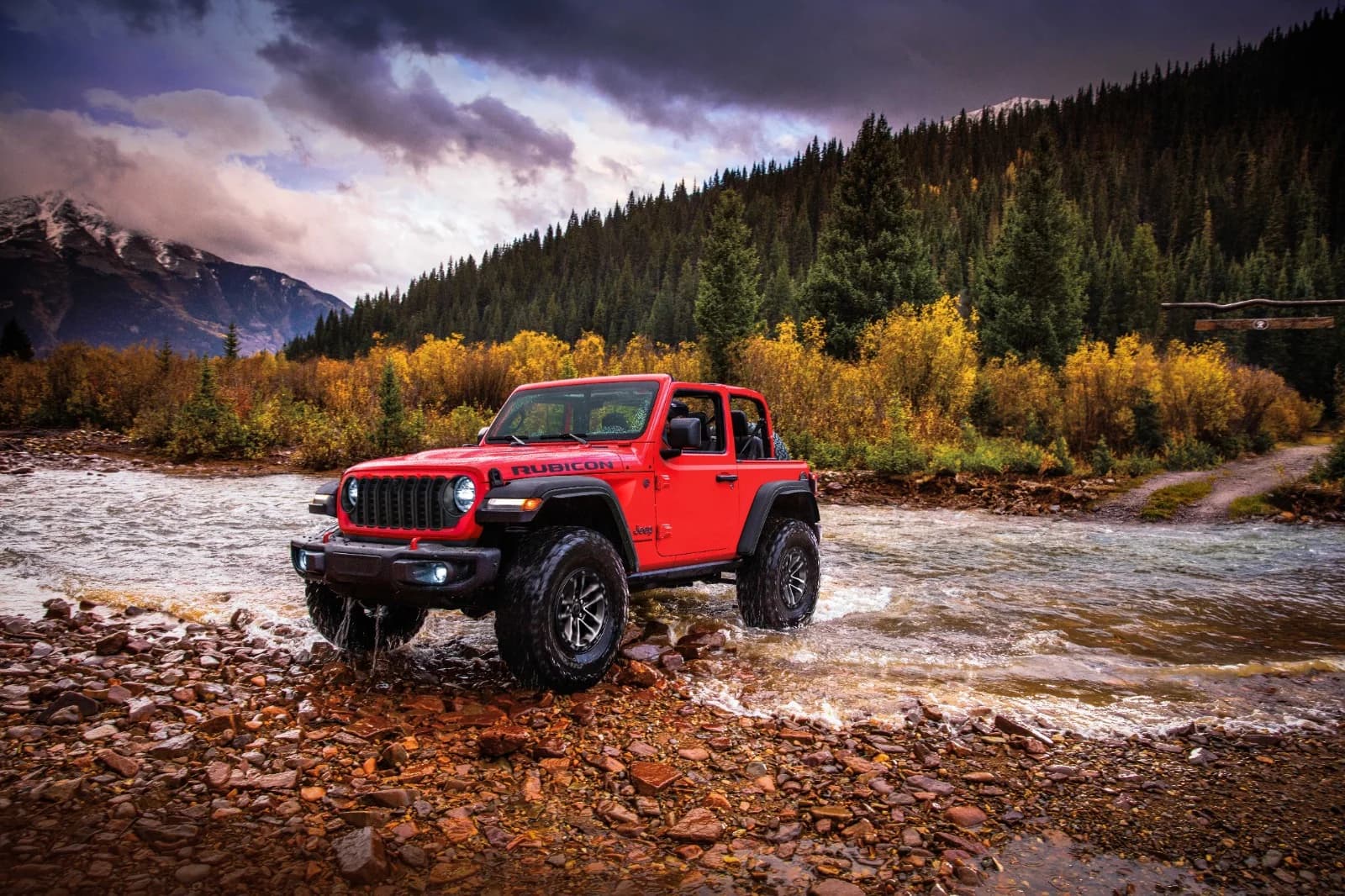
That badge ended with the Final Edition after the 2025 model year, when a V8 Wrangler cost about $100,000. The Hemi came back for 2026 as the Moab 392, about $20,000 cheaper, and a $69,995 Willys 392 followed in February. So the old argument still stands, solid axles and a big V8 against long-travel independent suspension and a twin-turbo V6, but the Jeep side of it has a new name and a much lower price.
The name changed, the recipe mostly didn't
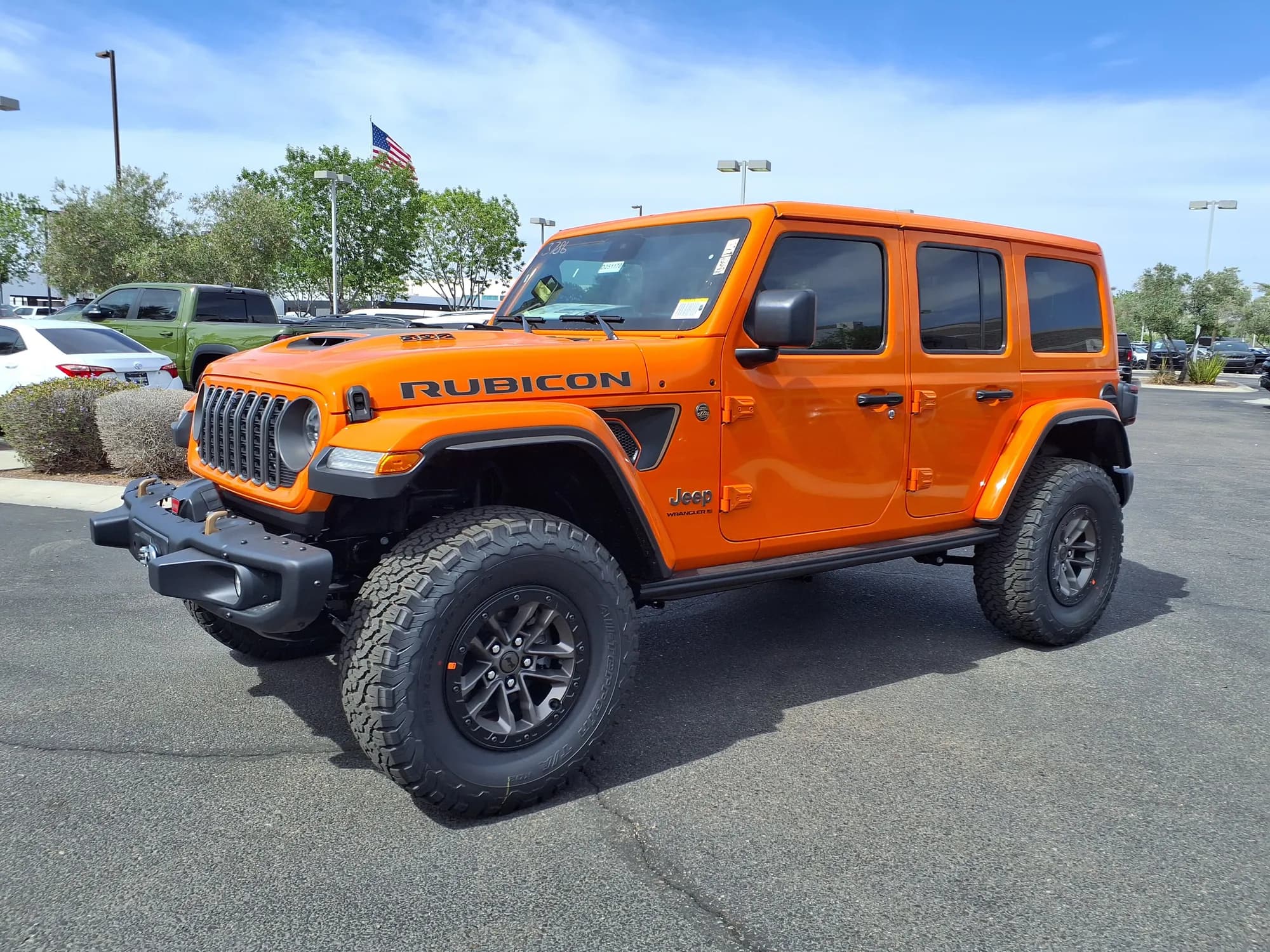
A 6.4-liter Hemi still makes 470 hp and 470 lb-ft through an eight-speed automatic and a full-time Selec-Trac transfer case with a 2.72:1 low range. Jeep claimed 0-60 mph in 4.5 seconds and a 13.0-second quarter mile for the original Rubicon 392, and output hasn't changed. Both current 392s are four-doors on 35-inch tires and 17-inch beadlock-capable wheels, with a 4.56 axle ratio and an electronic rear locker.
The $10,000 between them buys real hardware. The Moab adds an electronic front locker and an electronically disconnecting front stabilizer bar, where the Willys has a conventional front differential and a fixed bar. For rocks, that gap matters more than the Moab's body-color hardtop or its Nappa leather and Sepia accents. A factory Warn winch and the Sky One-Touch power top are Moab-only options.
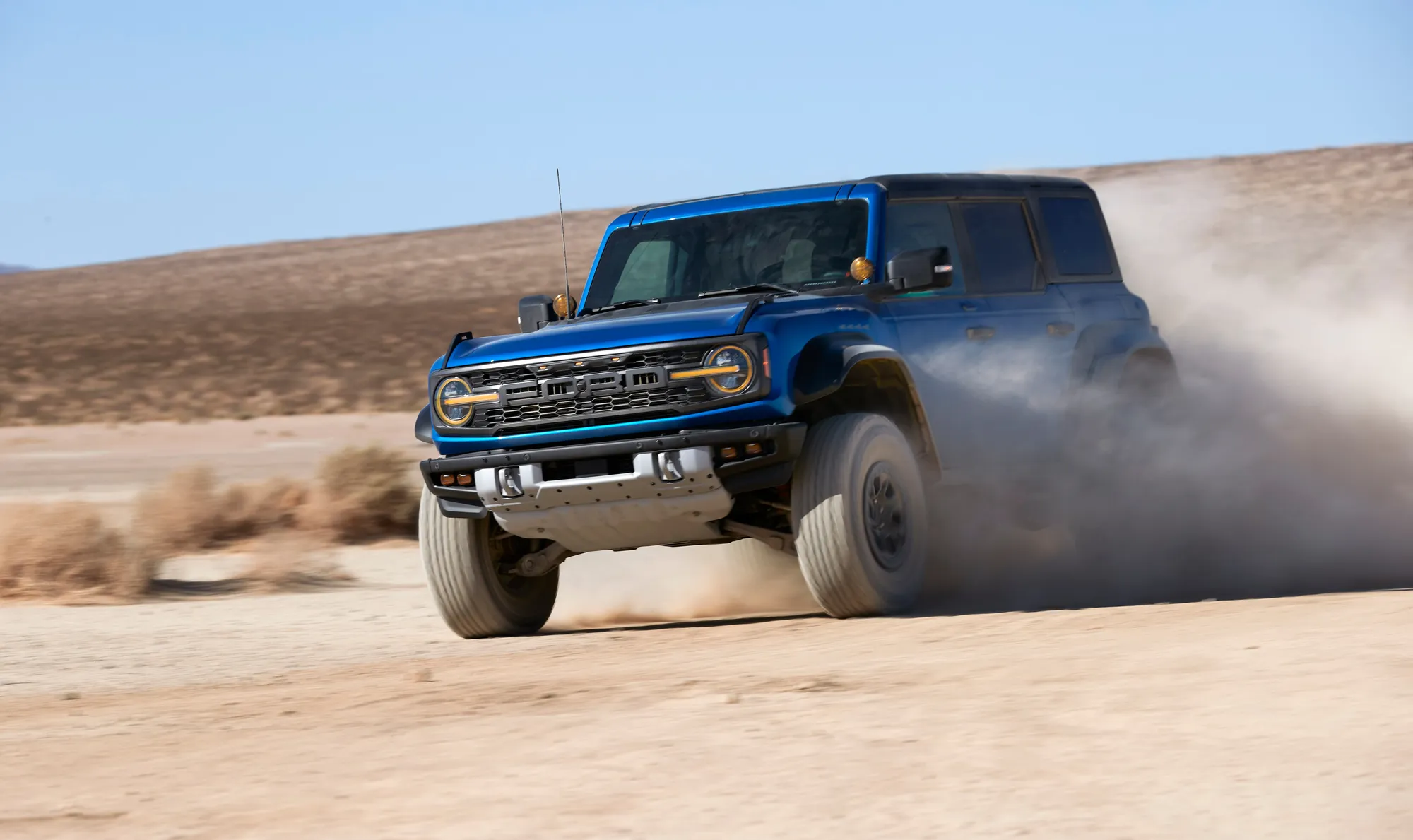
Ford's truck carries a 3.0-liter twin-turbo V6 rated at 418 hp at 5,750 rpm and 440 lb-ft at 2,750 rpm, with a 10-speed automatic. It gives up 52 hp to the Hemi but only 30 lb-ft, and that torque arrives low in the rev range.
One suspension likes rocks, the other likes speed
The Wrangler uses solid axles at both ends. A solid front axle is heavy, and it moves as one piece. In exchange, when one front tire climbs, the other is pushed down into the ground, and the Moab's disconnecting bar lets that happen more freely. The differential also stays at a fixed height relative to the tires as the suspension moves, so clearance over a ledge is predictable. That is why solid axles remain the default on slow, technical trails. The 392 sits 11 inches off the ground on LT315/70R17 tires.
The Raptor is a different tool. Its front wheels move independently, which cuts unsprung weight and lets each wheel react to a bump without upsetting the other side. Ford's HOSS 4.0 system pairs that with Fox Live Valve dampers and up to 13 inches of travel in front and 14 in back. The rear is still a solid axle, a Dana 50, with a Dana 44 front unit.
The track is 73.6 inches, 8.6 more than a base Bronco, and fender flares make the truck 9.8 inches wider overall. That stance keeps it stable across whoops and desert washes, which is what the truck was built for. It also makes for a harder fit between trees and rocks.
On paper, the Raptor covers rock work too. It has standard 37-inch tires, front and rear electronic lockers, a front stabilizer disconnect and 13.1 inches of ground clearance. Independent front suspension can crawl well. It just loses the solid axle's built-in habit of pressing the opposite tire down, and it relies on half-shafts and joints that move through bigger angles.
Living with them
Neither is a sensible daily purchase, and the numbers say so.
- Fuel: the four-door 392 is rated at 13 mpg city, 16 highway and 14 combined. The Raptor is rated at 15 city, 16 highway and 15 combined.
- Towing: 3,500 pounds for the Jeep, 4,500 for the Ford when properly equipped.
- Width: the Jeep fits a garage and a narrow trail more easily. The Raptor needs room everywhere.
The sound is a matter of taste, but it is part of the bill. A naturally aspirated Hemi with a dual-mode exhaust is much of the reason to buy a 392, and a turbo V6 has no answer for it.
What you can actually buy
Jeep opened Moab 392 orders nationwide in January 2026 and Willys 392 orders that March. Both carry into 2027 at unchanged prices, $81,990 and $71,990 with the $1,995 destination charge. Jeep hasn't published its complete 2027 lineup, so equipment could still shift. Jeep CEO Bob Broderdorf has said "the 6.4-liter HEMI V8 will have a home at Jeep" and that the company will extend the 392's availability on the Wrangler. That is a long way from the farewell the Final Edition promised, but no one should treat the V8 as permanent. If the badge matters to you, the Rubicon 392 is now a used purchase only.
Dealers began taking 2027 Bronco orders in October, with the Raptor still at $79,995 before destination and now wearing a "High Output EcoBoost" label. The label exists because a 380 hp version of the 3.0-liter V6 is replacing the 2.7-liter elsewhere in the lineup. The Raptor's tune carries over, though Ford's final 2027 rating is still to come. Shelter Green, the Raptor-only color, is on its way out for December production, so order soon if you want it.
Sticker prices climb quickly. New 2026 Raptors commonly carry MSRPs in the mid-$80,000s once options are added, and the Black Appearance Package alone runs close to $9,000.
Which one to buy
Choose by the terrain you actually drive, not the one in the brochure.
- Moab 392: the pick for slow, technical trails. The front locker and disconnecting bar are worth the $10,000 over the Willys if you really crawl.
- Willys 392: the pick if the Hemi is the point and the trail work is moderate. It is the cheapest 392 Wrangler yet.
- Bronco Raptor: the pick for open desert, fire roads and high-speed washboard. The trade is width and a less memorable engine.
- Neither, maybe: Ford's new 2027 Bronco RTR starts just above $50,000 and tops out just under $60,000 with the Sasquatch with RTR package, which brings 35-inch tires and HOSS 3.0 Fox dampers. It has a 2.3-liter four and nothing like the Raptor's reach, but it costs about $20,000 less.
The deciding question is simple. If you spend your time at walking pace choosing lines, buy the V8 and its solid axles. If you spend it in a high gear with the dust behind you, buy the Raptor and accept that the narrow trail is someone else's.