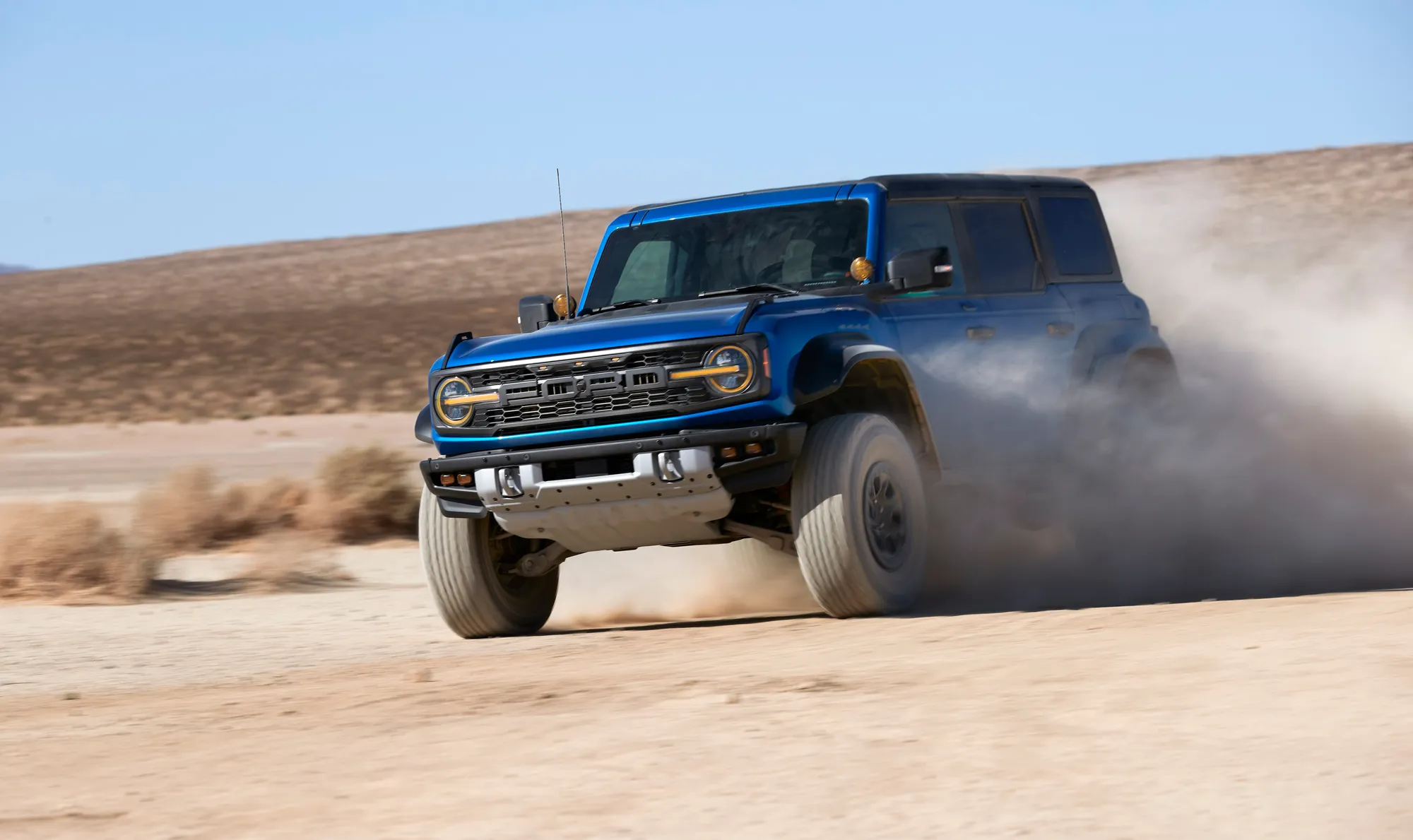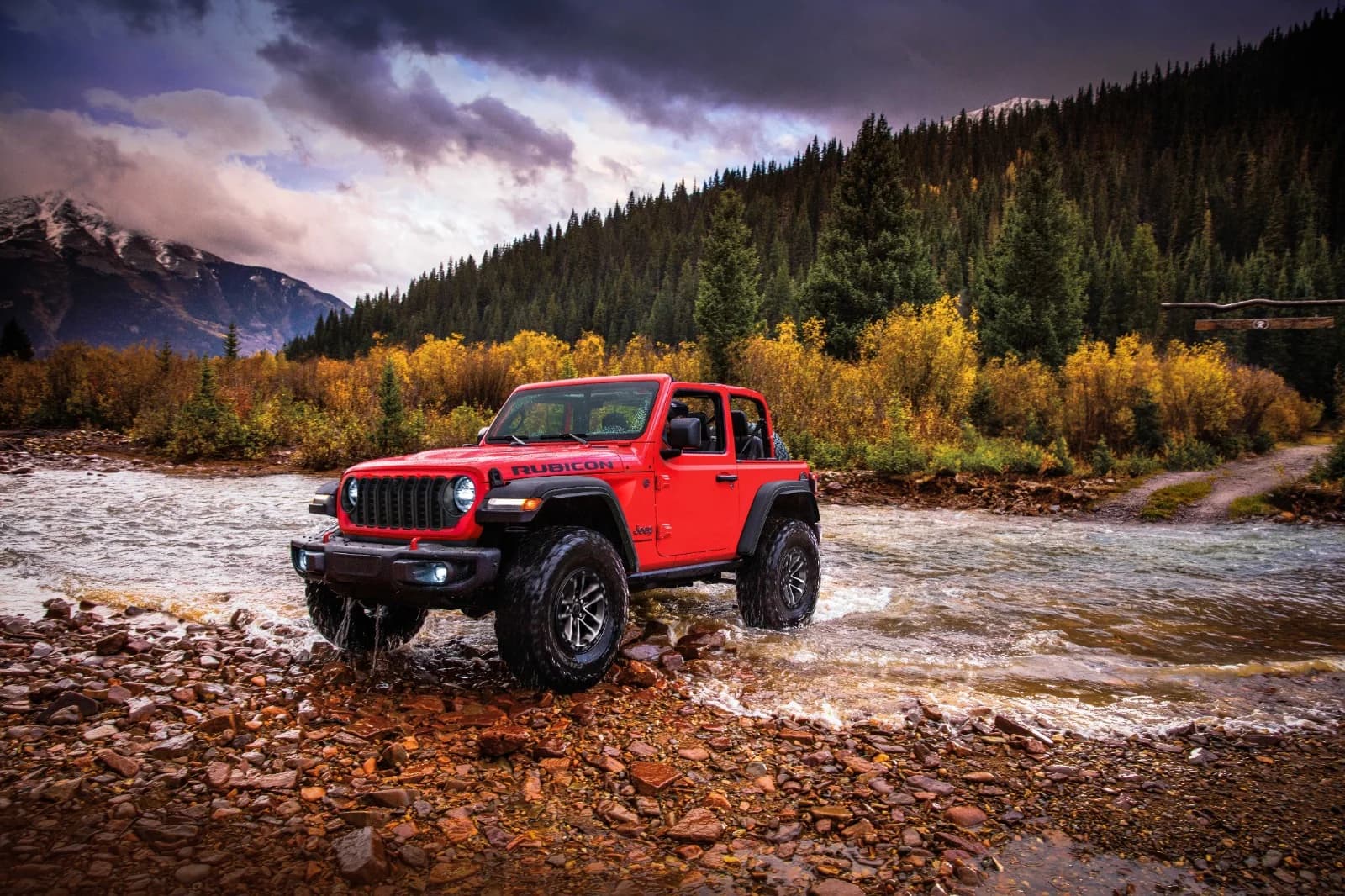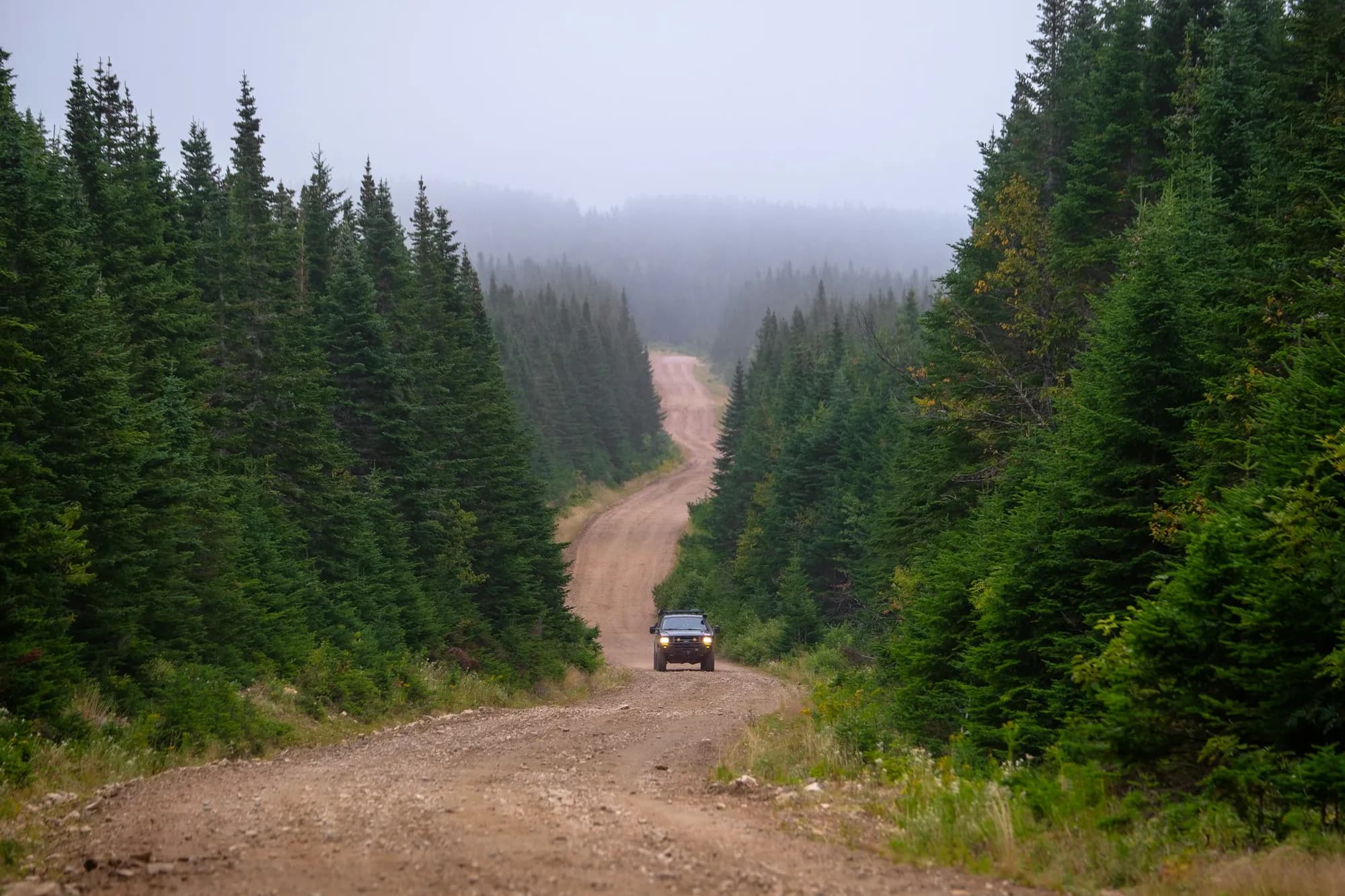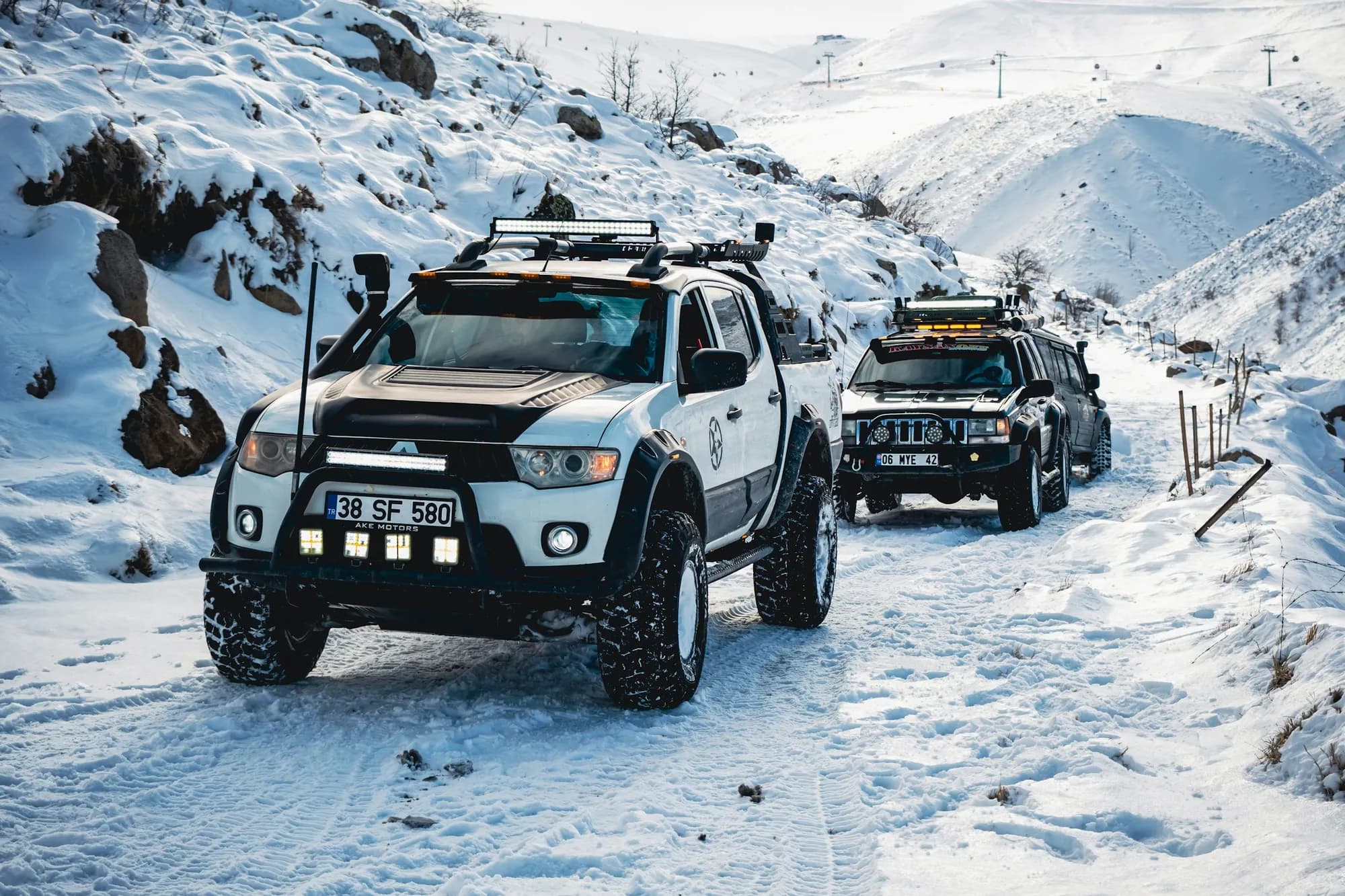
Photo: Muhammed İkitepe / Unsplash. Two trucks on a snowy trail on Mount Erciyes, Turkey.
On a group trail run, the radio does quiet, constant work. The leader calls a hard left at a fork, the tail rig confirms everyone made the turn, a spotter talks a driver down a ledge. For anyone new to group runs, the first equipment question is usually which radio to buy.
The most practical answer is whatever the group you wheel with already uses. The next step is understanding the rules attached to each service, because they decide who may transmit, how much power is allowed and whether you need anything on file with the FCC. The summaries below come from the federal regulations in Title 47.
CB: no license, modest power
Citizens Band radio uses 40 channels between 26.965 and 27.405 MHz. 47 CFR 95.963 Transmit power is capped at 4 watts of carrier power for AM or FM voice and 12 watts peak envelope power for single sideband. 47 CFR 95.967 External power amplifiers are banned, and the regulation states that the ban has no exceptions. 47 CFR 95.939
There is no individual license to apply for. The FCC's general rule for the Personal Radio Services is that it neither requires nor accepts individual license applications unless a service's own rules call for one. 47 CFR 95.305 Channel 9 may be used only for emergency communications or traveler assistance, and operators on every channel must give emergency traffic priority. 47 CFR 95.931
FRS and GMRS: shared channels, different rules
The Family Radio Service and the General Mobile Radio Service overlap more than their names suggest. All 22 FRS channels are also allotted to GMRS on a shared basis. 47 CFR 95.563 What separates them is the hardware and the paperwork.
FRS radios are low-power units. Effective radiated power is limited to 2 watts on channels 1 through 7 and 15 through 22, and half a watt on channels 8 through 14. 47 CFR 95.567 The antenna must be a non-removable part of the radio, so an FRS unit can't be connected to a roof-mounted antenna. 47 CFR 95.587
GMRS allows considerably more. Mobile, base and repeater stations may run up to 50 watts on the main channels. 47 CFR 95.1767 The service also includes 467 MHz channels that mobile and handheld units use to communicate through repeaters. 47 CFR 95.1763 That headroom is what a vehicle-mounted GMRS radio buys over an FRS handheld.
The tradeoff is a license. An applicant must be at least 18, a license normally runs ten years, and the licensee may let immediate family members operate under it. The rule's definition of family is broad, running from spouses and children to grandparents, in-laws, nieces and nephews. 47 CFR 95.1705 Eligibility rests on age and a few basic conditions rather than an exam. GMRS stations must also identify with their FCC call sign at the end of a transmission or series of transmissions, and at least every 15 minutes during a longer exchange. 47 CFR 95.1751
Amateur radio: more options, and an exam
Amateur radio asks the most of the operator up front. Every new amateur license requires passing an examination; the entry-level Technician class requires Element 2. 47 CFR 97.501 A Technician license includes privileges on the 2-meter and 70-centimeter bands. 47 CFR 97.301
The licensing rule applies vehicle by vehicle. When an amateur station transmits, it must have a control operator who holds an amateur license. 47 CFR 97.7 A group that standardizes on ham needs a licensed control operator for each rig that will transmit.
Setting up for a group run
Ask the run leader which service and channel the group uses before buying anything. Showing up on a different radio means spending the day relaying through someone else.
Mount a mobile radio where you can reach the microphone without looking away from the trail, and secure it so it can't become a projectile on rough ground. A handheld on the same service is useful for the person spotting outside the vehicle.
Agree on a primary channel and a backup before leaving pavement, keep transmissions short, and let the leader and tail vehicle do most of the talking at junctions. On CB, remember that channel 9 is set aside for emergencies and traveler assistance, and that emergency traffic takes priority on every channel.
If you are starting from nothing, the decision is mostly about how far your group's needs go. CB and FRS get you talking on day one. GMRS adds power and repeater access in exchange for a license. Ham adds more bands to work with, provided each transmitting rig has a licensed operator aboard.
Rules summarized from 47 CFR Parts 95 and 97 for general information, not legal advice. Check the current regulations and your equipment's certification before you transmit.