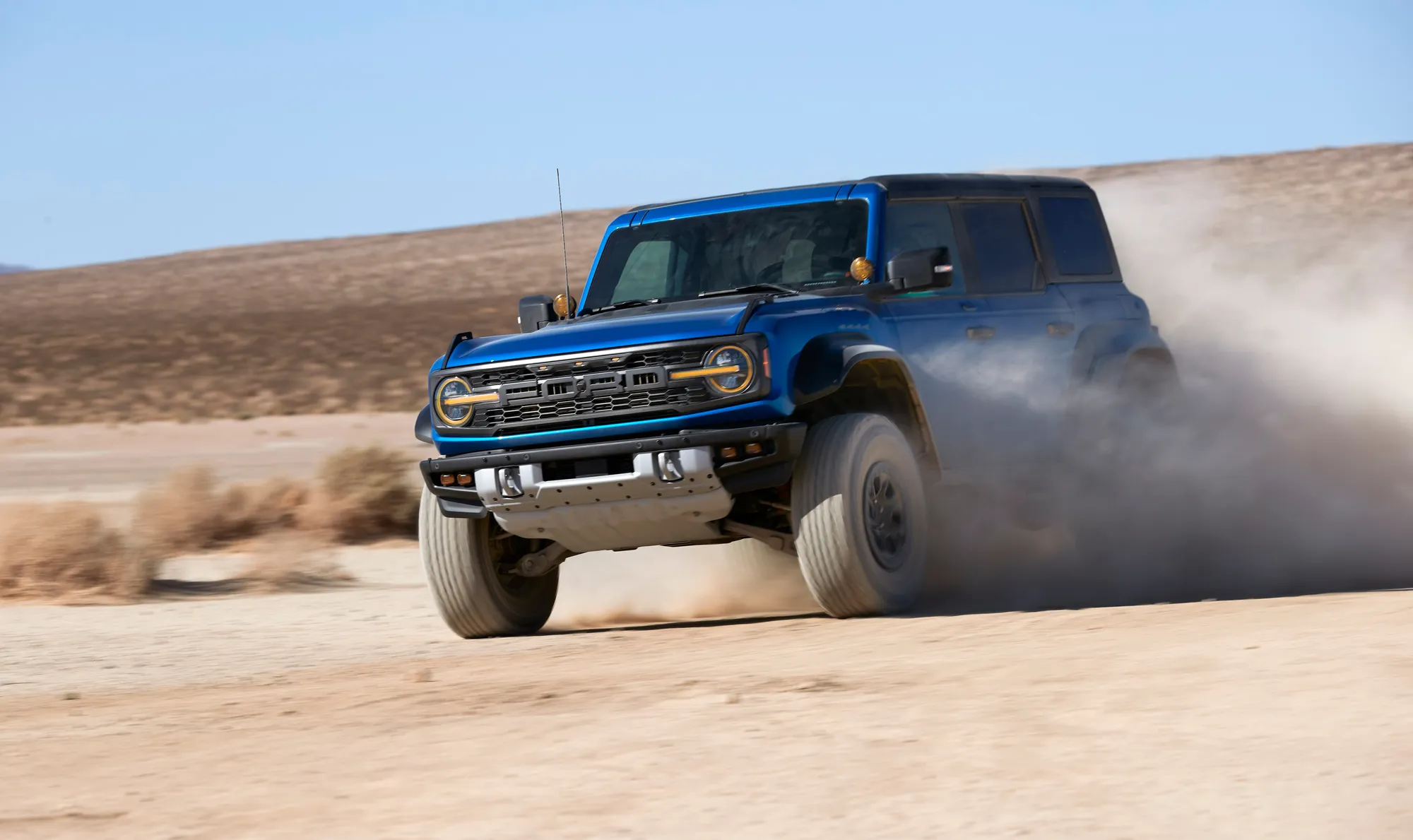
Photo: Ford Motor Company. A 2022 Ford Bronco Raptor off-road.
Modern 4x4s arrive with a row of trail buttons that would have sounded far-fetched to anyone who learned on a floor-mounted transfer-case lever and a careful right foot. Low-speed cruise control, terrain modes and brake-based turning aids now come straight from the factory.
They work best when you understand what they're doing, which is mostly managing throttle and individual-wheel braking on your behalf. Here is how Toyota, Ford and Jeep describe their systems, and where the manufacturers draw the limits.
Low-speed cruise control
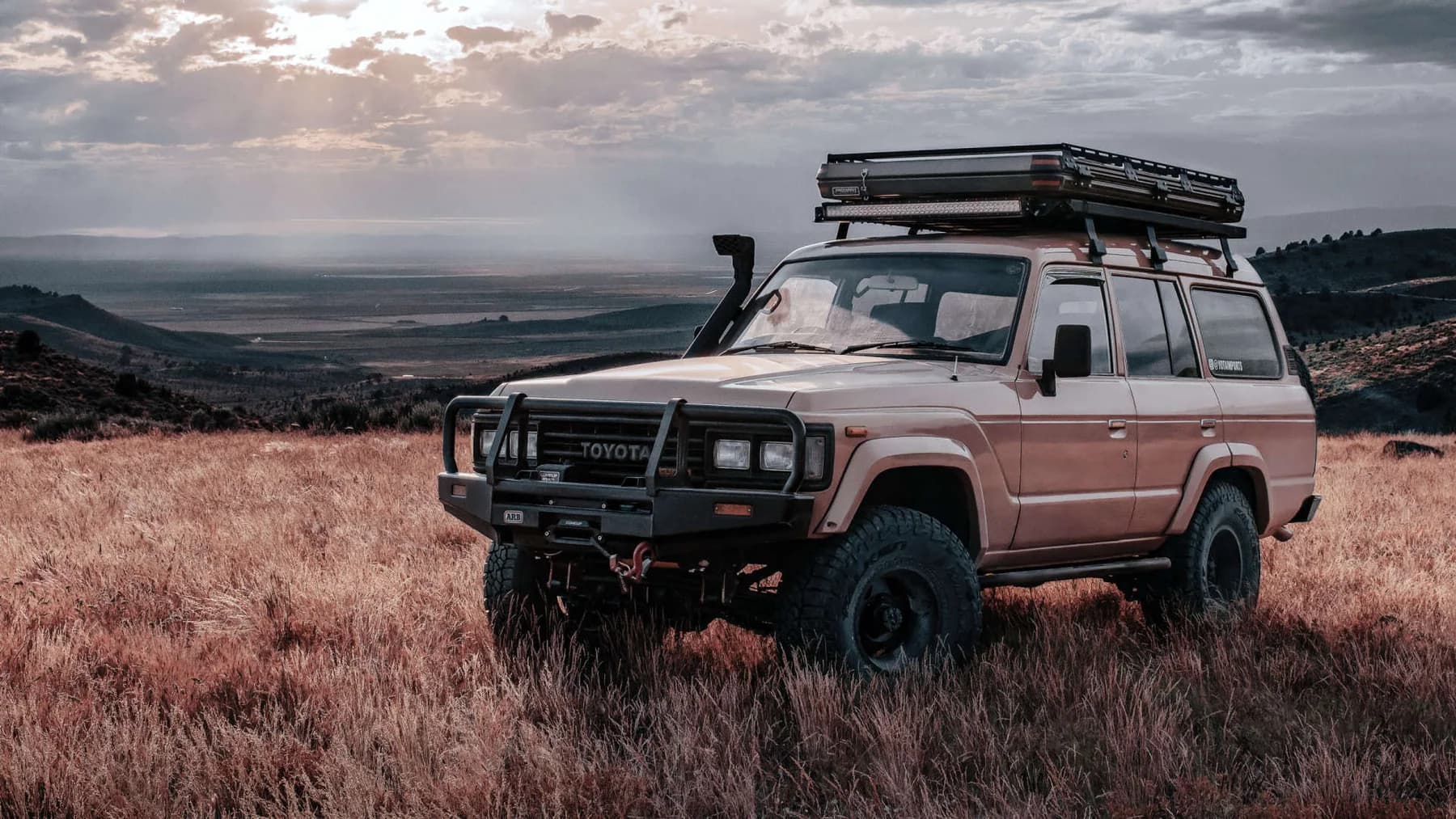
Toyota's CRAWL Control is the reference point. Describing it on the Land Cruiser, Toyota says it works with the transfer case in low range and regulates engine output and braking force to move the vehicle forward or in reverse at one of five driver-selected speeds, so the driver can focus on steering. Toyota's Land Cruiser release For the 2024 Tacoma, Toyota introduced a version it calls significantly quieter, still holding one of five selectable speeds. Toyota's 2024 Tacoma release
Ford's equivalent is Trail Control. On the Bronco, Ford limits it to models with automatic transmissions and sets ceilings by mode: it is unavailable above 20 mph in 2WD High or 4WD High, above 9 mph in 4WD Low and above 3 mph in reverse. The driver sets the speed with the steering-wheel buttons and can also adjust it by braking. Ford's Trail Control explainer
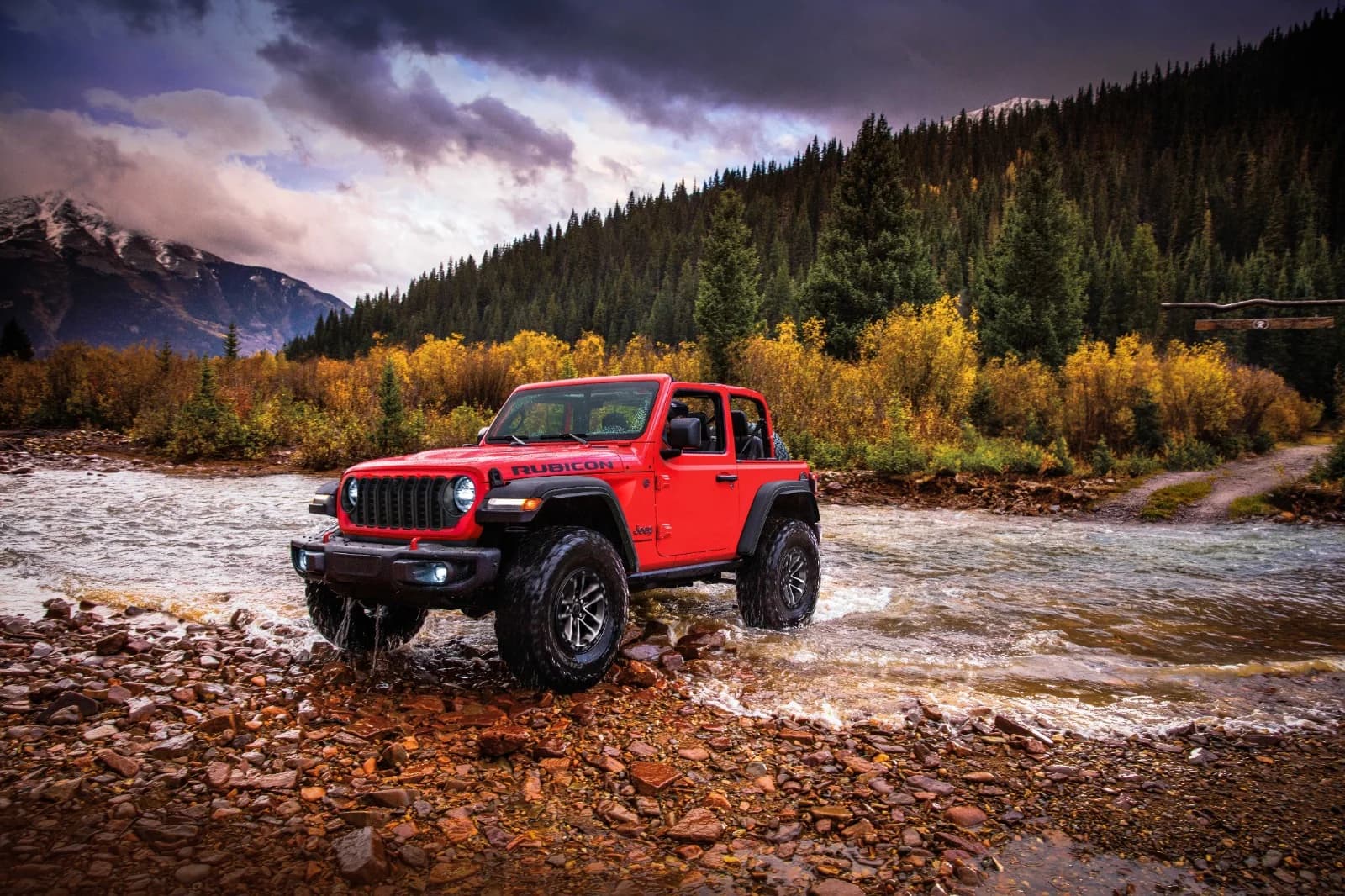
Jeep calls its version Selec-Speed Control. On the Wrangler Rubicon 392, Jeep says it manages vehicle speed in 4L without throttle or brake input, switches on with a dashboard button and adjusts between 0.6 and 5 mph. Jeep's Rubicon 392 release
All three hold a pace, not a line. Choosing where the tires go is still the driver's job, and so is deciding when a spotter would help more than a button.
Terrain modes and brake-based traction
Terrain selectors change how much wheelspin the electronics will tolerate. Toyota says Multi-Terrain Select allows more-than-normal wheel slip in loose surfaces such as mud and sand so the vehicle keeps moving instead of digging in. Its Mogul setting does the opposite on very uneven ground, minimizing slip so the system behaves more like a limited-slip differential. Toyota's Land Cruiser release On the 2025 4Runner, Toyota's Mud, Dirt and Sand settings work in both 4WD High and 4WD Low. Toyota's 2025 4Runner release
Brake-based traction control is a separate layer. Toyota describes its A-TRAC system as using both brake and throttle intervention to control wheelspin. Toyota's Land Cruiser release
A locker is a different tool. Toyota says the 4Runner's electronically locking rear differential splits power 50/50 between the rear wheels when traction is very limited. Toyota's 2025 4Runner release Knowing which system you have engaged tells you what to expect when a wheel lifts off the ground.
Descents, tight turns and one-pedal crawling
Downhill aids hold a target speed so the driver can concentrate on steering. Toyota describes Downhill Assist Control as helping hold the vehicle to a target speed with minimal driver intervention. Toyota's Land Cruiser release
Turn assists tighten the turning circle. Toyota's Off-Road Turn Assist does it by applying slight brake pressure to the inside rear wheel, creating a pivot effect. Toyota's Land Cruiser release Ford lists its own Trail Turn Assist among the F-150 Raptor's off-road features, alongside Trail Control and Trail 1-Pedal Drive. Ford's 2024 Raptor technical specifications
One-pedal modes blend braking into the accelerator. On the Bronco, Ford says the brakes engage as you ease off the pedal, that the feature works only in 4WD High or 4WD Low and not above 30 mph, and that lifting off may not bring the vehicle to a complete stop on steep grades. Ford's Trail Control explainer
Using them well
Read the owner's manual section for your exact vehicle. Activation rules differ by brand, and Ford ties Trail Control to automatic transmissions and Trail 1-Pedal Drive to particular Bronco engines. Ford's Trail Control explainer
Practice before you need them. Try each system on an easy grade with a clear runout, so you learn how quickly it reacts and what it sounds like. Toyota's emphasis on a "significantly quieter" CRAWL Control for the Tacoma is a hint that these systems can be noisy at work, and it's better to learn what normal sounds like on flat ground than on a ledge.
Keep the fundamentals in place. Ford states plainly that its one-pedal feature does not replace the driver's attention and judgment. Ford's Trail Control explainer None of these systems airs down your tires, walks the obstacle or picks a line.
Treat the buttons as a second pair of feet, not a second brain.
Feature descriptions come from manufacturer materials and vary by model year, trim and powertrain. Check your owner's manual before using any off-road driving aid.