A $90 jacket and a $250 jacket look nearly identical on the hanger. They stop looking identical at 40mph, roughly one second into a slide, which is a bad moment to learn about abrasion resistance.
Gear is the one place in motorcycling where price and outcome are strongly correlated, and it's also the one place riders economise first because the bike is the fun purchase. Here's what your money is actually buying, in the order you should buy it.
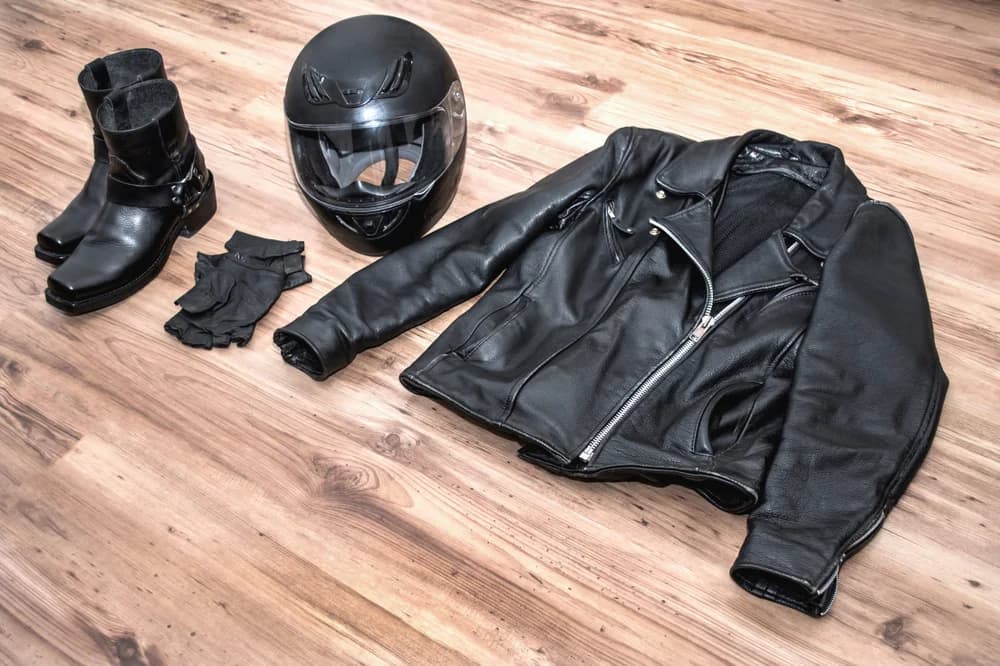
The helmet gets the first money
Standards, briefly. DOT in the US is a self-certification standard with random spot testing — it's a floor, not a rating. ECE 22.06 is the European standard, batch-tested, and it added oblique and rotational impact testing plus multiple impact speeds, which is why it's the meaningful baseline now. Snell M2020 is voluntary and stricter on high-energy impacts. SHARP in the UK isn't a standard at all; it's a rating program that publishes star scores from independent testing, and it's the most useful shopping tool available.
Fit beats price above a certain point. The helmet should be tight enough that the cheek pads move the skin on your face, with no hot spots after twenty minutes of wearing it in the shop. Heads come in round, intermediate oval and long oval; the wrong shape in the right size will give you a headache in an hour. Cheaper helmets often use two shell sizes across six helmet sizes, so a small head gets a big shell, which means more weight and more leverage on your neck.
Replace it after any impact, even one that left no mark. The EPS liner crushes once. Manufacturers generally say five years from the date sticker inside.
Why the $200 jacket matters
Abrasion resistance is the entire point, and it doesn't come from thickness or looks. The European garment standard EN 17092 rates jackets AAA, AA, A, B and C, with AAA being full leather-grade protection and C meaning it's basically just a bag to hold armor.
Armor is separately rated. EN 1621-1 Level 1 or Level 2 for shoulders and elbows, EN 1621-2 for back protectors. Most jackets ship with a foam back pad that exists to fill the pocket. Buy the real insert; it's usually somewhere around $40 to $70 and it's the highest-value upgrade in this entire article.
Fit matters here for a mechanical reason: armor has to sit on the joint at riding position, not near it. Zip the jacket, get in a riding crouch, and check where the elbow pieces land.
Mesh with proper armor and an AA rating is vastly better than a hoodie and is survivable in summer heat. Leather is still the best abrasion material and always will be.
Gloves and boots come before anything you'd rather buy
You land on your hands. Every time, reflexively, no matter what you intend. A glove needs a palm slider so it skids instead of gripping and twisting your wrist, scaphoid protection, and external seams or reinforcement so it doesn't burst open.
Boots need to cover the ankle, resist torsion, and stay on. Sneakers come off in a slide, laces and all. Over-the-ankle riding boots with a shift pad start around $150 and it's money you'll never think about again.
Riding jeans with aramid lining and knee armor are the compromise most people actually wear. Single-layer AA-rated jeans exist and are worth the extra.
Building it in stages
Approximate, market-dependent, and worth treating as a starting frame rather than a quote:
- Entry, roughly $600 to $700. ECE-rated helmet, textile jacket with Level 1 armor, gloves with palm sliders, over-the-ankle boots. Upgrade the back protector immediately.
- Mid, roughly $1,200 to $1,500. A helmet you actually want to wear, an AA-rated jacket with Level 2 armor, riding jeans, gauntlet gloves, better boots.
- Track or serious road, $2,000 and up. Leather one- or two-piece, back and chest protection, race gloves, race boots. A one-piece is a track requirement almost everywhere.
Used gear: what's fine and what isn't
Never buy a used helmet. You cannot see a crushed EPS liner and the seller's memory of dropping it is not evidence.
Jackets, pants and boots secondhand are fine if the stitching is intact, the leather isn't dried out, the zips work and the armor is present and unbroken. Check the armor labels, because a lot of used jackets have had the good inserts pulled.
Nobody needs a lecture about wearing gear. The practical version is simpler: your gear budget is not competing with your bike budget, it's competing with your emergency room deductible, and one of those two numbers is a lot larger than the other.