“Four left turns” describes a track layout. It explains almost nothing about the work of racing on it.
The interesting question is how a driver and crew keep a car useful as tires, traffic and track conditions change. Repetition makes those changes visible. It does not make managing them simple.
An oval is not one kind of corner
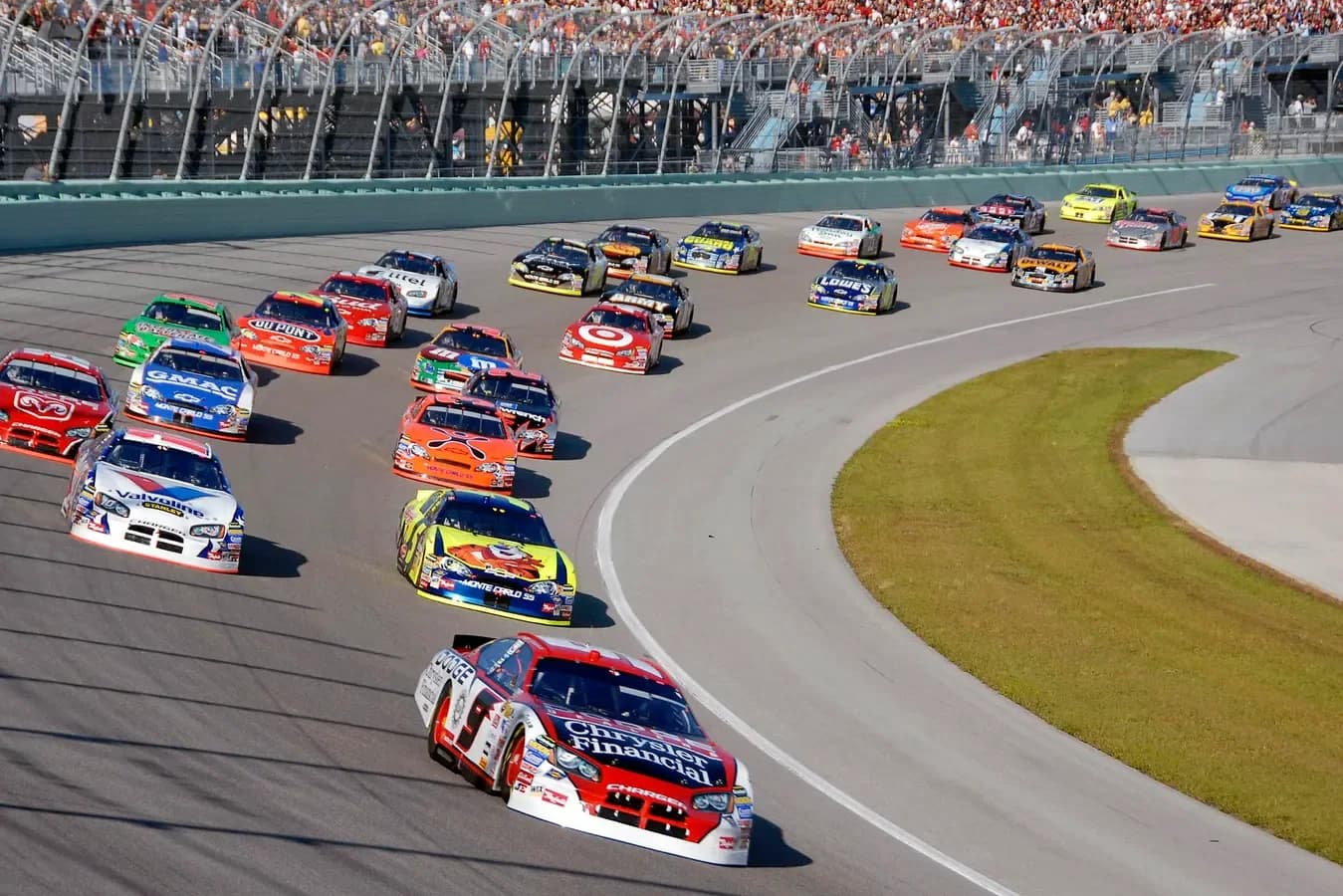
NASCAR's schedule includes short tracks, intermediate ovals and superspeedways, with different banking, surfaces and corner shapes. A line that works at one circuit is not a universal solution.
Even the two ends of one track can ask for different compromises. The car has to remain usable through an entire run, rather than feeling perfect at one point in one corner.
For a viewer, that means watching more than the passing move. Notice where drivers place the car on entry, where they are able to maintain momentum and whether they move to a different lane as the run develops.
The car has changed too
Descriptions of stock-car setup often mix different generations. The NASCAR Cup Series introduced the Next Gen car in 2022 with independent rear suspension, replacing the previous solid rear axle. It does not have the old track bar.
That matters when an explanation claims a current Cup crew is moving a track bar during a pit stop. It is describing hardware from an earlier car. NASCAR's Next Gen introduction identifies that change, along with other differences in the platform.
Setup remains a complicated job. Tire pressures, suspension settings and the options permitted by the applicable rules give teams ways to influence balance. The exact adjustment menu depends on the series, car and event.
Traffic changes the problem
A car circulating alone and the same car surrounded by competitors do not experience the same airflow. Drafting can influence straight-line performance, while following closely or running alongside another car can change the aerodynamic forces acting on both.
That makes positioning a technical decision as well as a tactical one. A driver is choosing a path through traffic that may alter the car's behavior before the steering input changes.
There is no useful universal claim that every driver holds full throttle around every superspeedway lap. Starts, traffic, avoidance, fuel management and the particular rules package make the actual race more complicated.
Balance is a conversation
When a driver says the car is tight or loose, the crew needs more information. Where in the corner? Under braking, at steady throttle or on exit? Has the behavior appeared as the tires aged, or only when following another car?
A useful description connects the symptom to the situation. A successful adjustment then has to improve that situation without making another phase worse.
That is a familiar engineering problem to anyone who has tried to improve a road or track car. Racing compresses the time available to identify it, act and assess the result.
Consistency is something to watch
The line on one lap is only part of the story. A driver can trade immediate pace against tire condition, position and the options that may be available later.
This is why two cars that appear evenly matched early in a run can separate later. It is also why the fastest visible lap does not automatically belong to the strongest race.
Oval racing and road racing share many skills, including control, observation and judgment. They place those skills under different demands. There is no need to diminish either discipline to appreciate how much is happening in a corner that looks familiar on television.
Updated September 5, 2026: corrected the current Cup suspension description and removed unsupported speed, reaction-time and universal setup claims.