Le Mans becomes easier to follow once you stop treating the field as one race with a single meaningful position. Different categories share the circuit, while competing for their own results.
For the 2026 edition, those categories were Hypercar, LMP2 and LMGT3: three classes. The official 2026 spotter guide introduction identifies all three. An LMP2 Pro/Am classification should not be confused with a fourth basic vehicle class.
Hypercar includes two technical routes
Hypercar is the top prototype category. In the 2026 regulations, it accommodates LMH and LMDh designs.
LMH gives manufacturers freedom to develop their own car within the regulated performance framework. It can be hybrid or non-hybrid. LMDh combines a chassis from an approved constructor with a common hybrid system and manufacturer-specific elements, including the engine and bodywork.
The 2026 FIA WEC media guide describes the distinction. The two routes do not mean two separate Hypercar races.
It is also wrong to describe cross-series eligibility as a benefit exclusive to LMDh. The FIA, ACO and IMSA convergence agreement established a path for LMH machinery as well, subject to the applicable requirements.
LMP2 is a separate prototype contest
LMP2 cars are purpose-built prototypes governed by a tightly controlled technical formula. They have their own class result and driver-lineup requirements.
A field dominated by one chassis should not be described as proof that only one chassis was permitted by the underlying regulations. The distinction between the rulebook and the cars actually entered matters.
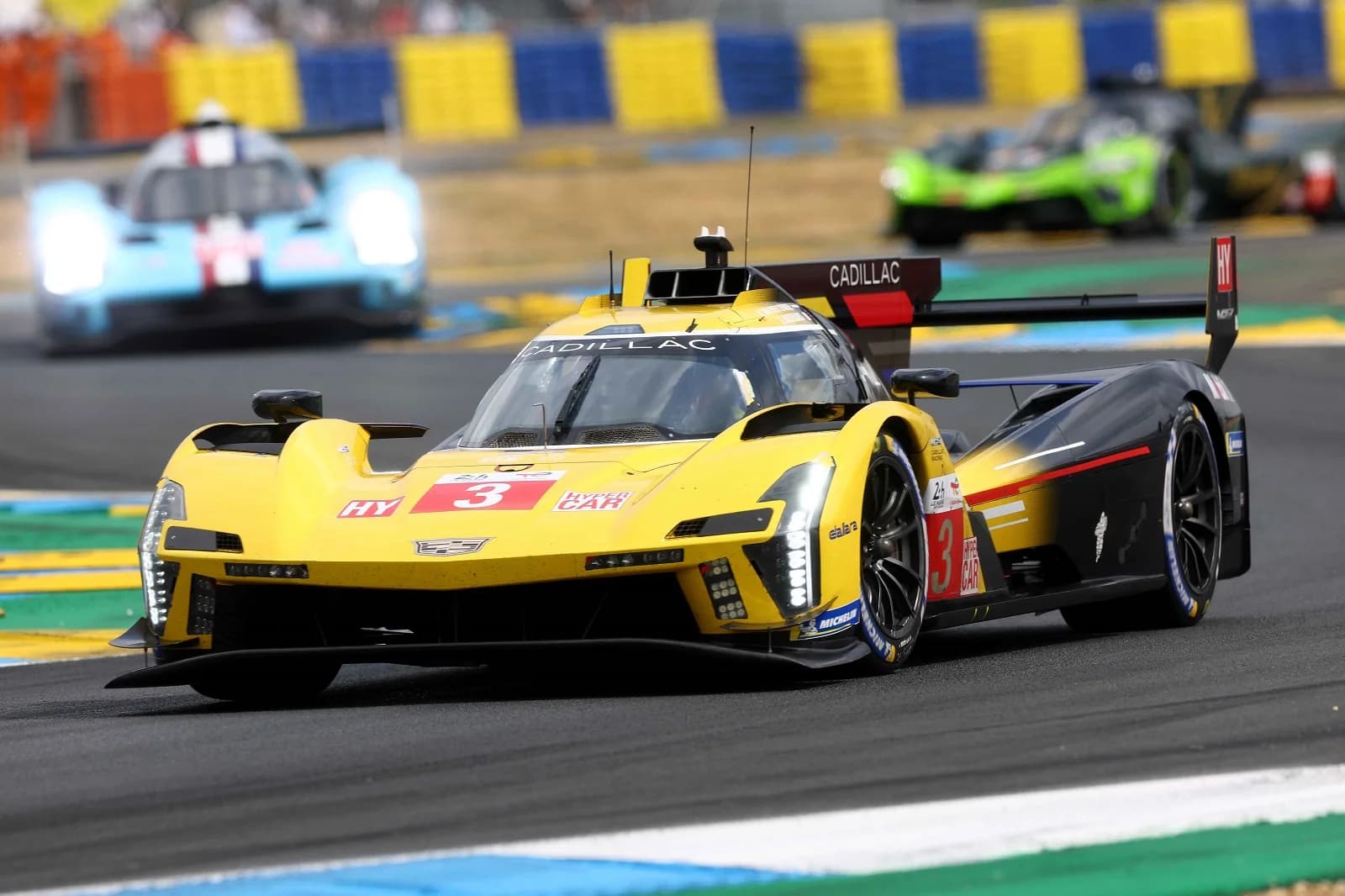
For viewers, the practical point is simpler: an LMP2 car running behind the overall leaders may still be leading its own race. Its position becomes meaningful when compared with the other LMP2 entries.
LMGT3 connects the race to recognizable road-car shapes
LMGT3 uses GT3-based racing machinery, adapted to the category's requirements. These are dedicated competition cars, even when the body shape resembles something seen in a dealership.
The name does not make every GT3 car automatically eligible for every series. Homologation, the championship's requirements and acceptance of the entry still matter.
The 2026 spotter guide is useful here because it ties the car's appearance to its number, team and category. That is a more reliable reference than guessing from the badge alone.
Balance of Performance supplies a framework
Different designs need a way to compete within the intended performance range. Balance of Performance uses regulated parameters to manage that comparison.
It is a sporting and engineering mechanism, not a guarantee of identical cars or identical race outcomes. Teams still have to prepare, operate and drive their cars. The result cannot be reduced to either “all engineering” or “all BoP.”
For a race viewer, the important habit is to distinguish a published adjustment from a claim about why a particular team won.
Traffic connects the three races
A faster category regularly catches a slower one. Both drivers are managing their own competition while sharing the same piece of circuit.
That creates decisions about timing, positioning and predictability. A class leader can lose time in traffic without losing a battle to another car in the same class. A lower overall position can still represent a successful race.
Watch the class order, pit-stop cycle and recent lap pattern together. Endurance racing rewards that wider view: the car in front at one moment may be on a different schedule, and a patient decision can matter long after it disappears from the broadcast.
Updated September 5, 2026: corrected the class count and technical descriptions; this explainer refers specifically to the 2026 structure.