A fast car needs tires. An aerodynamically sophisticated car gives those tires more load as speed rises. That is the useful starting point for understanding why a Formula 1 car can look planted in one corner and suddenly struggle when another car appears ahead of it.
The physics has not changed for 2026. The machinery and the rules have, which makes it important to separate the familiar DRS story from the system on the current cars.
Downforce adds load without adding the same amount of mass
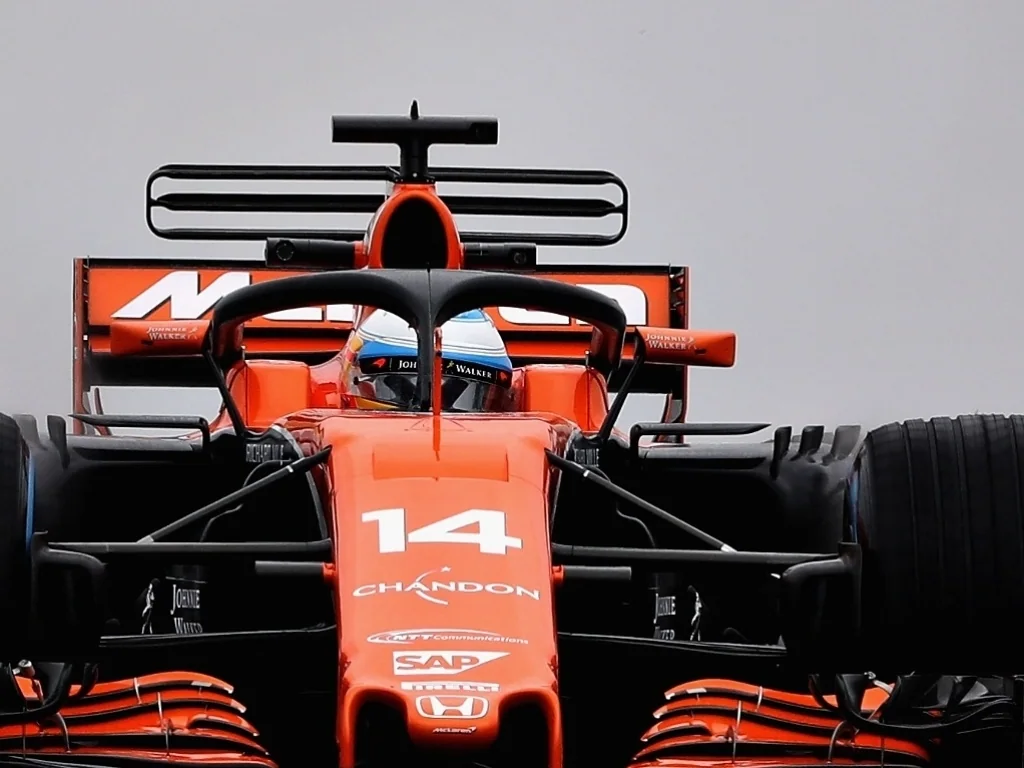
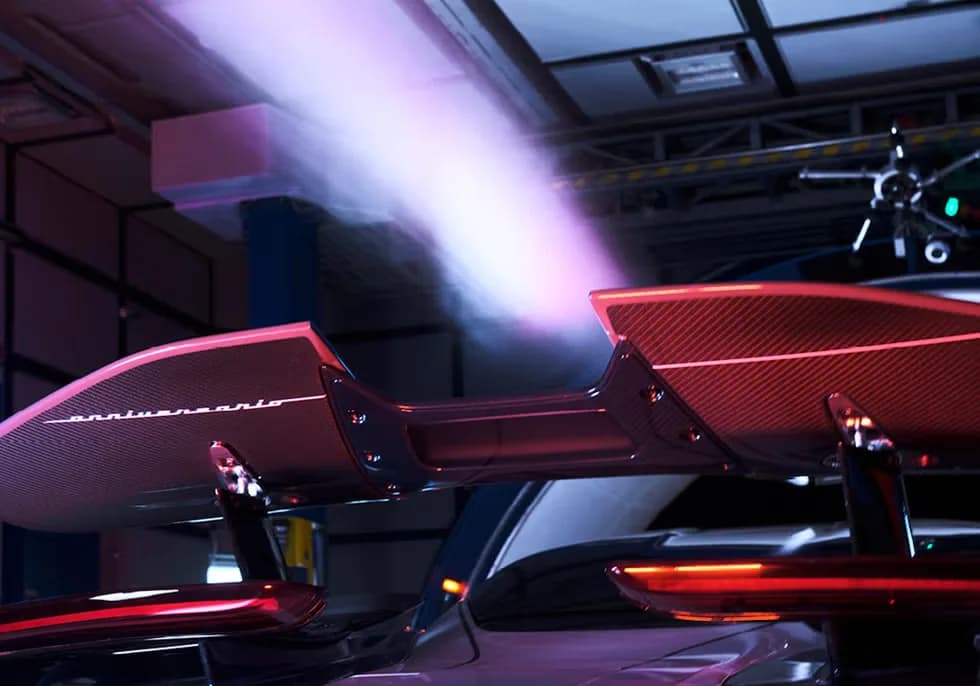
Wings, the floor and the rest of the body shape the flow around the car, producing pressure differences and a net aerodynamic force. For a racing car, part of that force is directed downward.
The explanation does not depend on air particles having to meet again after taking different routes around a wing. That popular longer-path story is wrong. NASA's explanation of lift connects pressure differences with the change in the airflow's momentum.
For a fixed shape and operating condition, aerodynamic force varies with the square of speed. Doubling speed would therefore give four times the force in that simplified comparison. Real cars complicate it: ride height, pitch, yaw and the surrounding airflow change the effective aerodynamic behavior. NASA's lift equation makes those dependencies explicit.
More tire load can produce more cornering force, but it does not make the tire infinitely capable. The extra load and the mass of the car are different quantities, and the suspension still has to keep the tire working.
Following another car changes the input
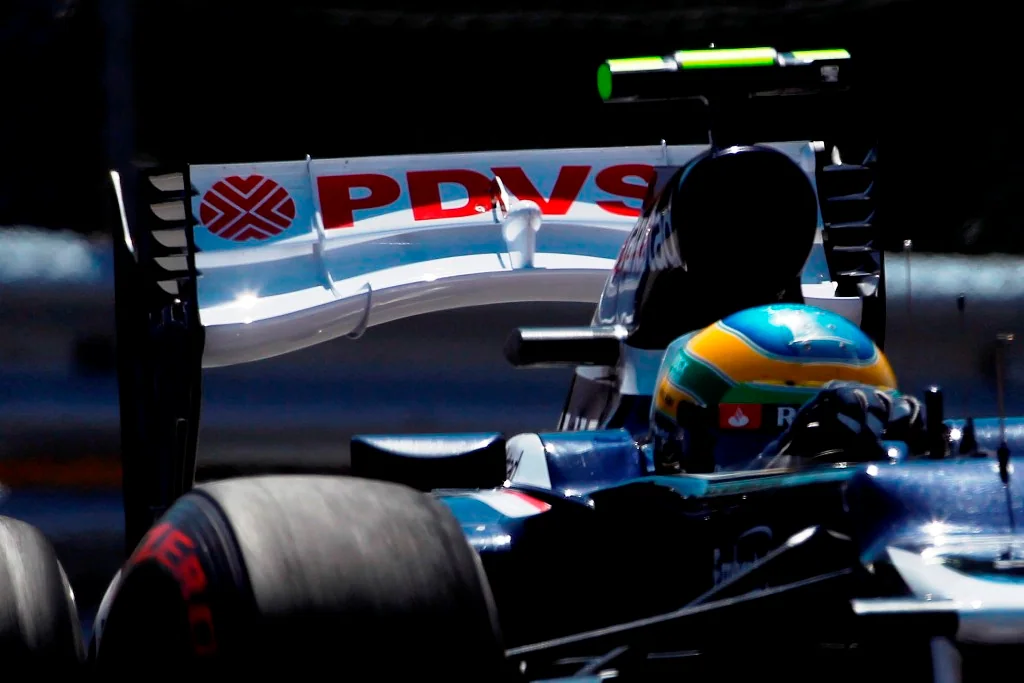
An aerodynamic package is developed around particular airflow conditions. The wake behind another car changes those conditions. A following car can lose aerodynamic performance or experience a different balance between its front and rear.
That is why a driver may close rapidly on a straight yet struggle to stay close through the corner before it. Straight-line benefit and cornering difficulty can exist in the same pursuit. Calling both effects “the slipstream” hides the distinction that matters to the driver.
DRS belongs to the previous rule cycle
DRS opened part of the rear wing to reduce drag. In racing use it was an overtaking aid, governed by eligibility and designated zones.
For 2026, Formula 1 replaced that arrangement with movable front and rear wings. The FIA describes a lower-drag Straight Mode and a higher-downforce Corner Mode. Active aero is available at permitted points without the old requirement to be following within one second; reducing drag also supports the new power units' energy demands. FIA's 2026 explainer sets out the distinction.
Overtake Mode is the other half of the story
The additional overtaking assistance comes through electrical energy deployment. It is separate from the wing configuration, with its own eligibility conditions.
For viewers, that means an opening wing is no longer sufficient evidence that a driver has earned a DRS-style advantage over the car ahead. Watch the gap, the permitted aero zones and the energy deployment together.
The interesting engineering problem remains the same: give the driver enough cornering performance to stay close, then enough opportunity to complete a pass. A lap-time advantage is useful. A car that can use it in traffic is more useful still.
Updated September 5, 2026: corrected the wing explanation and replaced the outdated description of current DRS rules.