A wing's size tells you remarkably little without the rest of the installation. What matters is the force it produces on that car, where the force acts and what happens as the car's speed and attitude change.
Effective aero begins with evidence. Before buying a part, ask what was evaluated, how it was evaluated and which conditions produced the advertised result. A rendering of colorful airflow is not, by itself, an answer.
Start with the force
An aerodynamic surface changes the pressure and movement of the surrounding air. The resulting force can act upward or downward depending on the shape, orientation and flow. There is no requirement for two air particles separated at the front of a wing to meet again at the rear. NASA explicitly identifies that familiar “equal transit time” explanation as incorrect. NASA on lift
For a fixed aerodynamic coefficient and air density, force scales with the square of airspeed. Double the speed and the equation predicts four times the force. The qualification matters: changing ride height, angle or airflow can change the coefficient, so a real car is not simply one number multiplied upward indefinitely. NASA's lift equation
For buying decisions, this means a downforce claim needs its speed attached. A figure without a test condition is incomplete information.
Ask whether the part was tested on the car
An isolated wing is not the complete vehicle. The body ahead of it influences the air it receives, and the mounting arrangement affects both airflow and load transfer.
Verus, for example, describes evaluating its FT86 rear wing and uprights using computational fluid dynamics, with structural analysis used for the uprights. That is useful disclosure about a development process. It remains the manufacturer's account, rather than independent confirmation of a result on your own car. Verus's FT86 wing documentation
Look for the exact body style, configuration and mounting instructions. Ask whether the published work covers the part alone or the complete car, and whether it includes the angle you plan to use. Treat missing information as a question for the supplier.
Numbers need context
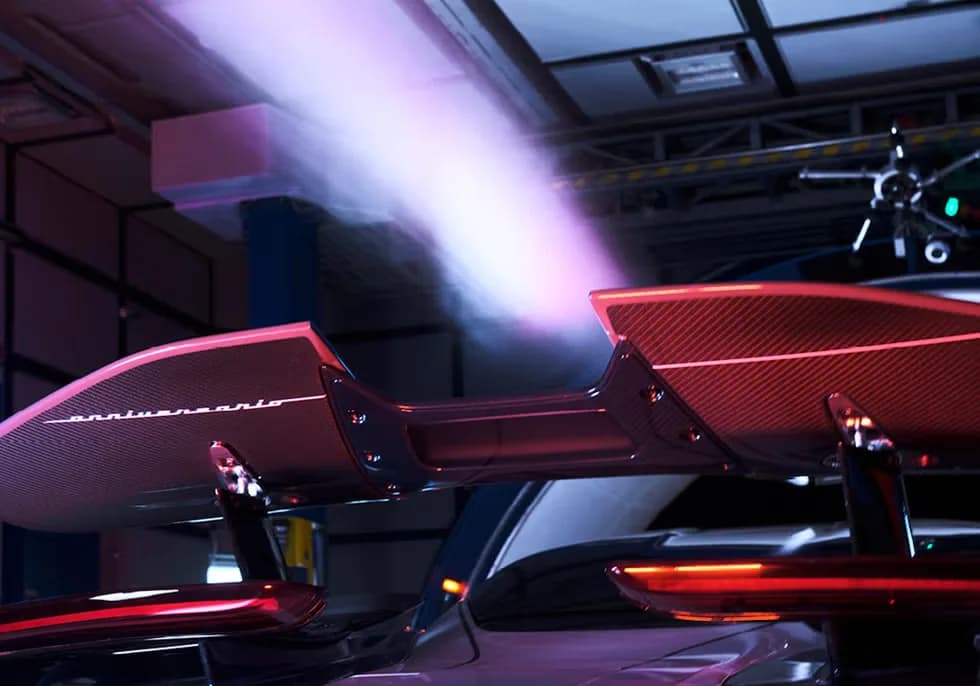
Computational simulation, wind-tunnel testing and circuit testing answer related but different questions. Verus has published a comparison between wind-tunnel measurements and its CFD results, illustrating why checking a prediction against a physical test is useful. A simulation is evidence of analysis; agreement with measurements is additional evidence. Verus's wind-tunnel comparison
For a track build, discuss the complete aerodynamic balance with someone qualified to develop that chassis. Front and rear changes belong in one plan. Installation also needs to carry the intended loads through suitable structure, following the component maker's requirements.
Do not use public roads as an aero test venue. Controlled circuit work requires an appropriate driver, a sound car and a method that can distinguish the modification from changes in tires, weather and technique.
Buy a solution you can explain
The right question is not whether aero “works.” It is whether a documented component solves a defined problem on your car. If the aim is appearance, say so. If the aim is circuit performance, insist on the conditions and evidence behind the claim.
Good aero makes a build easier to understand. The part, its mounting and the rest of the setup all have a reason to be there.
Updated September 5, 2026.