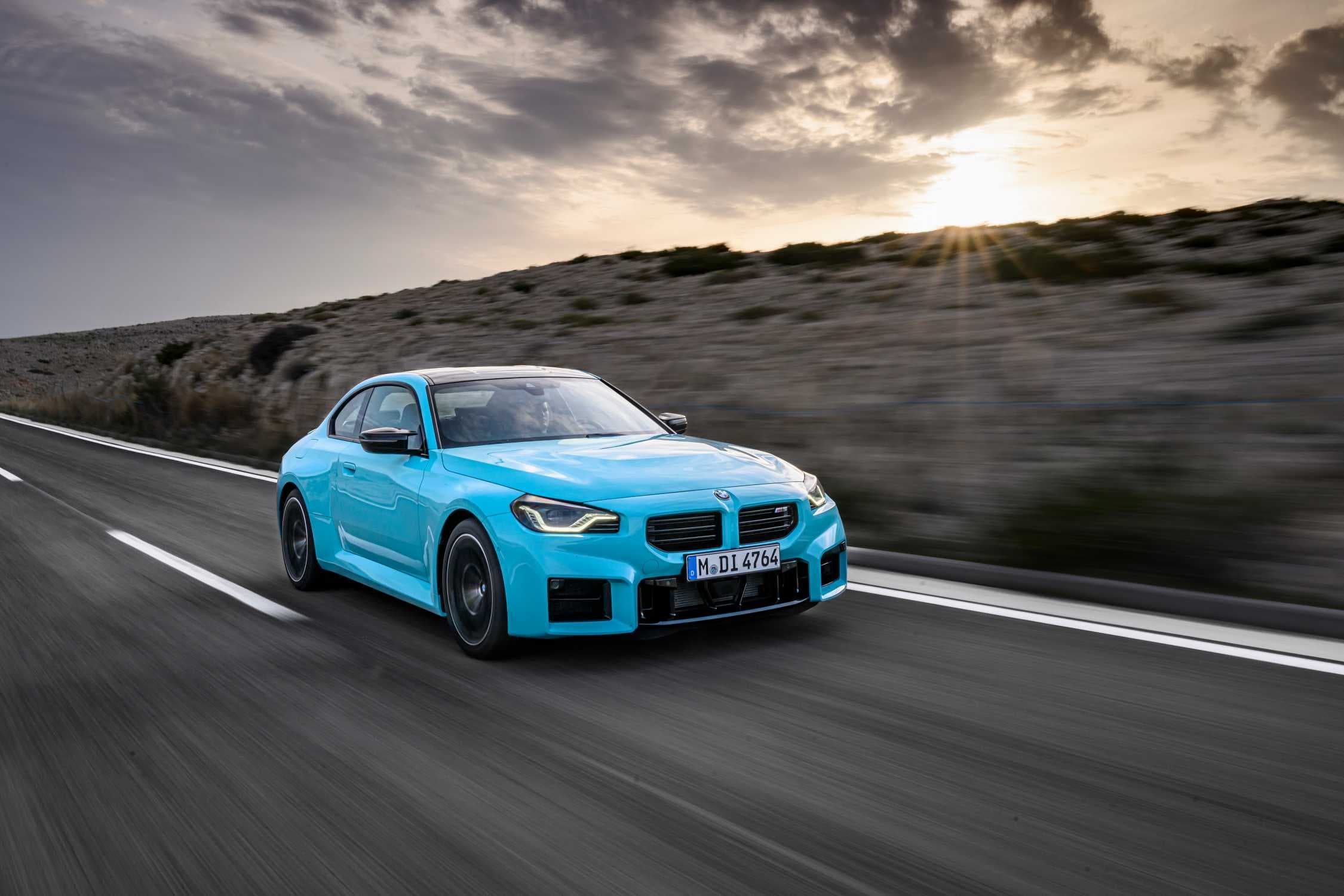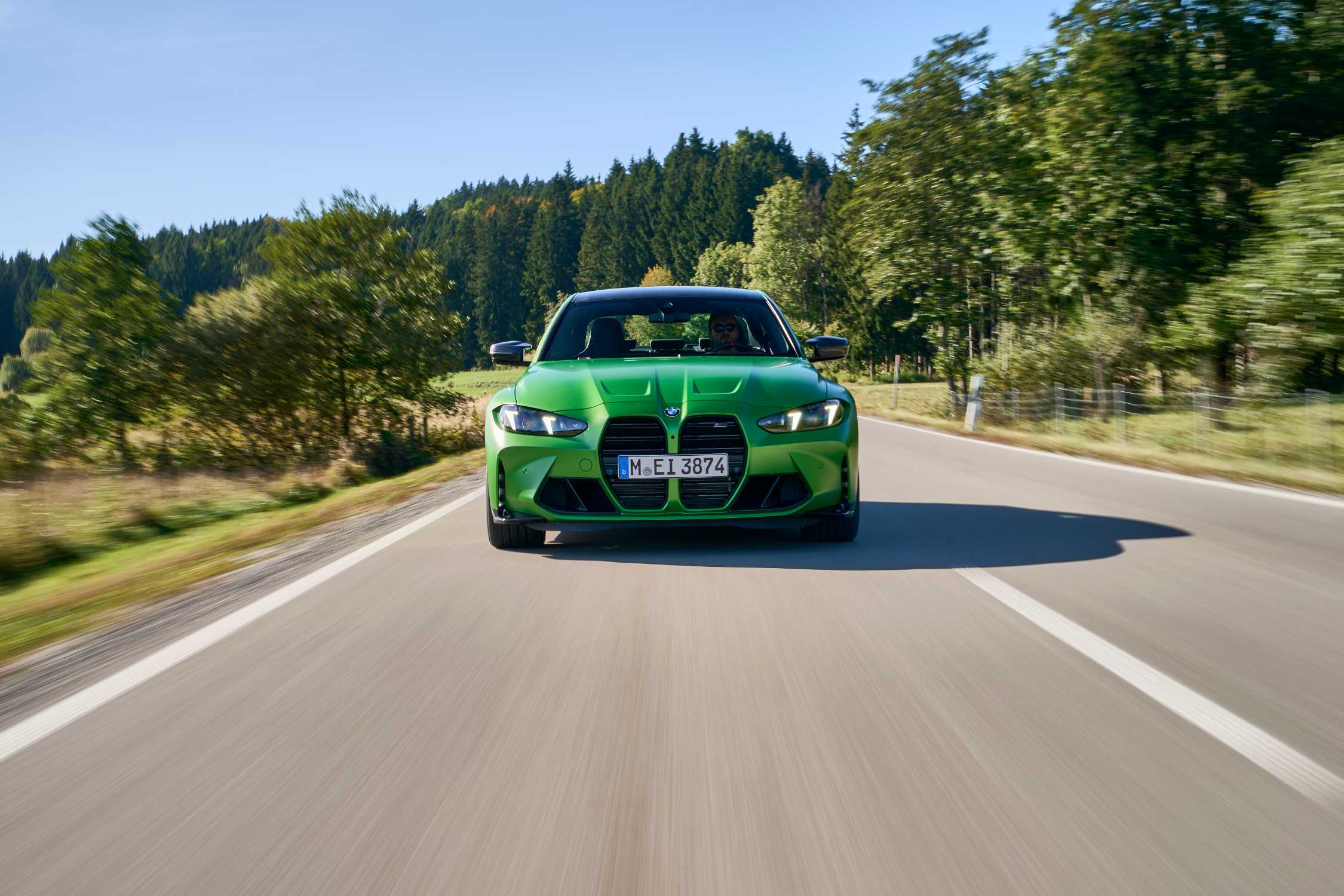
The interesting question about an M2 CS is what you intend to do after buying it. Keep the factory package and learn it? Add a personal wheel and color direction? Develop it into something more focused? Each route can make sense, but they begin with understanding what is already there.
For the G87, the CS conversation should start with an accurate specification sheet. That prevents an earlier-generation M2 CS, a modified regular M2 and the current special edition from becoming interchangeable in classifieds or build threads.
The US 2026 specification
BMW rates the G87 M2 CS at 523 hp and 479 lb-ft, with an eight-speed automatic and rear-wheel drive. The US release lists four seats and a 3,770-pound curb weight. Its stated 97-pound saving is against the regular M2 equipped with the eight-speed automatic. Carbon-fiber components and forged wheels contribute to that reduction. BMW's 2026 M2 CS release.
Keep that comparison intact when quoting the saving. It is not a claim that every CS weighs 97 pounds less than every regular M2, regardless of market, equipment or transmission. A weight figure with its reference car is more informative than a larger number without context.
The transmission choice is another clear distinction. The US 2025 regular M2 offers a six-speed manual as well as an automatic. If three pedals are essential to your project, that belongs near the top of the shortlist discussion. BMW's regular M2 specification.
Learn the setup before rewriting it
Our first step would be to document the car in its delivered state: installed tires, alignment, options, service history and any previous work. Store photographs of the wheels, underside and body components alongside those records.
Then use the car in the setting you bought it for. If that includes a circuit, prepare it with a qualified shop and work through the organizer's inspection requirements. Instruction and consistent sessions give you a better reference for later changes than impressions collected while learning an unfamiliar track.
Record what you want to improve in ordinary language. More confidence under braking? Better tire life? More comfortable road behavior? A preferred stance? Those are different objectives, and they may require different solutions. Bring the objective to the installer before selecting the component.
A personal CS does not need a complete parts swap
There is plenty of room for an owner's identity in careful detailing, a considered color relationship and a well-documented setup. Decide which factory elements you want to make more visible and which you want to keep understated.
If you change wheels, get a fitment assessment for the exact brake and suspension configuration. If you change seats or suspension, consider the whole installation and how the car will be used. Keep records and original parts where practical so the next decision is an informed one.
For a larger build, make a before-and-after plan with a specific question for each stage. A project can justify extensive changes; the explanation should go beyond the availability of aftermarket parts.
What makes a useful CS feature
A proper owner feature would show more than an arrival photo and a power figure. We want to know how the car is used, which settings were retained, which consumables it goes through and what the owner changed their mind about. Actual mileage, invoices and photographs make that account useful to somebody planning a similar car.
The G87 M2 CS deserves that level of attention. Its factory specification gives the story a starting point. The owner's decisions supply the rest.
TUNERS ownership and build-planning analysis, not a firsthand review. Specifications and the weight comparison refer to BMW's US 2026 release.
Photo: © BMW AG. Factory BMW M2 CS (G87). BMW PressClub.
Updated September 5, 2026.