The 924, the 944 and the 928 are treated as the Porsches that do not count. The asterisk cars. The ones people mention with a little apologetic shrug before changing the subject to air-cooled 911s.
That reading is wrong, and it is also the last genuinely cheap corner of a brand that has run out of cheap corners.
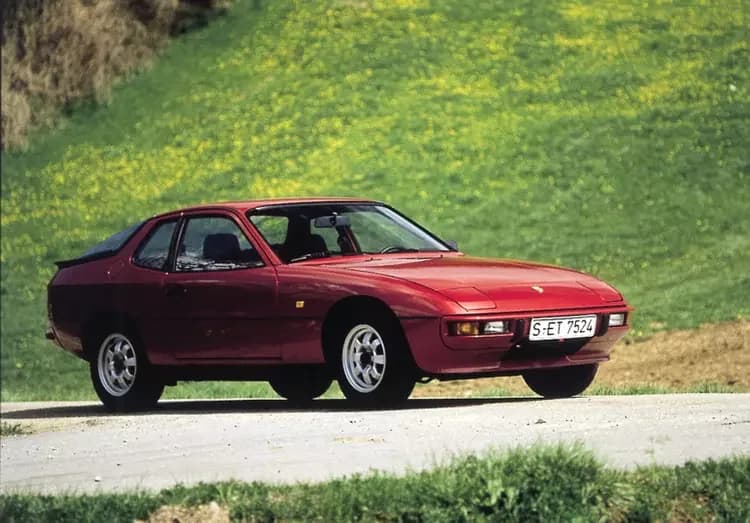
The 924 got sentenced for its engine
The story everyone repeats is that the 924 has a van engine. The truth is close enough to sting. Its 2.0-litre four came from the wider Volkswagen and Audi parts bin, and a version of that engine family did indeed find work in a commercial vehicle.
What gets left out is what Porsche did with the rest of the car. The 924 put the gearbox at the back in a transaxle, connected to the engine by a torque tube, giving it weight distribution the 911 could only dream about. It was light, it was aerodynamic for its era, and it handled beautifully on almost no power.
The 924S later fixed the only real complaint by fitting the 944's 2.5-litre engine into the earlier, lighter body. That car is one of the great forgotten bargains and nobody talks about it.
The 944 is the one
Wider body, Porsche's own engine, and a chassis that still holds up. The 944 took the transaxle layout and gave it a proper 2.5-litre four with a balance shaft arrangement licensed from Mitsubishi to keep a big four-cylinder civilized.
The result is a car with near-even weight distribution, low mass, and steering that tells you things. It is not fast by modern standards and it does not pretend to be. It is fast enough to be interesting and slow enough that you can use all of it, which is a rarer combination than horsepower.
The 944 Turbo, the 951, took it past two hundred horsepower and turned it into a genuine period supercar chaser. The 968 that followed added displacement and a slicker gearbox before the line ended.
Prices sit somewhere around $7–15k for a healthy naturally aspirated car, with Turbos asking considerably more. The parts that matter, meaning the timing belt service on an interference engine, are non-negotiable maintenance rather than optional.
The 928 was supposed to end the 911
This is the part that gets forgotten. Porsche did not build the 928 as a cheaper alternative to the 911. It built it as the replacement.
Front-mounted V8, rear transaxle, a proper grand tourer designed to take the company upmarket while the rear-engined car quietly retired. It won European Car of the Year, the only sports car ever to do so, and it spent seventeen years in production growing from 4.5 litres to the 5.4 of the GTS.
Then the 911 refused to die. Customers kept buying it, kept demanding it, and the car that was supposed to be a farewell tour outlived its own successor. The 928 ended up as the answer to a question nobody had asked loudly enough.
Why the market punished them
Three reasons, and only one of them is about the cars.
The first is the engine layout. A Porsche with the engine at the front reads as a lesser Porsche to a lot of people, regardless of how it drives. The second is the era. These cars came from the period when the company was chasing volume, and enthusiast history has never been kind to volume.
The third is money, and it is the real one. A neglected 928 is one of the most expensive cheap cars in existence. Complicated V8, complicated electronics, and forty-year-old wiring that has opinions. Buyers learned to be afraid, and fear keeps prices down long after the underlying reason stops applying to well-kept examples.
The take
If you want a Porsche and cannot afford a 911, stop treating the front-engine cars as a compromise. A sorted 944 gives you more usable enjoyment per dollar than almost anything else wearing the badge, and it does it with a chassis nobody has ever criticised.
Buy the one with a documented belt service and receipts, not the cheapest one on the listings. Then enjoy the fact that the people sneering at your engine placement are paying five times as much for a car they are too nervous to drive in the rain.