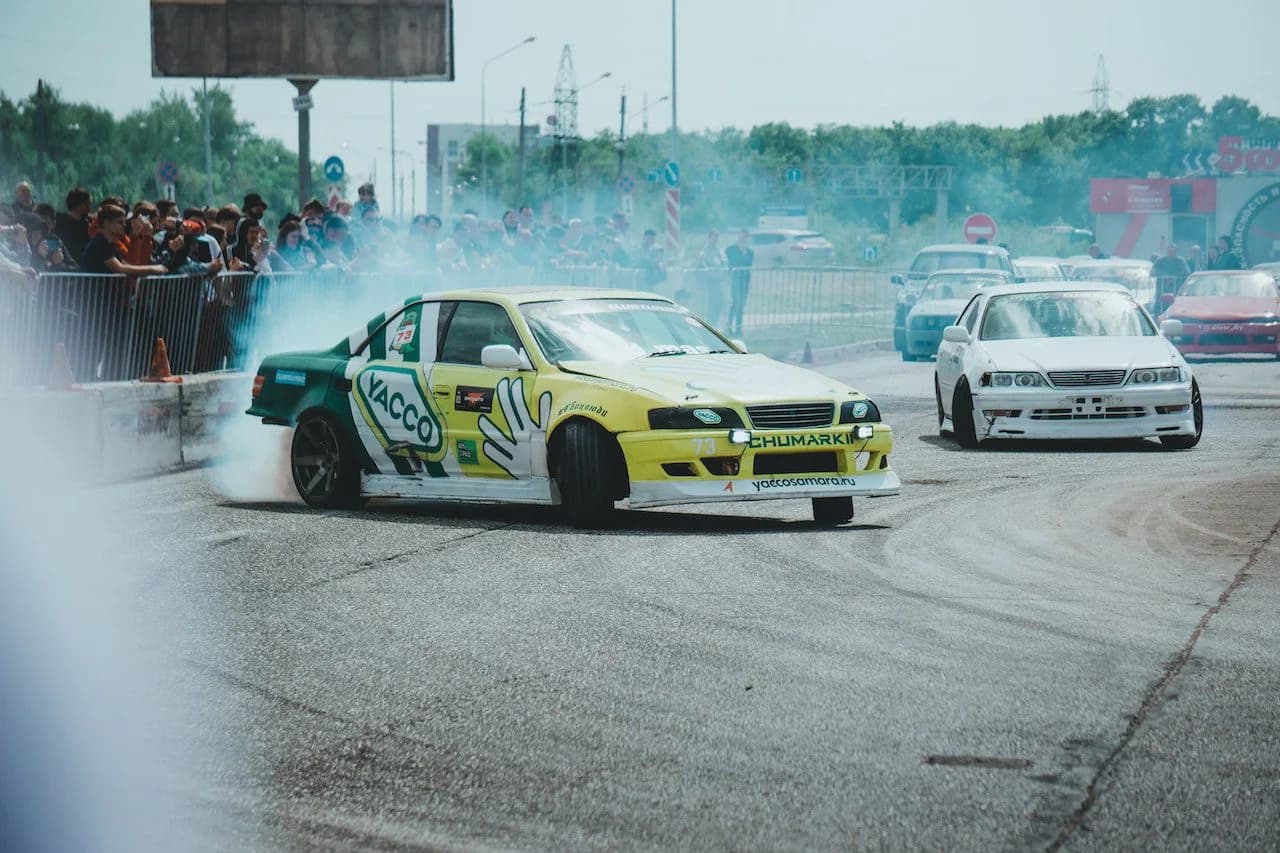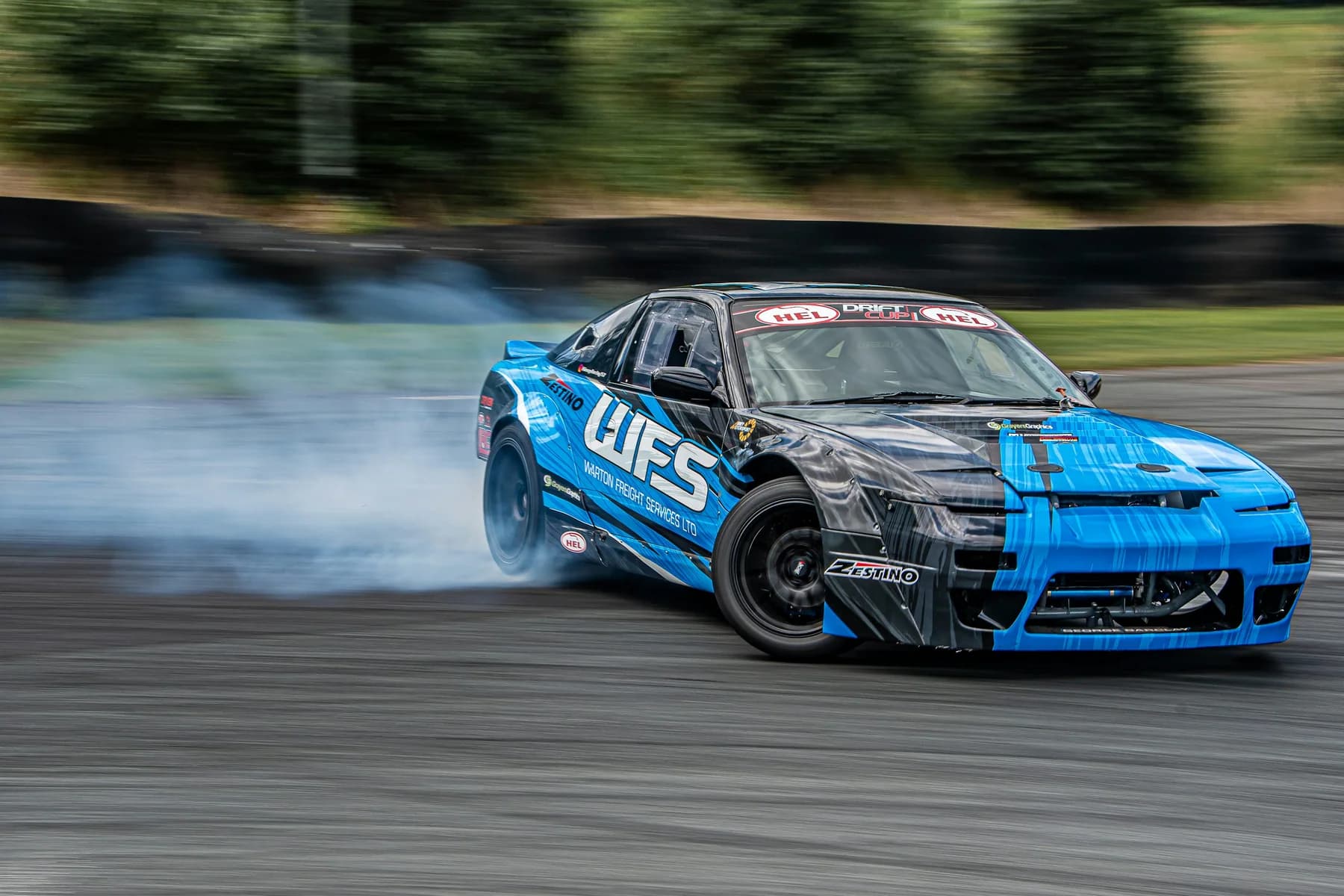
A good drift run is more than the instant the rear of the car steps out. The entry has to connect to a line, a sustained slide and an exit. Watch an experienced driver at a sanctioned event and the interesting question becomes why a particular input suited that car and corner.
Clutch kick, feint, handbrake and power oversteer describe different ways of initiating rotation. They are useful vocabulary for watching motorsport or talking to an instructor. They are not interchangeable recipes, and a written overview cannot choose the appropriate speed or inputs for an unfamiliar car.
Four terms you will hear
Clutch kick uses a brief clutch disengagement and re-engagement to introduce a change in driven-wheel torque. It depends on the car having an appropriate manual drivetrain; the phrase does not describe a universal technique for every modern transmission.
Feint, also called a flick, involves a change of direction and load transfer before the intended corner. The timing and vehicle response matter; body roll alone does not explain whether the car will rotate as intended.
Handbrake initiation uses rear-wheel braking to disturb rear grip. It also reduces speed. A competition hydraulic handbrake and a road car’s electronic parking brake should not be assumed to function the same way.
Power oversteer uses drive torque to exceed the rear tires’ available grip. Whether it happens depends on the surface and complete setup, not a universal horsepower threshold.
Racelogic’s DriftBox manual describes these families of initiation and restricts its drifting discussion to controlled environments. It is a useful terminology reference, not a current vehicle-specific training syllabus. Racelogic manual, drifting section.
Watch the whole run
Instead of judging an entry by smoke or abruptness, follow where the car goes next. Does the driver reach the intended part of the course? Is the transition between corners settled? What changes when the driver repeats the run?
For competition, use the actual judging brief. Formula DRIFT publishes separate sporting, judging and technical documents for 2026. A casual practice session and a scored competition have different purposes; a spectacular moment on video is not enough to reconstruct a judging decision. Formula DRIFT rulebooks.
Make the coaching brief specific
Before a first session, tell the instructor about your experience and the exact car: transmission, differential, tires, suspension and any relevant changes. Ask what the session is designed to teach, how exercises progress and how the instructor decides you are ready for the next one.
Our preference is to use a small number of clear observations between runs. Describe where an exercise stopped working or which part felt inconsistent. Avoid changing several parts or settings while also learning a new exercise; it makes the result harder to interpret.
A practice log can stay simple: the exercise, the instructor’s feedback, one agreed change and the result. It gives the next session a starting point beyond trying to recreate a favorite clip.
Progress belongs to the venue
Book an organized drift school or sanctioned practice day with appropriate instruction. Confirm technical inspection, protective equipment and the driver-group rules. Permission for solo practice does not automatically include tandem driving or passengers. Club Loose’s current rulebook is one example of a venue-specific system with group and regional requirements. Club Loose rules.
The most useful entry is the one that serves the exercise and the line the instructor has set. Learn to identify the methods, understand the car’s response, and let consistent supervised practice determine the progression.
TUNERS motorsport explainer for controlled circuit activity; no firsthand instruction or universal setup values are claimed.
Updated September 5, 2026.