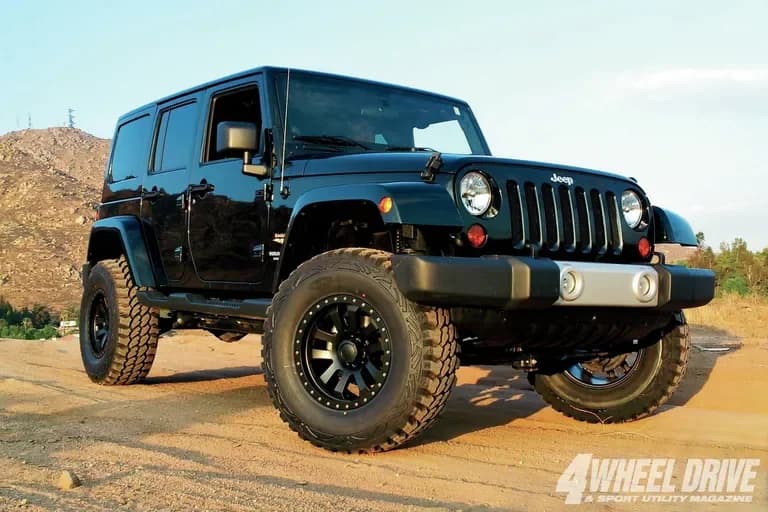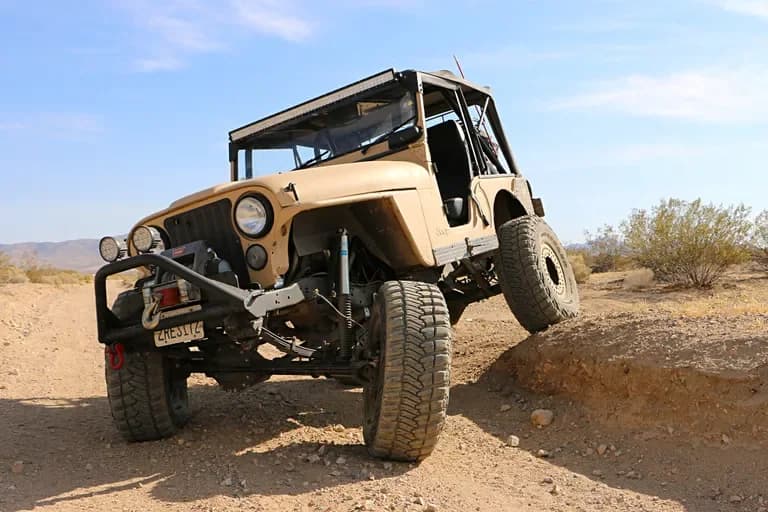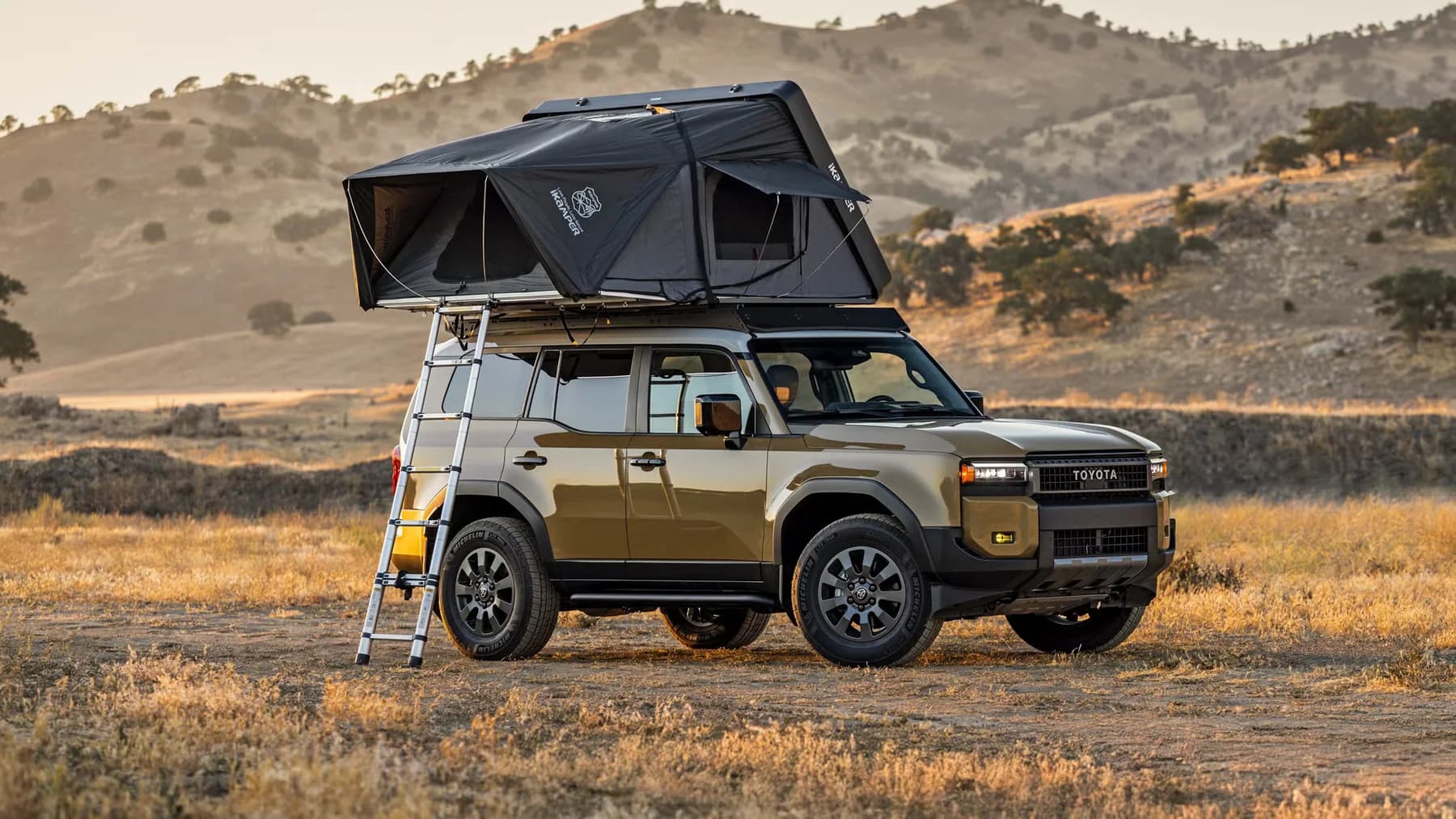
A lift kit does exactly one thing: it makes room for bigger tires. That is the whole job. It does not add traction, it does not add clearance under the axle, and above about three inches it starts taking away driveline angles, steering geometry, and rollover margin you cannot buy back.
Buy tires. If they fit, you are done. Here is where the money should go instead.
One through three: the ones that decide whether you get stuck
1. Tires, then the tools to use them. Size is the least interesting part. A 33 on a proper wheel width, with a compressor and deflators in the back, will out-drive a 37 at street pressure every day of the week. The gear that lets you run 15 psi and still get home is worth more than two inches of spring.
2. Recovery gear you know how to use. A kinetic rope, two soft shackles, rated recovery points, and a shovel. Not a chain, not a tow ball, not the ratchet strap off your dad's boat trailer. Then go practice in a field with a friend, because reading about recoveries and performing one are different skills and the failure modes are lethal.
3. A rear locker. The cheapest real capability upgrade in existence. A drop-in automatic locker in the rear axle costs a fraction of a suspension package and fixes the actual reason you got stuck, which was one unweighted tire spinning while the other sat on solid ground.
Four through six: the ones that keep it alive
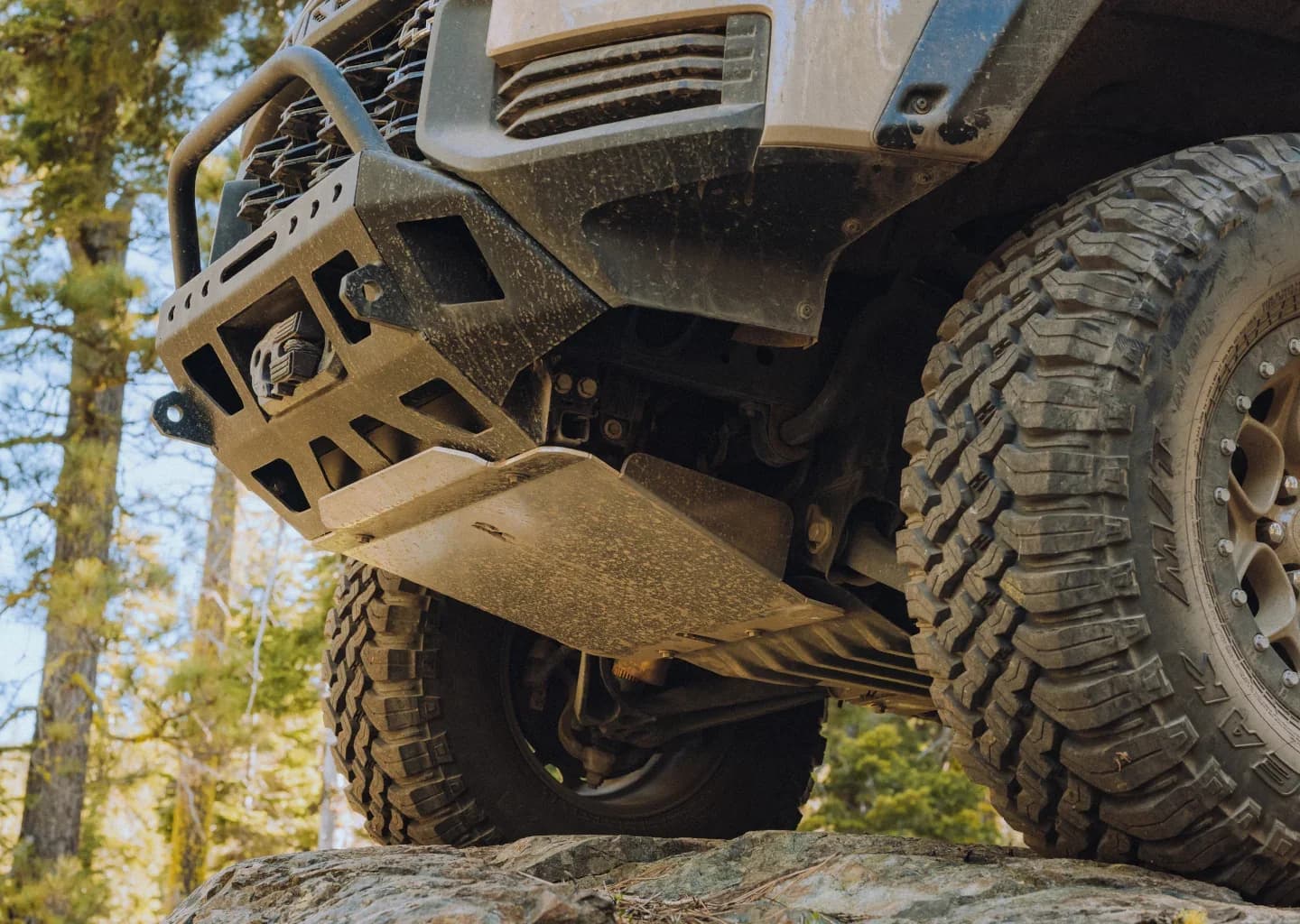
4. Sliders and skid plates. Sliders are not side steps. They are structure, they tie into the frame or the unibody rails, and they let you use a rock as a pivot instead of folding a rocker panel. Skid plates go over the transfer case and the gas tank, in that order. If you drive real rock, sliders will save you more money than any other bolt-on, because body damage is the most expensive damage per unit of fun.
5. Gears, once the tires get big. Fit 35s to a stock-geared truck and you have taxed every ratio in the box. First gear crawls worse, the automatic hunts on hills, and the transmission works hard enough to cook fluid on a long grade. Regearing costs real money because it is labor-heavy, and it is the difference between a truck that drives properly and one that feels tired everywhere.
6. Better shocks at stock height. Nobody posts about this and everybody should. A quality damper at factory ride height transforms washboard and rutted two-track more than a spacer lift on the original shocks ever will. Heat is the enemy on long dirt roads, and a bigger bodied shock manages heat instead of fading into a pogo stick.
Seven: the free one
Seat time, and somebody who knows more than you. Go out with a group. Get spotted through something that scares you. Watch a stock rig walk a line you failed on 35s and let it embarrass you into learning.
Driver skill has no installation cost and no weight penalty. It is also the only upgrade that transfers to the next truck.
So when do you actually lift it?
When the tire you want rubs and you have already done the rest. At that point, buy the smallest lift that clears, keep it around two to three inches, and budget for the supporting parts nobody mentions: adjustable control arms or a track bar to recenter the axle, a longer brake line, a corrected pitman arm or drop bracket depending on platform, and an alignment.
Six inches on street tires is a costume. It raises the center of gravity, it puts the driveshaft at an angle that eats U-joints, and it makes the truck less stable on exactly the off-camber terrain where stability matters most.
The uncomfortable part
The most capable stock vehicles in this space, the Rubicons and the TRD Pros and the Sasquatch Broncos, are capable because of lockers, gearing, and disconnecting sway bars. Not ride height.
Every trailhead in America has a guy on 37s and a six-inch kit getting winched off a hill by somebody in a stock 4Runner with a rear locker and 20 psi. Do not be the guy paying $4,000 to be that guy.