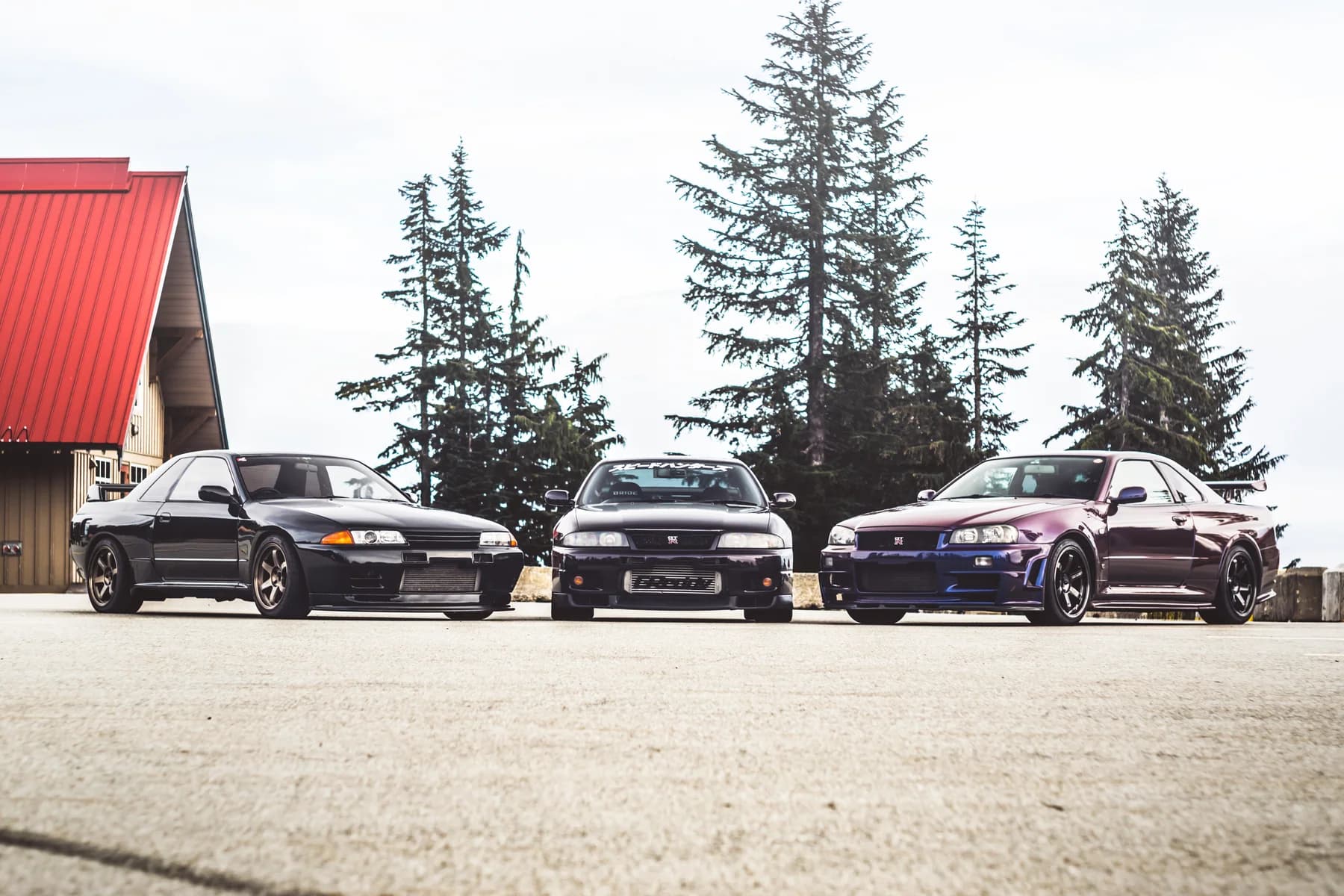
The R34 Skyline GT-R is becoming importable to the U.S. one build month at a time. Under NHTSA's 25-year exemption, an R34 that left the line in October 2001 cleared the bar in October 2026, while one of the last, built in early August 2002, waits until August 2027. Here is how the clock works, and what else is in the way.
How the 25-year rule actually works
A motor vehicle at least 25 years old can be imported without regard to whether it meets the Federal Motor Vehicle Safety Standards, and it is declared under Box 1 of the HS-7 form at entry. The 25 years run from the date of manufacture, not the model year.
That is why R34 eligibility rolls instead of flipping every January. If no manufacturer's label shows the build date, NHTSA says to have documents such as an invoice from the first sale or a registration record showing the car was registered at least 25 years ago. Failing that, a recognized vehicle historical society's statement can serve. The paperwork has to prove the age; the seller's listing doesn't.
Younger cars need a registered importer, a NHTSA eligibility decision and a bond worth 150 percent of their declared value, and NHTSA warns that right-hand drive can fail its similarity test. For a Japanese-market R34, age is the realistic door.
The EPA half
EPA has its own provision for vehicles over 21 years old, and every R34 GT-R clears that age, because Nissan ended production in early August 2002.
The catch is the engine. EPA says it has long read the rule to require an engine identical to the one originally installed, meaning the same model and configuration. It urges importers to call its Imports Hotline first; cars that arrive without an exemption or an Independent Commercial Importer arrangement can be seized or exported, and fined. If the RB26 has been swapped, get EPA's answer in writing before you bid.
Which R34s are eligible, and when
By NHTSA's date-of-manufacture rule, any R34 GT-R built on or before October 22, 2001 has cleared 25 years as of October 22, 2026. Nissan's records set the windows.
- GT-R and V-spec, from January 1999. The R34 GT-R debuted in January 1999, so launch cars turned 25 in January 2024. The V-spec, with its own aero, suspension tuning and active LSD, gave way to the V-spec II in late 2000, so every original V-spec has cleared.
- V-spec II, from October 30, 2000. Nissan put it on sale that day with a carbon-fiber hood and NACA duct, which it called a first for a mass-production car, and gave the whole GT-R range larger rear brakes. V-spec IIs roll over month by month, from late 2025 to August 2027.
- M-spec, from May 8, 2001. Nissan's GT-R for grown-ups had ripple-control dampers, hand-stitched leather, heated front seats and an exclusive Silica Breath paint. The first builds cleared around May 2026; the rest follow into 2027.
- V-spec II Nür and M-spec Nür, 2002. Sold from February 26, 2002 as a 1,000-car run, they got an N1-based engine with weight-balanced pistons and connecting rods, a gold cylinder head cover and a 300 km/h speedometer. Like the last of every grade, they turn 25 during 2027.
Every car is judged on its own build date, so two V-spec IIs that look identical in a listing can sit a year apart on NHTSA's clock.
Show or Display: the early door
NHTSA has one more route. Vehicles of unusual historical or technological significance can be imported for show or display, but they can't be driven more than 2,500 miles a year, and as a general rule a model won't qualify if more than 500 were built. NHTSA publishes the list of models it has found eligible and posts separate applications to import a car under the program and to transfer one to a new owner.
Some R34s have come in this way. A 1999 Midnight Purple V-spec, one of 282 in that color for the 1999 model year, sold at auction for $315,187 in 2021 after entering under Show or Display. Two M-spec Nürs came in the same way. Only 285 were built, and one sold for $455,000 in 2023.
Early arrivals face a tariff wrinkle. CBP says used vehicles escape the Section 232 auto duties only if they were made in a year at least 25 years before the year of entry. A 2002 Nür entered in 2026 fails that test; the same car entered in 2027 passes.
The import, step by step
- Prove the date and the engine. Get the build date, the documents behind it and the engine's history before bidding.
- Ship it clean and empty. USDA wants the undercarriage free of foreign soil, and CBP warns against using the car to ship personal belongings.
- File the entry. CBP asks for the original bill of lading, bill of sale and foreign registration, plus EPA Form 3520-1 and DOT Form HS-7. CBP officers can't act as your agent, but a customs broker can.
- Budget the duty. CBP lists passenger cars at 2.5 percent; get your broker's written estimate for the actual car and entry date.
- Then deal with your state. Federal entry doesn't register the car, so ask your DMV what it needs before the ship sails.
Do it in that order and the build date is the only thing you're waiting on.