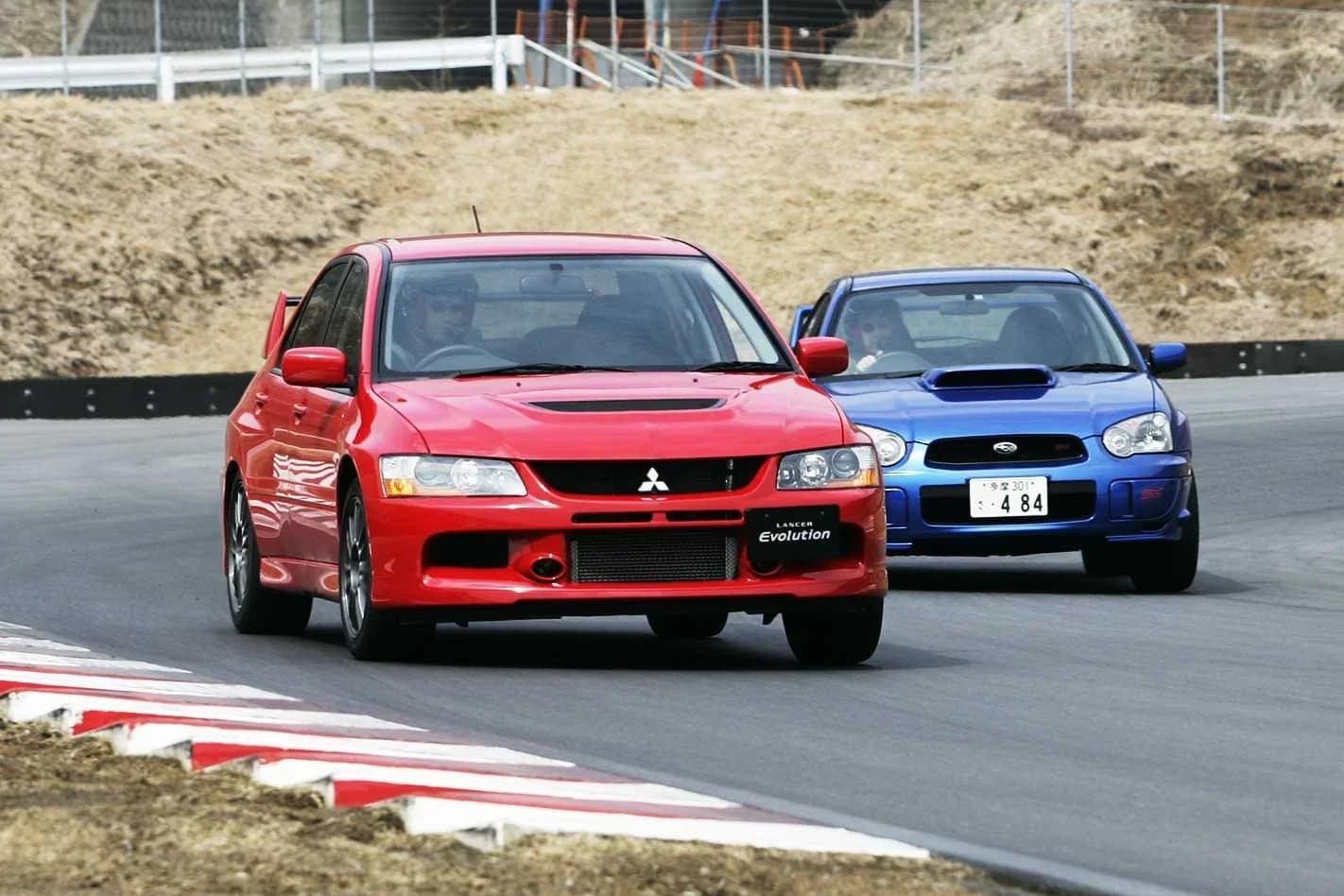
Two four-door sedans, four driven wheels each, both born to satisfy a rally rulebook, both now priced like the collectibles nobody expected them to become. Choosing between an Evo and an STI used to be a personality test. Now it is a budget exercise with a personality test attached.
What the money gets you
Rough tiers, market-dependent, and moving in one direction:
- Cheapest real entry: an early GDB-generation STI or a high-mileage Evo VIII. Both will need work. Both are cars somebody has already modified.
- The sensible middle: a clean, documented, lightly-modified example of either. You pay a premium for stock and it is the best money in this whole segment.
- The top: low-mileage Evo IX examples, special editions, and the JDM homologation cars that came in under the 25-year rule. These are collector prices now and no longer make sense as toys.
Imported JDM versions add another dimension. Evo IV through VI arrived with the AYC active yaw system and the earlier Evos came in specifications the US never got, including the stripped RS models built for people who intended to rally them.
The Mitsubishi case
The 4G63T is the durable heart of the thing. A cast iron block, a decent head, and a bottom end that takes a considerable amount of boost before anything structural complains. The chassis is the other half: active center differential from the Evo VII onward, active yaw control shuffling torque across the rear axle, and steering that feels quicker than it has any right to.
An Evo turns in like a smaller car and holds a line with a confidence that flatters you. The trade is that everything else about the experience is coarse. The interior is a rental car with a nice seat, road noise is constant, and nothing about the driving position suggests anyone thought about long journeys.
The five-speed gearbox in the Evo VIII is the known weak spot at elevated power. The later six-speed is the one to have if you plan on more than a modest tune.
The Subaru case
The EJ20 and its bigger relatives have the sound and the character, and a flat-four sitting low in the nose gives the car a different balance. The driver-controlled center differential lets you dial the torque split yourself, which is either genuine tuning or a novelty depending on how you drive.
The STI is the more comfortable car and the easier one to own daily. It rides better, the seats are friendlier, and visibility is good. It is also softer on turn-in than an Evo and relies more on all-wheel-drive traction than on chassis sharpness.
The engines want respect. Ringlands crack on a bad tune, bearings suffer when oil changes are stretched, and a boxer that has been run hard on a cheap map will find a way to tell you.
What to check on either
Both cars attract owners who modify first and maintain second. Treat every example as guilty until documented.
- Compression and leak-down. No exceptions, no "it pulls fine".
- Evidence of the tune: who wrote it, on what hardware, with what fuel, and can they show a log.
- Boost leaks, intercooler piping fit, and whether the car holds steady boost or spikes and drops.
- Clutch feel and center diff behavior on full-lock maneuvers.
- Rust on imported cars, particularly rear arches and rails, plus the underside of anything that saw a Japanese winter.
- Service history for timing belt intervals, and a straight answer about track use.
The honest pick
If you value the way a car changes direction more than anything else, the Evo is the better machine and always was. It is sharper, more mechanical, and more rewarding on a road you know well.
If you want to drive it every day, in weather, with a passenger who does not share your hobby, the STI is the correct answer and there is no shame in it.
What you should not do is buy either on a tight budget and plan to modify immediately. Both are now old, both were built with racing homologation as the priority and longevity as an afterthought, and the difference between a good one and a nightmare is entirely down to who owned it before you. Spend the money on the best example. The horsepower is the cheap part.