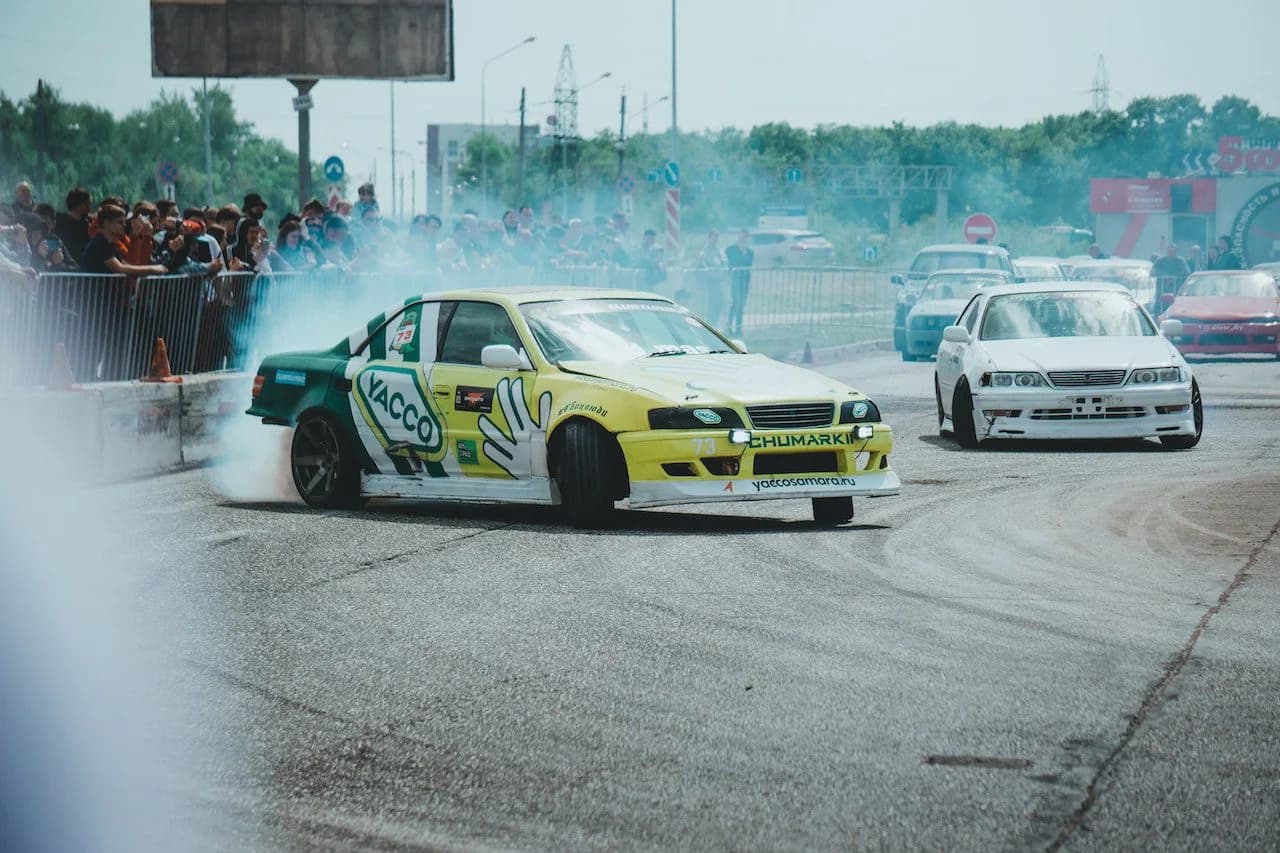
A good drift day depends on people being able to trust one another. The car beside you might have crossed three states on a trailer. The driver behind it might be attending a first event. Neither should have to guess whether you have read the rules, noticed the marshal or checked a leaking car.
This is an editorial ranking of avoidable habits, from everyday inconvenience to conduct that can put an event at risk. It is not a substitute for the organiser's current rulebook or drivers' briefing.
8. Treating everybody else's kit as your packing list
Sharing tools is part of paddock life. Expecting strangers to provide everything is a different arrangement. Work out what your own car needs, prepare what you can transport and arrange shared equipment beforehand. If somebody lends you something, return it promptly and in the condition you received it. Ask before taking the next item from their toolbox.
7. Letting the camera run the day
Photos and video are part of the culture, but an edit should not dictate the grid's schedule. Sort out permitted camera mounts before joining the queue. Spectators and photographers belong in the areas authorised by the venue; a camera does not turn a restricted area into an acceptable place to stand.
6. Using inspection as the first maintenance check
Technical inspection is a requirement to meet, not a repair appointment. Check the car against the actual event's inspection sheet before arriving. Ready Set Drift, for example, requires inspection and a drivers' meeting before track activity. That illustrates why preparation belongs before the queue forms; it does not establish identical requirements for every organiser. Ready Set Drift's rulebook
5. Assuming the signals are the same everywhere
Read the briefing information and listen to the explanation of flags, lights, course entry and recovery procedures. Ask the staff to clarify anything you do not understand. A generic article should not tell every reader to stop immediately wherever a red flag appears: the required response and safe stopping arrangements must come from the event's instructions.
4. Treating another driver's car as an invitation to tandem
An organiser may separate drivers by experience, vehicle equipment and permission to run together. Follow that allocation. A conversation with another driver does not override it. If tandem is permitted, understand the briefing and agreed procedure before entering the course; do not assume proximity is welcome because the other car looks capable.
3. Treating a solo run as permission to ignore limits
Being the only car on course does not remove staff, barriers, recovery vehicles or the consequences of losing control. Stay within the activity the organiser has authorised. Ask for instruction when you need it, and be straightforward about your experience when choosing a group. A predictable beginner gives others something they can work with.
2. Making the paddock harder to use
Keep access lanes clear, contain your equipment and deal with spills through the venue's procedure. Follow the posted paddock speed limit instead of bringing course behaviour into shared space. Ready Set Drift specifically sets an off-track speed limit. Other venues supply their own rules. Organiser rules
1. Ignoring the people running the event
Follow officials' directions and use the stated process for questions or disputes. Formula Drift's 2026 sporting regulations likewise distinguish paddock and on-course conduct, but a professional competition's procedures should not be assumed to govern a local practice day. The relevant authority is the organiser of the event you are attending. Formula Drift's 2026 sporting regulations
The useful kind of paddock reputation comes from preparation, patience and keeping your commitments. Help when invited, leave the space clean and make the next person's day easier. That belongs in drift culture as much as the car's stance or the photograph from its best run.
Updated September 5, 2026: removed universal flag instructions, automatic blame for tandem contact and the suggestion that solo runs have no limits.