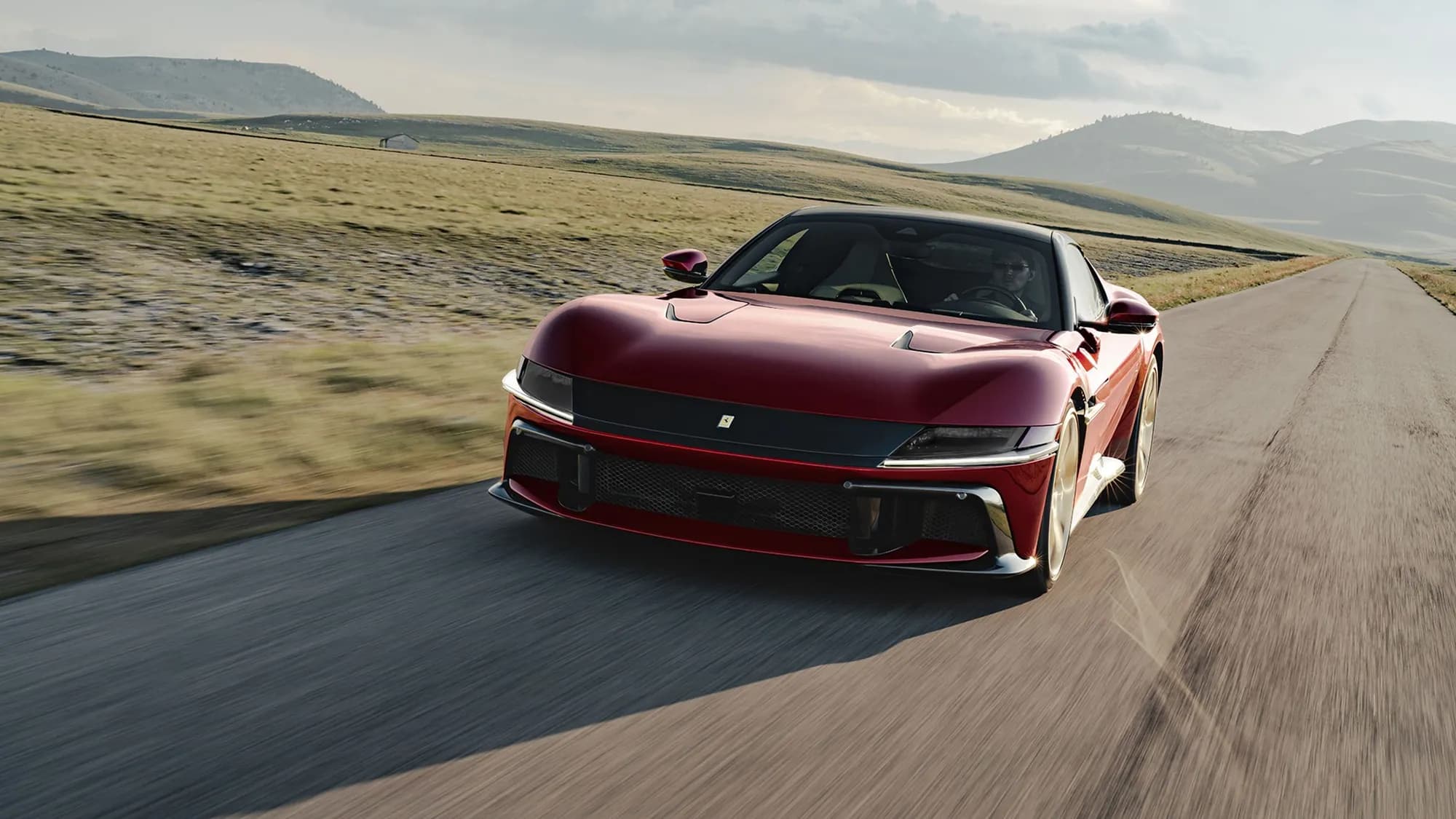
Photo: Ferrari. The Ferrari 12Cilindri Manuale.
The Ferrari 12Cilindri Manuale, unveiled on July 3, 2026, has a gated shift lever and a third pedal. Its gearbox is still Ferrari's eight-speed dual-clutch transmission. That makes it neither a traditional manual nor a conventional paddle-shift car, and Ferrari says it is the first of its cars in many years to have no steering-wheel paddles at all. How Ferrari bridged a manual interface and an automated gearbox is worth understanding before anyone argues about whether it counts. Ferrari's 12Cilindri Manuale release
What stays the same
Ferrari says the engine and transmission are unchanged, with the new work concentrated on the driver interface and the control software. The Manuale is a limited series of 1,499 cars, a number Ferrari links to the displacement of its first 12-cylinder engine in 1947. Underneath is the 12Cilindri's naturally aspirated 6.5-liter, 65-degree V12, rated at 830 cv at 9,250 rpm (including 5 cv of dynamic overboost on 98-octane fuel) and 678 Nm at 7,250 rpm, with a 9,500 rpm limit. Ferrari's 12Cilindri Manuale release
The eight-speed DCT is a shared Ferrari component. Ferrari's 296 GTB launch material lists it as already in use in the SF90 Stradale, Roma, Portofino M and SF90 Spider. Ferrari's 296 GTB release
The lever: mechanical feel, electronic signal
The shifter is a self-contained module that turns the driver's movements into electronic signals rather than moving anything inside the gearbox. Two Hall-effect angle sensors, one for each axis of movement, read the lever's position and send signals to the gearbox control unit, which handles the manual inputs while leaving the DCT's basic operating logic unchanged. A push-pull solenoid serves as a lock: if the clutch pedal is not pressed, or a gear that is not allowed is selected, it physically stops the lever from engaging. Ferrari's 12Cilindri Manuale release
The feel comes from hardware. A profiled rotating drum and a preloaded system build and then release load as the lever moves into gear, with clicks and load changes intended to mimic the synchronizing and engagement loads of Ferrari's manual gearboxes. The lever returns to neutral on eccentric rollers, reverse requires pushing the lever down, and the module weighs less than 3.5 kg. The gate follows a six-speed pattern with reverse at the top left. Ferrari's 12Cilindri Manuale release
The clutch pedal: by-wire, with real consequences
The clutch pedal works the same way. A sensor reads the pedal's position, and the system converts it into hydraulic actuation of the DCT's clutch pack. To make the pedal feel like a mechanically linked clutch, Ferrari uses a preload spring, a cam and a roller to recreate the familiar relationship between pedal load and travel. Ferrari's 12Cilindri Manuale release
Ferrari also kept the consequences of bad technique, presenting them as part of the involvement. Well-timed shifts are smooth. Poorly timed ones can be stiffer or produce a jolt, and the car can stall when pulling away or downshifting if the clutch is mishandled. Heel-and-toe downshifts are possible. Ferrari's 12Cilindri Manuale release
Manual mode covers the first six gears and reverse, and it is engaged only through the clutch pedal. When required, the driver can switch to an automatic mode, handing control back to the DCT's fully automated eight-speed operation. In automatic mode the lever can preselect a gear, and the instrument cluster shows how the revs will respond. Ferrari also added coasting management so the car can slow smoothly to idle. Ferrari's 12Cilindri Manuale release
Two routes to involvement
Ferrari's stated goal is an authentic manual driving experience that keeps the advantages of its dual-clutch transmission. It argues that a naturally aspirated V12 revving to 9,500 rpm is the ideal engine for manual gear changes. Ferrari's 12Cilindri Manuale release
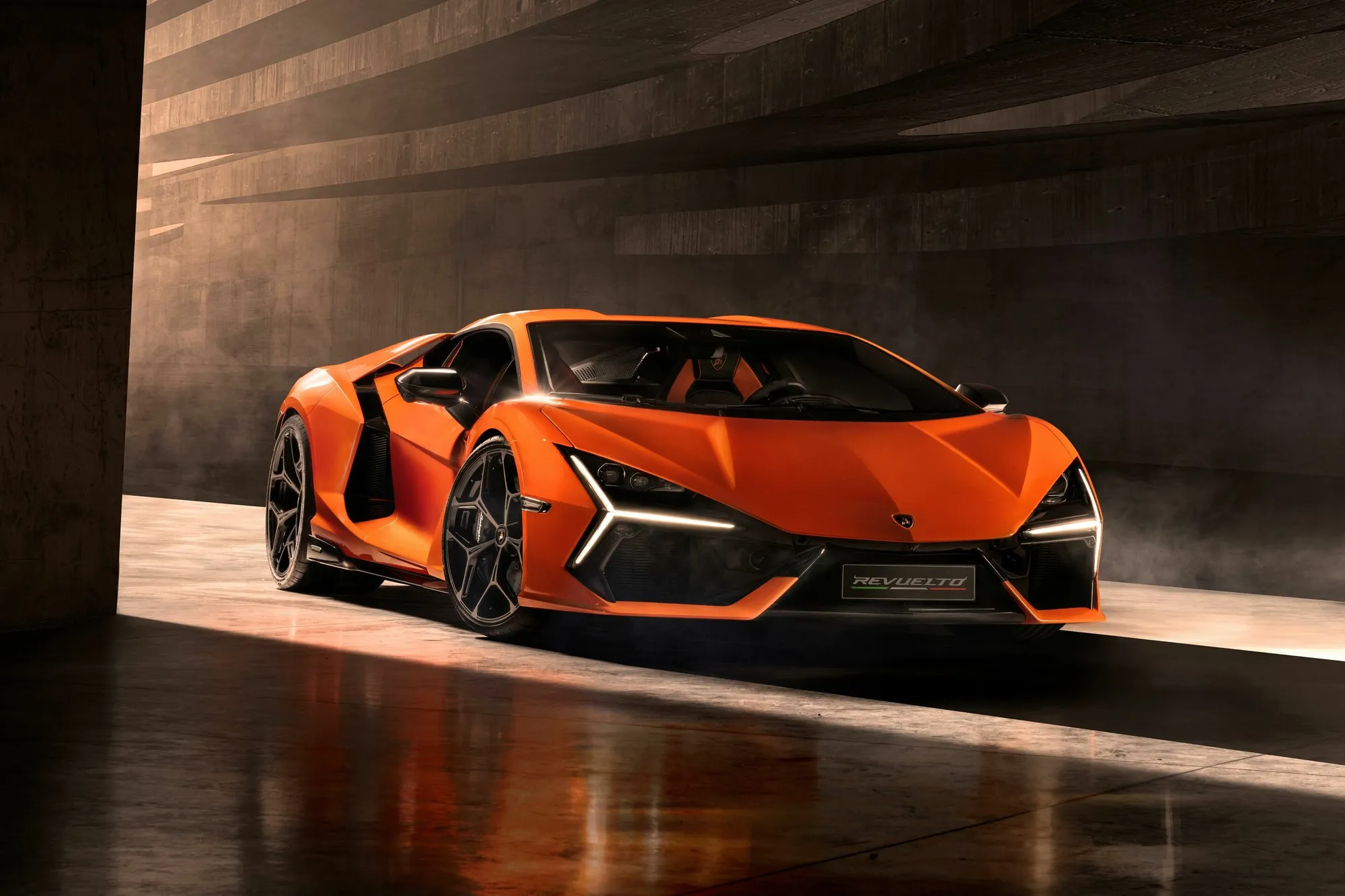
BMW took the more traditional route with its M3 CS Handschalter, announced in May 2026. That car pairs a 473 hp S58 with a conventional six-speed manual and rear-wheel drive, built exclusively for North America. BMW's M3 CS Handschalter release Lamborghini went the other way with its own V12: the Revuelto introduced the first dual-clutch gearbox on a 12-cylinder Lamborghini. Lamborghini's Revuelto release
Those are three different answers to the same question about how a driver should change gear in a high-performance car. Ferrari's answer keeps the dual-clutch hardware and rebuilds the human side of the interface.
The useful way to judge the Manuale is as its own category: a manual interface wrapped around an automated gearbox, with sensors reading the driver's intent and actuators carrying it out. The gate, the clutch pedal, the stall and the heel-and-toe are all real. The mechanical connection between the driver's hand and the gears is not. Whether that satisfies someone who wants a true manual is a question for time behind the wheel, and buyers should judge it there rather than on paper.
Technical explainer based on Ferrari's published release. TUNERS has not driven the 12Cilindri Manuale.